
When you spend your entire day managing medications, schedules, appointments, and the emotional needs of someone else, your mind rarely gets a moment of true silence. By the time evening arrives, that accumulated mental weight often shows up as a restless brain, making an effective end of day mental clutter reset feel completely out of reach. You lie down in the dark, but instead of resting, your thoughts race through tomorrow's to-do lists, unresolved worries, and lingering micro-stressors. This persistent cognitive fatigue is a universal challenge for high-load caregivers, yet traditional relaxation advice often assumes you have hours of free time you simply do not possess.
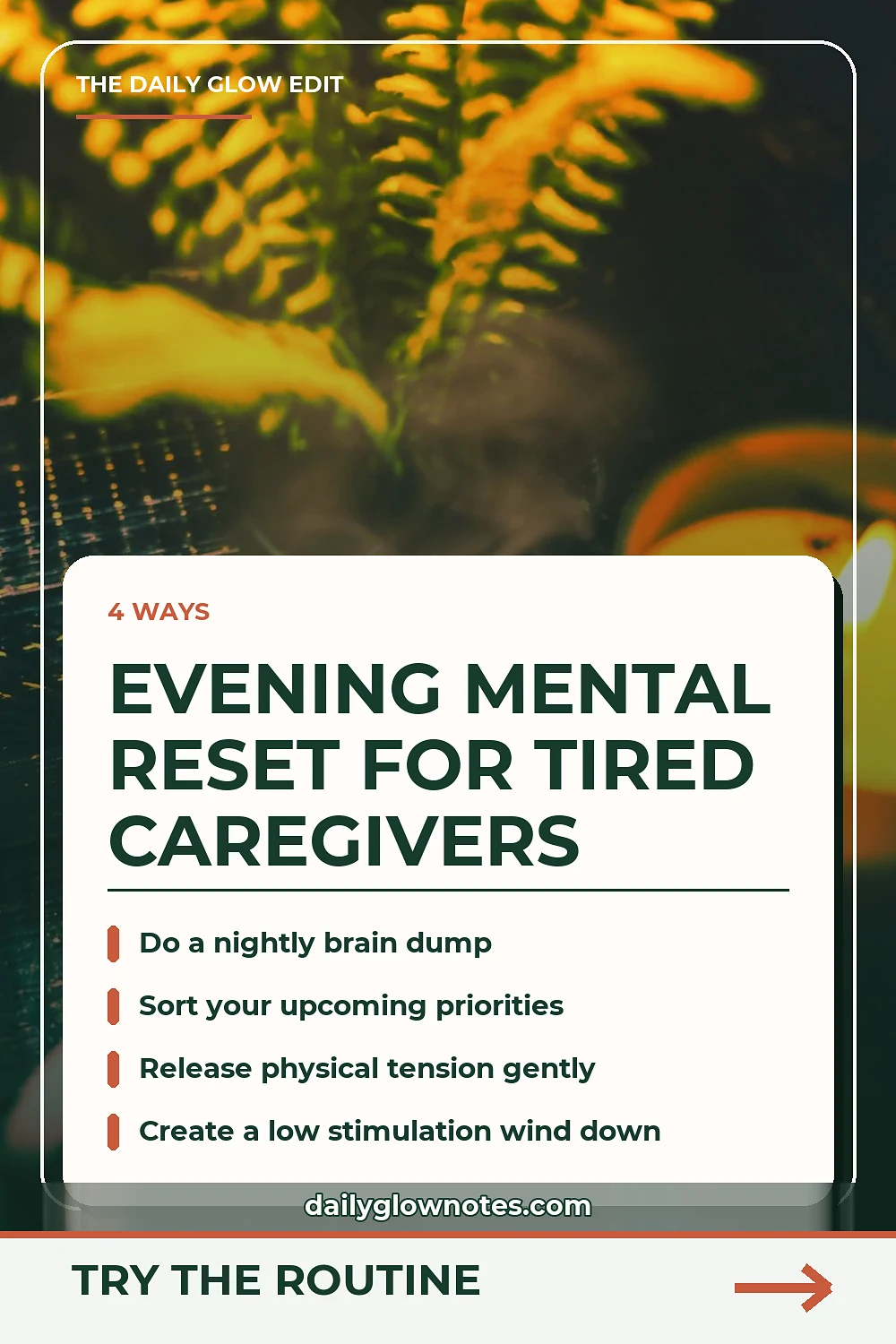
Creating evening peace does not require a sweeping lifestyle overhaul or an expensive spa retreat. Instead, it relies on a deliberate, structured practice of transferring the chaos from your head onto a physical page. By utilizing a simple pen and paper routine, you can signal to your nervous system that your responsibilities for the day are officially paused. This article explores a practical, four-step framework designed to quiet mental chatter, ground your physical body, and restore a sense of calm before sleep.
Step One: The Brain Dump to Clear Immediate Cognitive Clutter
The first step in any effective evening reset is getting everything out of your head without filtering or organizing it. Grab a blank journal and write down every single task, worry, random reminder, and lingering frustration currently bouncing around your skull. Do not worry about neat handwriting, grammar, or structured formatting. The goal is sheer velocity and release. When your brain realizes that these thoughts are safely captured on paper rather than stored in active memory, it immediately begins to loosen its grip. This physical act of writing acts as an external hard drive for your stress, making the invisible weight of caregiving feel manageable and contained.
Allowing yourself this unfiltered expression is essential because caregivers constantly filter their language and emotions to remain strong for others. When you finally pick up the pen at night, grant yourself full permission to write messy, frustrated, or unpolished sentences. No one else will read this page. The act of externalizing these raw thoughts prevents them from looping endlessly in your working memory, which is often the primary culprit behind midnight insomnia and restless tossing and turning.
Step Two: Sorting and Categorizing the Remaining Priorities
Once the raw mental dump is complete on the page, look over your frantic notes with a gentle, objective eye. Not everything you wrote down requires your immediate attention tomorrow. Group your jotted points into three distinct categories: urgent items for tomorrow, tasks that can be delegated or postponed, and purely emotional worries that needed an outlet rather than an action plan. Much like sorting through the inbox overload habit that can make stress feel louder, categorizing your mental load prevents incoming worries from blurring together into an overwhelming wall of anxiety. By sorting the noise, you regain a sense of personal agency over your schedule and your boundaries.
As you categorize, pay special attention to the emotional worries that require no practical action. Acknowledge them with compassion, recognizing that feeling overwhelmed is a natural byproduct of caring for another human being. Separating a logistical chore from an emotional burden stops your brain from trying to solve unfixable feelings late at night, letting you rest with a clean slate.