
You turn off the lights, pull up the covers, and expect relief. Instead, your brain decides that 11:30 PM is the optimal time to review every awkward conversation from 2018, organize tomorrow's work deliverables, and worry about whether you locked the back door. This frustrating nighttime cognitive loop happens because daytime busyness forces your nervous system into overdrive, leaving you with a backlog of unprocessed mental data. When distractions finally fade in the dark, those lingering thoughts rush in to fill the silence, making it feel almost impossible to transition naturally into sleep.
Why Your Mind Sprints When Your Body Tries to Rest
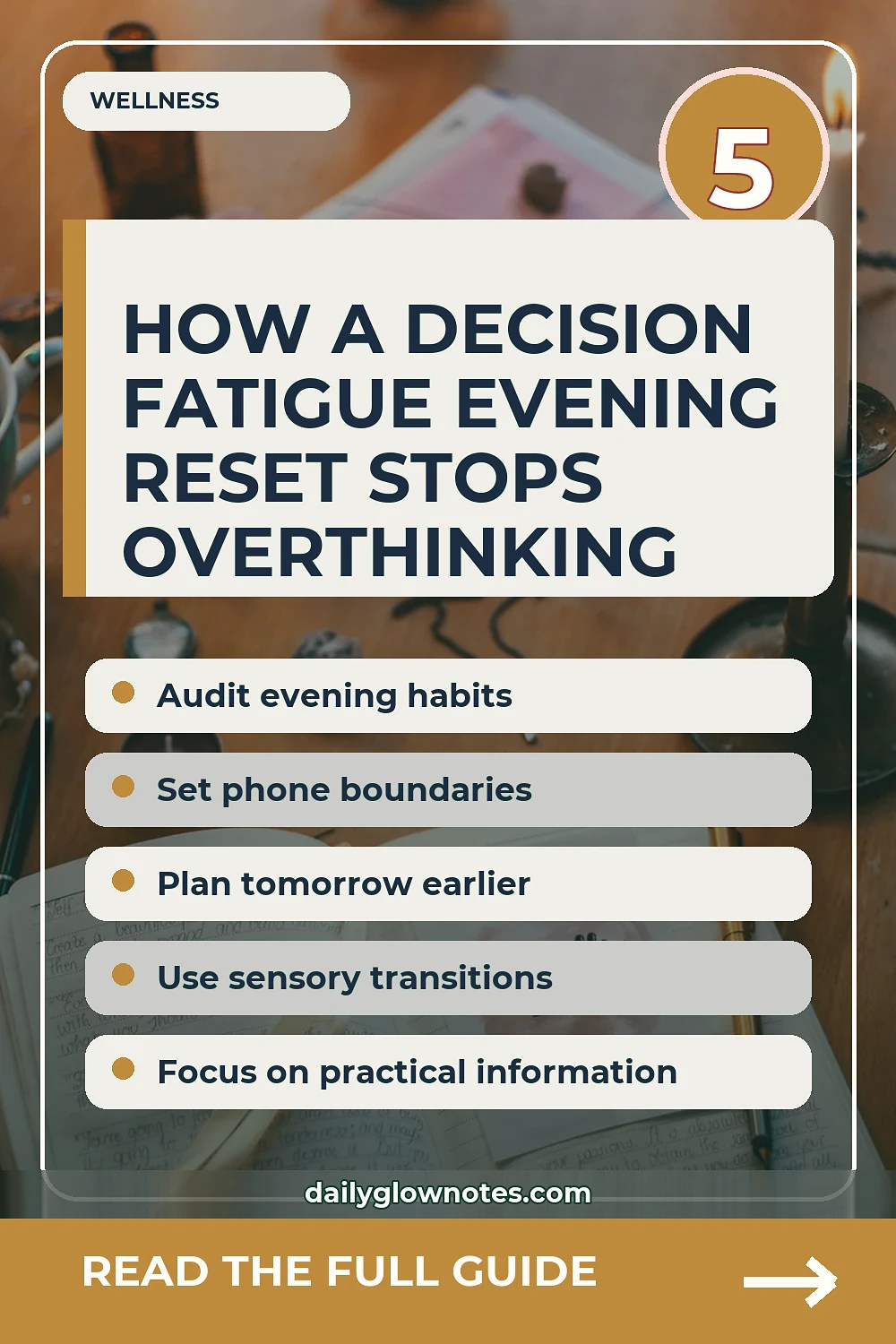
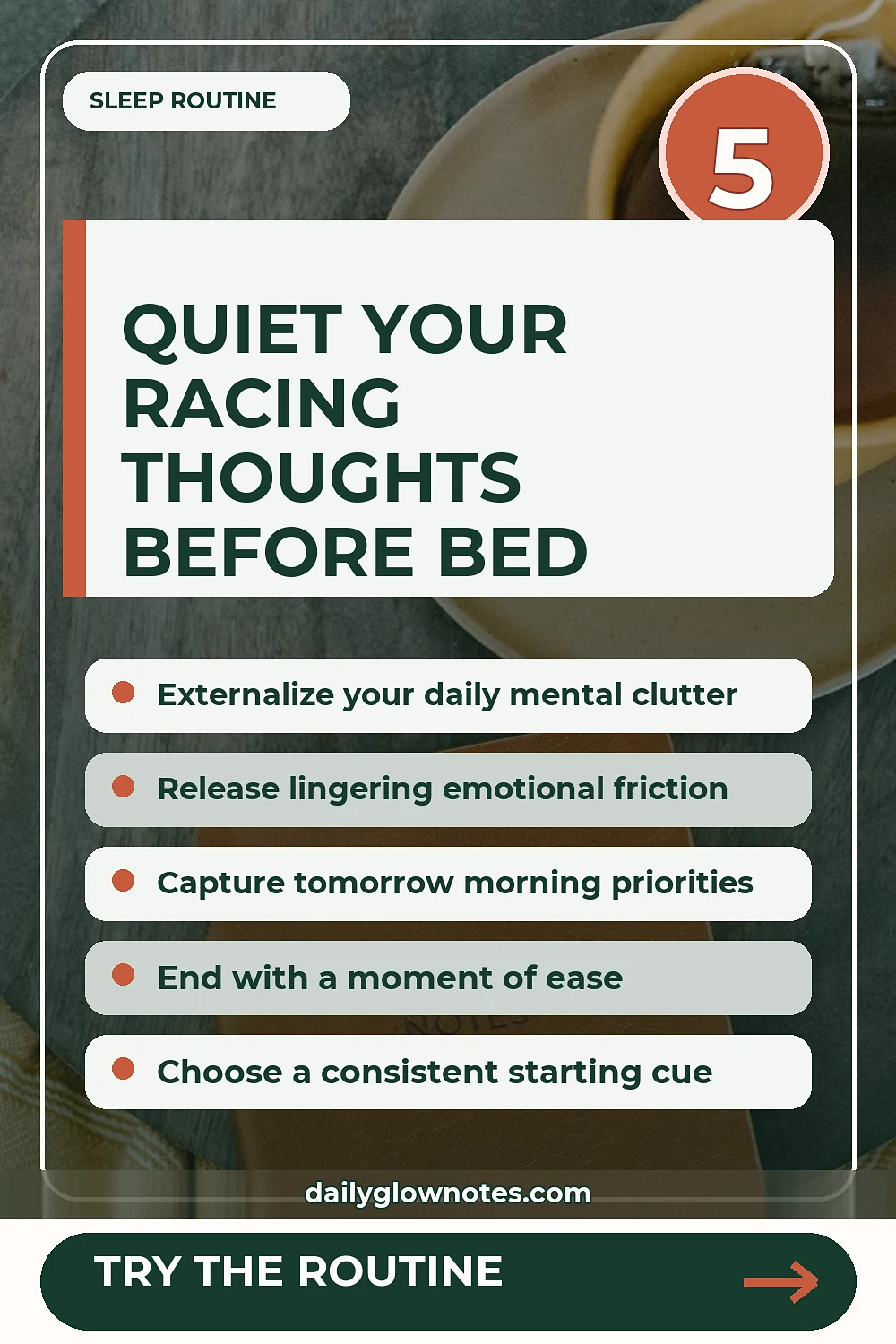
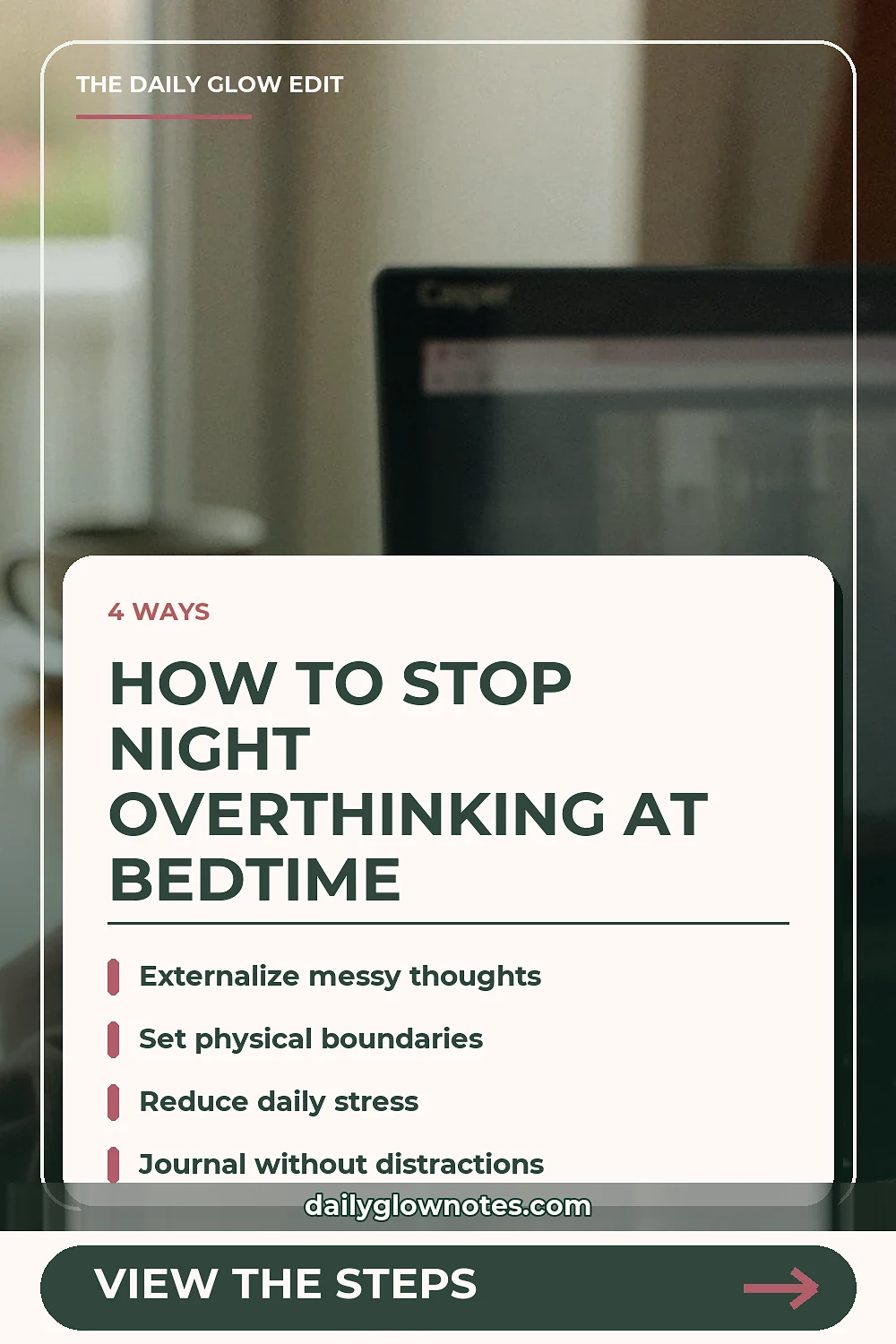
Addressing this cycle requires more than just telling yourself to relax or staring stubbornly at the ceiling. When you try to force your brain to stop thinking through sheer willpower, you often create a secondary layer of stress that only keeps you awake longer. A reliable evening reset routine to stop night overthinking provides a structured offramp for your cognitive energy. By giving your thoughts a physical destination on paper, you signal to your nervous system that the day's problem-solving window is officially closed, allowing your body to finally prioritize physical recovery over mental analysis.
Setting the Stage for a Calm Transition
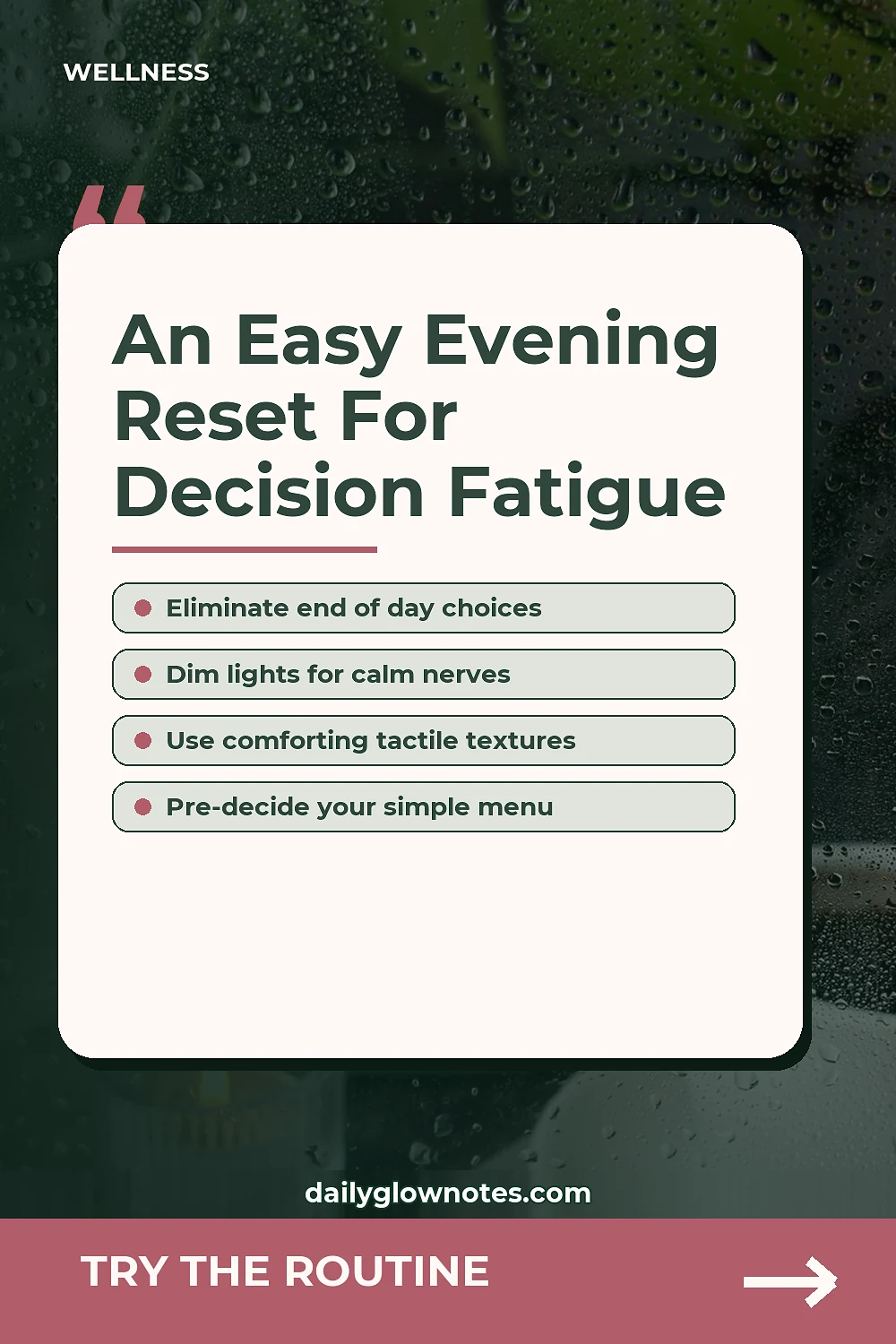
Physical cues play a massive role in preparing your mind for sleep and signaling safety to a hypervigilant nervous system. Long before your head hits the pillow, your environment needs to communicate boundaries, quietness, and predictability. Dimming the overhead lights, lighting a warm amber lamp, and removing screens from your immediate vicinity create an atmospheric boundary between your active day and your resting night. This transition mimics the natural rhythm of dusk, helping your body's internal clock understand that stimulation is winding down.
As you build this physical sanctuary, you might also find it helpful to integrate other grounding practices that engage your physical senses in a soothing way. For instance, exploring a shopping free relaxation toolkit using household items for busy evenings can show you how to use simple items you already own, like a warm washcloth or a cozy oversized sweater, to anchor your senses in the present moment without needing to purchase specialized wellness gear or expensive sleep gadgets.