
By the time the sun dips below the horizon and your living room settles into dusk, your brain feels less like a functioning organ and more like an open browser with forty tabs running simultaneously. If you have spent the entire day fielding emails, solving sudden crises at work, managing household logistics, and making what feels like a thousand microscopic choices, your evening arrival home brings a very specific kind of exhaustion. This is not just physical tiredness. It is heavy, invisible decision fatigue. When your cognitive tank is completely empty, even simple questions like 'what should we make for dinner?' or 'which show should we put on?' can feel entirely insurmountable. You do not need another complex wellness overhaul or a rigid evening productivity checklist that demands more willpower. You need a friction-free transition from work-mode to rest-mode that requires zero mental effort.
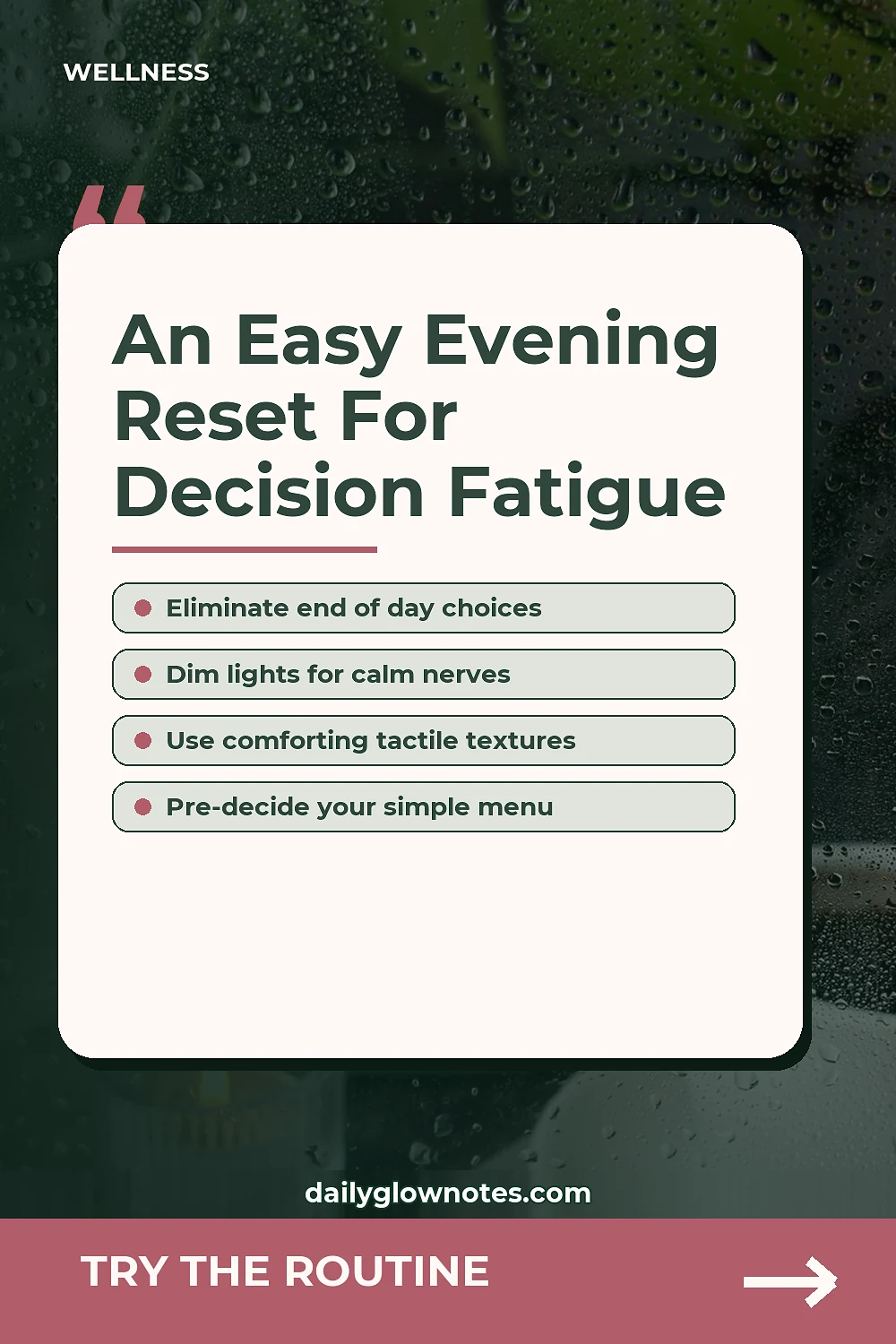
Creating a low-demand evening reset routine is about removing choices before you even step into your living room. By designing a predictable, sensory-driven wind-down framework, you can signal to your nervous system that the workday is officially over without having to think your way through the process. Let us explore how you can reclaim your evenings through simplicity, sensory grounding, and intentional ease.
The Anatomy of Decision Fatigue at the End of the Day
Every single choice you make throughout the day—from the professional strategy you approve to the outfit you select in the morning—draws down on a finite cognitive reserve. By evening, your prefrontal cortex is simply exhausted. This phenomenon explains why many of us fall into the trap of mindless scrolling or staring blankly into the refrigerator; our brains are desperately seeking a state that demands absolute zero output. Recognizing that this exhaustion is cognitive rather than a personal failing is the first step toward genuine relief. Instead of fighting your evening slump with forced productivity, you can lean into a structured environment that carries you effortlessly into relaxation.
For those days when your schedule feels particularly overwhelming, you might also find comfort in shifting your perspective during the workday itself. Exploring a 5-minute micro-mindfulness reset for high-stress desk days can help buffer against total depletion long before evening arrives, making your nighttime transition feel noticeably smoother.
Setting the Environmental Triggers for Zero-Choice Wind-Down
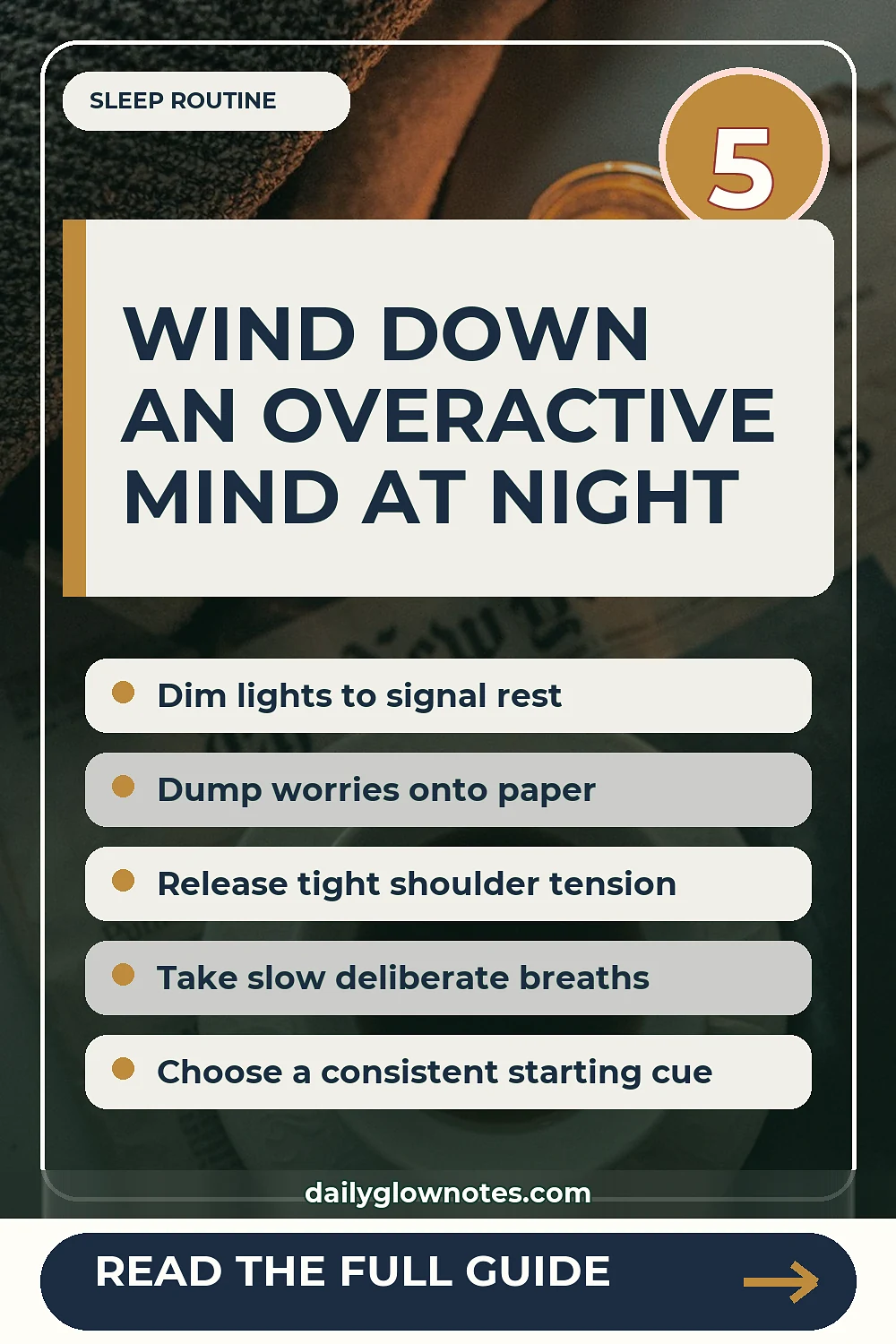
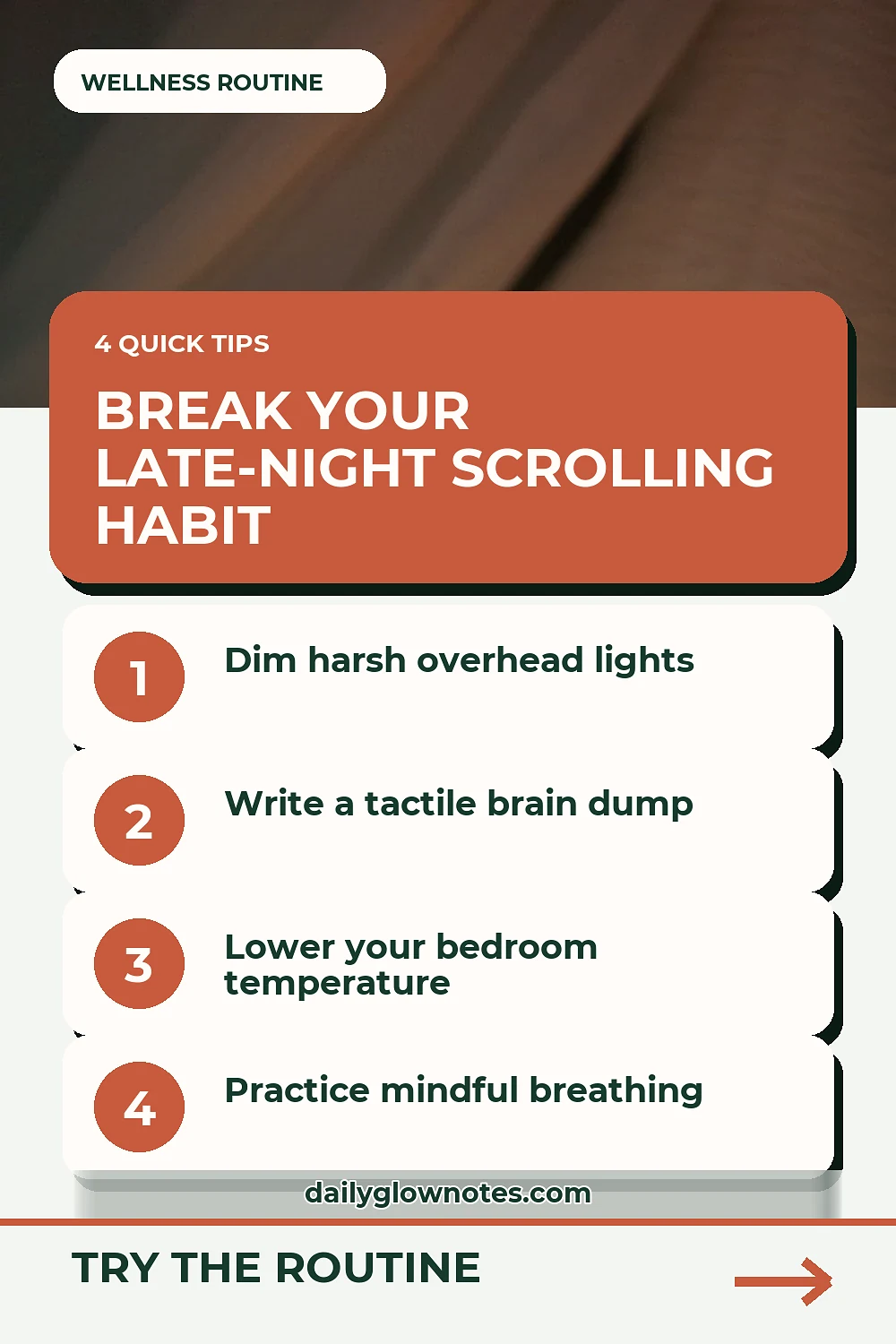
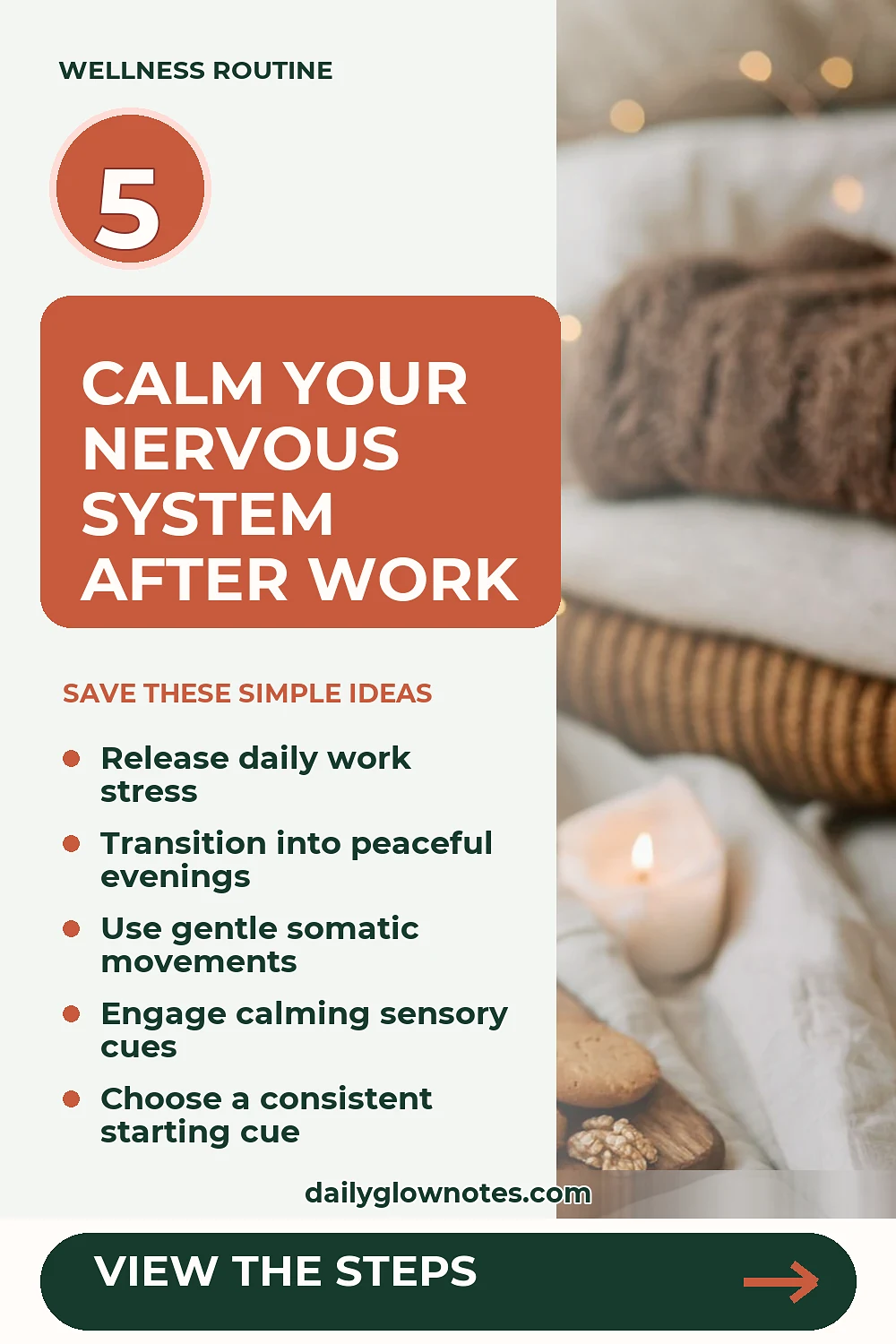
The secret to bypassing a tired brain is to let your physical environment do the heavy lifting. When lighting, sound, and tactile cues remain consistent every single evening, your body learns to associate those cues with automatic decompression. Start by dimming your overhead lights the moment you transition into your evening space. Soft, warm lighting instantly communicates safety to a hyper-stimulated nervous system. Next, lean into comforting textures. A soft linen throw blanket draped over your favorite chair and a warm ceramic mug held in your hands provide grounding tactile feedback that pulls your awareness out of your head and back into your physical body.
You do not need an elaborate setup or expensive equipment to achieve this state. Incorporating simple environmental shifts can completely transform how your space feels at the end of a long day. If you enjoy practical, creative ways to unwind without spending money, you can easily pull together a shopping-free relaxation toolkit using household items for busy evenings to keep your wind-down accessible and effortless.