
5-Minute Micro-Mindfulness Reset for High-Stress Desk Days becomes easier to understand when the main ideas are organized into practical, realistic steps. This guide explains the core considerations and shows how to apply them thoughtfully in everyday life.
Your shoulders have crept up toward your ears, your breathing is shallow, and the third spreadsheet of the morning is starting to blur behind a wall of notification pop-ups. High-stress desk days have a way of quietly hijacking the nervous system, turning a routine morning into an endless loop of digital urgency. When your schedule is packed and stepping away for a twenty-minute meditation session feels completely impossible, you need a different strategy. A desk stress reset mindfulness practice doesn't require a quiet room, an app, or an empty calendar. It takes five minutes, your current workstation, and a willingness to pause.
Overstimulated focus is a common byproduct of modern knowledge work. Continuous task-switching keeps the brain locked in a low-grade fight-or-flight response, which physically manifests as tight jaws, shallow chest breathing, and cognitive fatigue. Mindfulness activities integrated directly into your workspace help signal safety back to the nervous system without breaking your workflow. Instead of escaping your desk, you transform it into an anchor for calm.
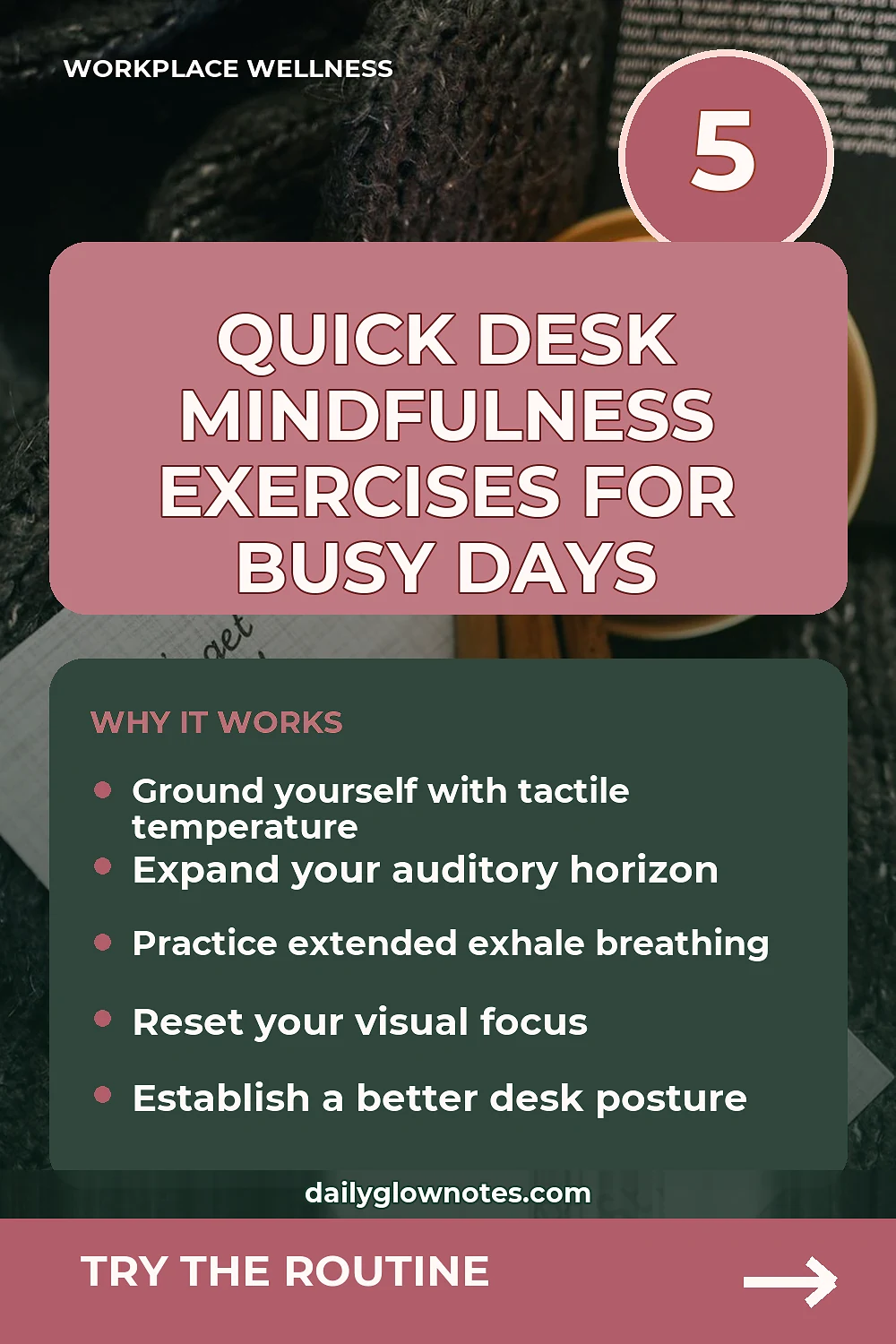
Minute 1: The Tactile Temperature Anchor
Begin your reset by dropping your shoulders away from your ears and planting both feet firmly flat on the floor. Notice the solid support beneath you. Next, pick up your mug of tea or water with both hands. Feel the exact texture of the ceramic or glass, noticing whether it is warm, cool, or lukewarm against your palms. This simple tactile grounding immediately pulls your awareness out of the chaotic digital loop in your head and places it squarely in the physical present moment. Spend sixty seconds focusing entirely on physical touch and temperature, letting your fingers trace the weight of the object.
Minute 2: The Audible Horizon Shift
Close your eyes or lower your gaze to the edge of your keyboard. For the next minute, stop trying to block out the ambient noise of your office or home environment and instead expand your auditory horizon. Listen for the furthest sound you can perceive, then pull your attention inward to a closer sound, such as the hum of your computer fan or your own steady breathing. This auditory sweep breaks the hyper-focus tunnel vision that staring at a monitor creates. When you allow sounds to simply exist around you without labeling them as distractions, your mental grip softens.
Minute 3: Extended Exhale Respiration
Breathing during a stressful workday is often restricted, which lowers oxygen efficiency and increases physical tension. Use this minute to alter your breathing pattern deliberately by making your exhales longer than your inhales. Inhale quietly through your nose for a count of four, then release the air slowly through your mouth for a count of six. As the exhale lengthens, consciously unclench your jaw and let your tongue fall away from the roof of your mouth. Repeat this cycle four or five times, feeling your ribcage expand and contract without force.