
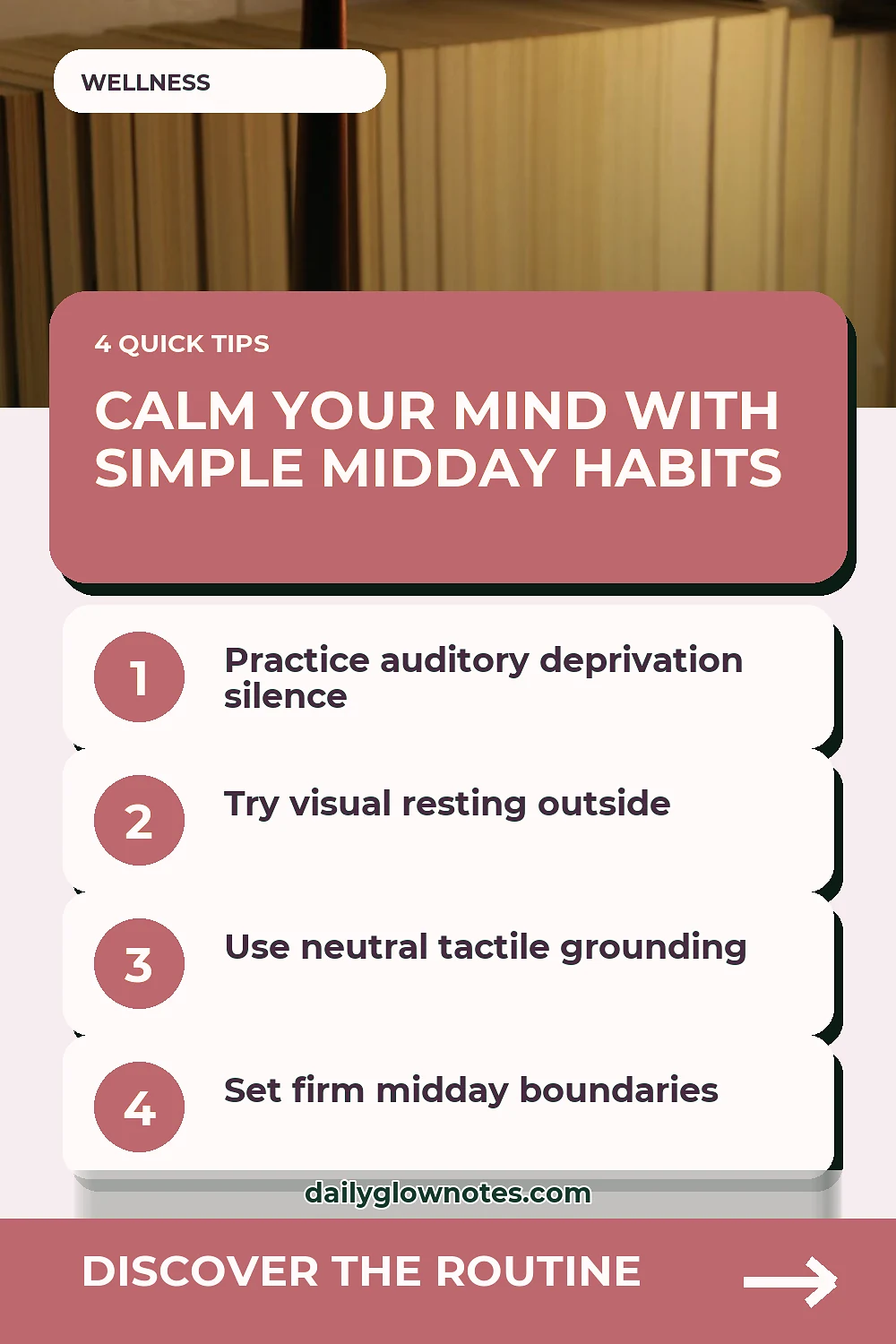
When your morning inbox fills up before you have even finished your first cup of coffee, the afternoon often arrives with a low-humming static in your mind. Corporate adult women juggling back-to-back meetings and endless decision-making frequently find themselves experiencing mental exhaustion long before the workday ends. If you are searching for a reliable midday stress reset routine for corporate women, you already know that simply grabbing another espresso or forcing yourself through a quick desk stretch is not going to clear the mental clutter. True relief requires stepping away from the cognitive load entirely.
Many standard relaxation guides recommend physical workouts, yoga flows, or intense breathing exercises during lunch breaks. However, when your nervous system is already overstimulated from screen time, constant notifications, and high-stakes communication, adding another physical task can feel like just another chore on your to-do list. Instead, non-movement unwinding habits allow your brain to settle without requiring physical exertion. By focusing on sensory reduction and mental boundaries, you can effectively lower your daily tension and regain clarity before the afternoon shift begins.
Auditory Deprivation and the Power of Silence
Modern workplaces and open-plan offices bombard the brain with an invisible stream of background noise. From clicking keyboards and hushed conversations to the distant hum of HVAC systems, your auditory cortex works overtime all morning to filter out distractions. Giving your ears a complete break is one of the fastest ways to signal safety to your nervous system.
Stepping outside or finding a quiet corner to sit in absolute silence for ten minutes creates an immediate buffer against cognitive overload. If total silence is unavailable, listening to unstructured nature sounds or white noise through headphones can achieve a similar effect. This practice connects closely with the principles explored in Designing a Low-Stimulation Morning Routine for High-Demand Workdays, where reducing sensory inputs helps set a calm foundation for whatever tasks lie ahead. By intentionally muting the world around you, your thoughts begin to slow down naturally.
Visual Fasting to Clear Digital Fatigue
Staring at monitors, smartphones, and documents for hours causes a phenomenon known as visual fatigue, which keeps the brain in a state of alert attention. When you take a lunch break, keeping your eyes glued to social media feeds or news apps means your brain continues to process stimulating imagery. Visual fasting involves actively redirecting your gaze away from screens and artificial patterns.
Find a spot near a window or outdoors where you can look at distant trees, the sky, or soft greenery. Allowing your eyes to focus on the horizon relaxes the ciliary muscles inside the eye, which directly mirrors a state of physiological calm. This simple shift tells your brain that you are no longer in a high-alert environment, making it an essential pillar of any midday grounding routine.