
You finally turn off the lights, pull up the blankets, and expect your body to naturally transition into rest. Instead, your mind treats the silence as an invitation to replay every awkward conversation from three years ago, plan tomorrow's grocery list, and analyze a random news headline. This frustrating phenomenon is extremely common for adults carrying the mental load of modern responsibilities. When your nervous system stays locked in a state of high alertness all day, it cannot simply flip a switch the moment your head hits the pillow.
Why Your Brain Refuses to Switch Off at Night
Creating a low effort evening wind down routine for stressed minds does not require spending hours meditating or rearranging your entire household. It simply means giving your brain physical and sensory cues that signal the workday is officially over. By working with your biology rather than fighting against your thoughts, you can gently guide your nervous system away from daily overstimulation and into a peaceful state.
Setting the Stage with Low-Stimulation Lighting
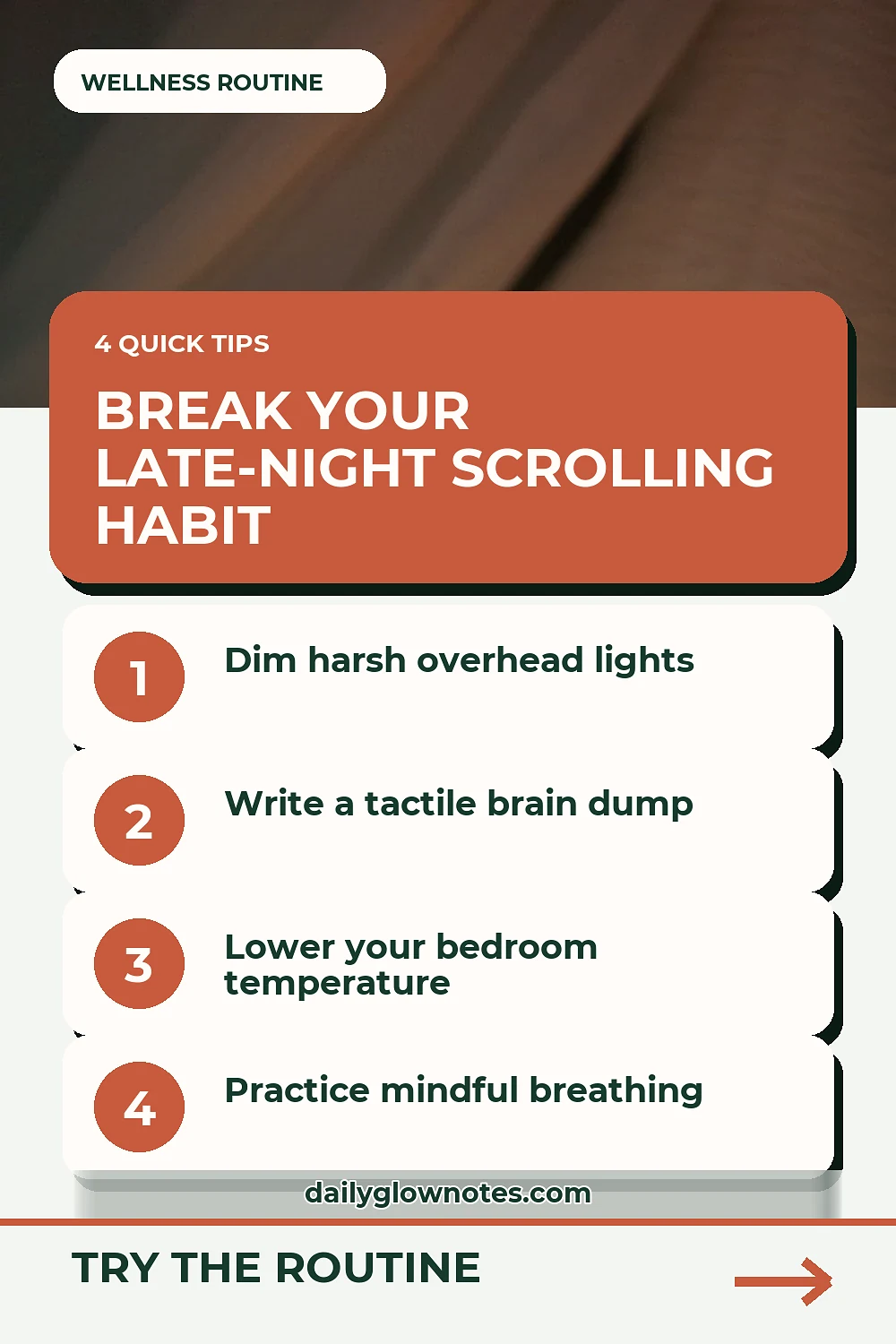
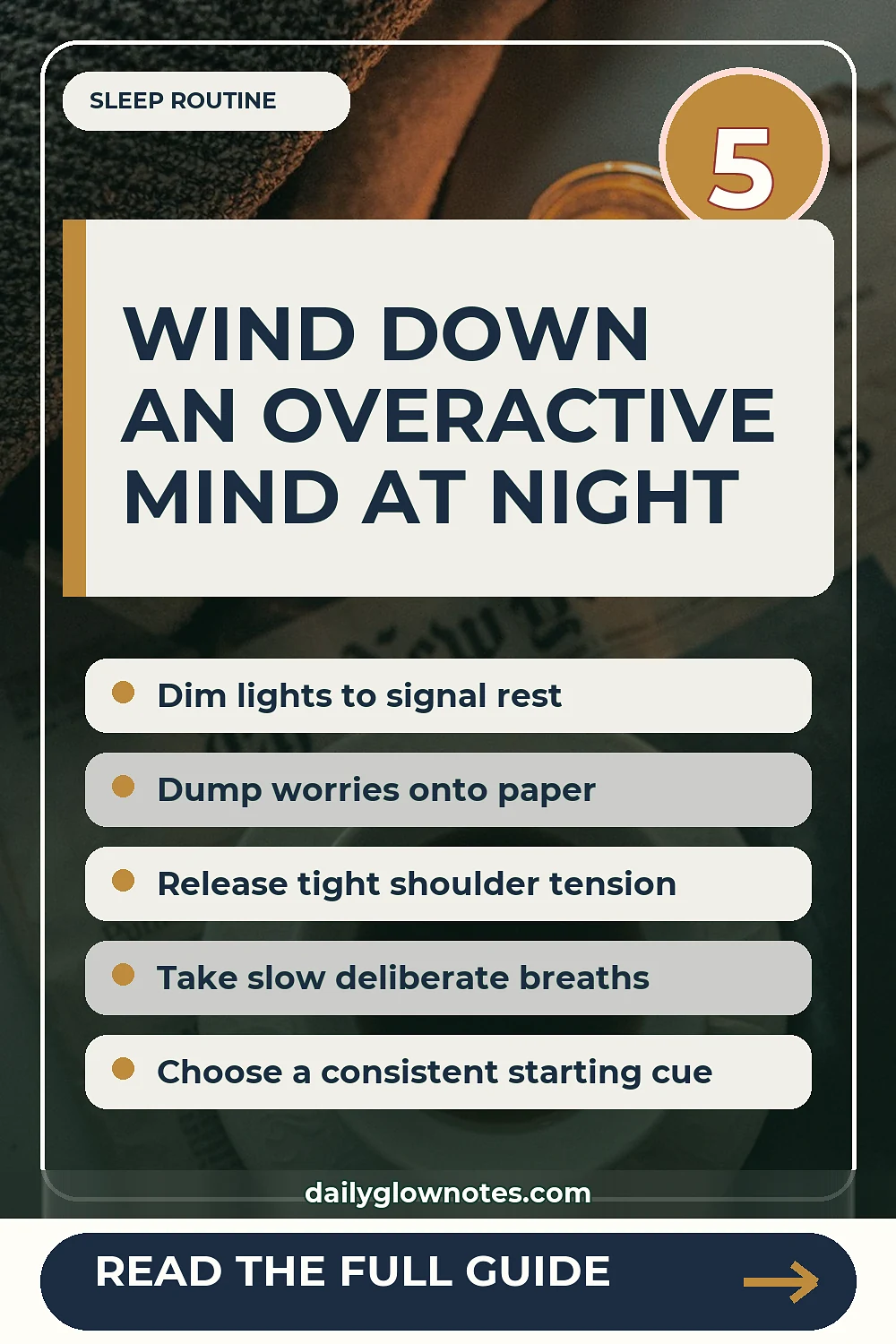
The physical environment plays a massive role in how quickly your racing thoughts begin to settle. Overhead fluorescent or bright white LED lights trick your brain into believing the sun is still high in the sky, delaying the natural release of sleep-supportive compounds. As soon as your evening wind-down window begins, make it a habit to dim the overhead lights entirely.
Switch on a small amber reading lamp or a warm bedside light instead. This subtle shift in illumination instantly lowers the visual noise in your bedroom. When your eyes are not constantly processing bright environments, your brain receives an immediate physiological reminder that it is safe to unwind. Pair this simple lighting adjustment with a comfortable physical setting, such as smoothing down clean linen sheets and fluffing your pillows so your bed feels like a true sanctuary rather than an extension of your workspace.
The Brain-Dump Journaling Method
When thoughts refuse to quiet down, trying to force them away usually backfires. The more you tell yourself to stop thinking, the more persistent those mental loops become. A much more effective strategy is to capture the chaos on paper before you even get under the covers. Keep a blank notebook and a pen right on your nightstand.
Spend five minutes writing down whatever is bouncing around in your head. Do not worry about neat handwriting, grammar, or forming complete sentences. Simply transfer your to-do lists, lingering worries, and random ideas onto the page. Once those thoughts are physically stored outside your brain, your mind instantly registers that it no longer needs to actively hold onto them overnight. This practice serves as a vital anchor in any low effort evening wind down routine for stressed minds, bridging the gap between daytime productivity and nighttime quiet.