
Family gatherings bring an undeniable warmth, filled with shared laughter, familiar voices, and generational traditions. Yet, stepping into a packed room where multiple conversations overlap, children dart between legs, and relatives ask rapid-fire questions can instantly trigger sensory overload. Your heart rate quickens, your shoulders creep up toward your ears, and you find yourself scanning the room for an exit strategy that does not feel awkward or rude. You do not need to fake a sudden emergency or lock yourself in a guest bathroom for an hour to find relief. Instead, mastering the art of the discreet low-stimulation break allows you to reset your nervous system without making a dramatic exit.
Mapping Your Internal Weather Before You React
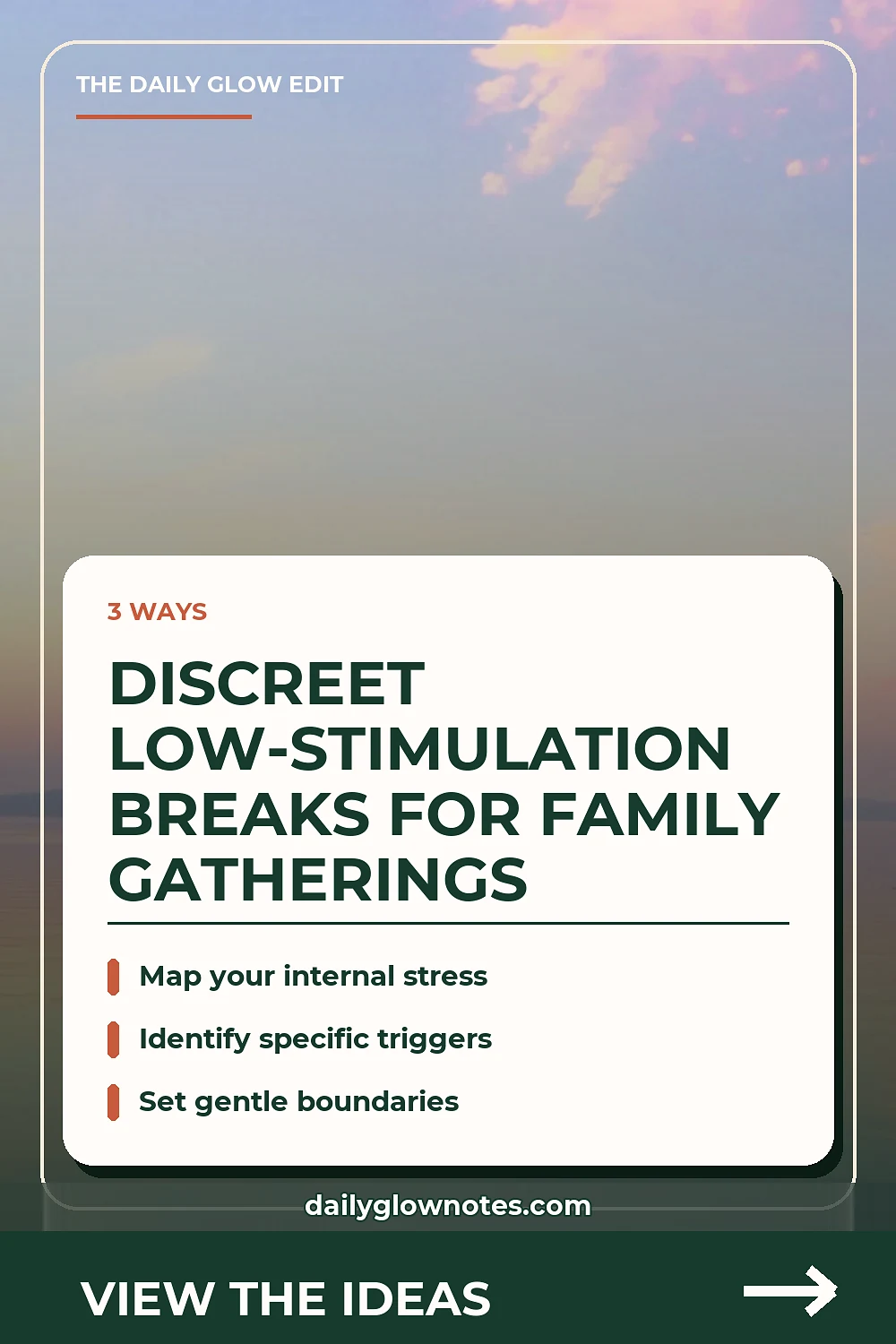
When the noise level in the living room reaches a crescendo and your personal space shrinks to zero, pause before you speak or snap. The first question to ask yourself is simply: What is my body telling me right now? Notice the physical signatures of stress without judging them. Are your fists clenched? Is your breathing shallow and rapid? Acknowledging these physical cues strips away the immediate panic. When you recognize that your nervous system is simply reacting to high sensory input rather than a true crisis, the urgency begins to dissolve. This quiet internal check-in acts as an anchor, keeping you tethered to yourself even while surrounded by chaos.
Identifying the Specific Source of Overload
Not all family gathering stress is created equal. Sometimes the trigger is acoustic fatigue from the sheer volume of voices. Other times, it is the emotional weight of answering repetitive questions about your career, relationship status, or personal life. Ask yourself: Is it the noise, the conversation, or the lack of space wearing me down? Pinpointing the exact stressor helps you craft an appropriate micro-break. If auditory clutter is the culprit, retreating to a quiet hallway nook or stepping onto the porch for a breath of crisp air provides immediate relief. For more insights on carving out micro-moments of calm during chaotic routines, you might find comfort in exploring How to Find Peace in the First Ten Minutes of Your Day, which outlines simple grounding techniques you can adapt anywhere. Understanding these nuances empowers you to select the exact antidote your mind and body require in that precise moment, preventing exhaustion before it takes root.