
Walking into a packed room full of chattering voices, bright overhead lights, and competing demands can instantly trigger a wave of internal tension. For many adults, high-density social situations and lively family gatherings are less about celebration and more about managing an invisible wave of sensory overload. When the noise level rises and physical space shrinks, your nervous system responds as though it is facing an urgent physical threat. Your shoulders climb toward your ears, your breathing becomes shallow, and thoughts begin to scatter.
Escaping to a quiet room for an hour is rarely an option when you are right in the middle of a busy event. Instead, you need subtle, invisible strategies that allow you to recalibrate your composure right where you are. These small, tactile, and mental shifts help lower the internal volume without drawing any attention or requiring you to completely withdraw from the room.
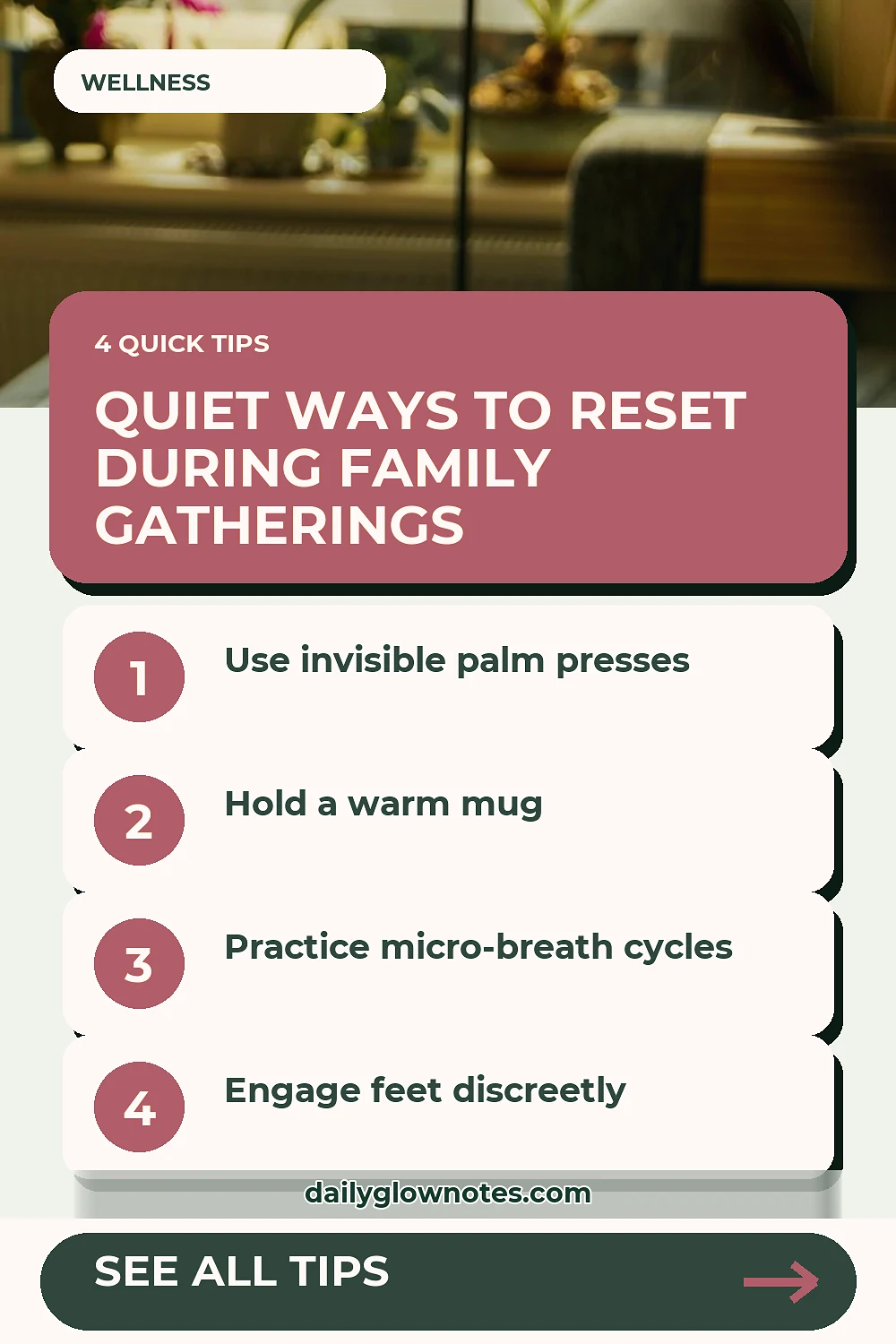
1. The Dual-Anchor Palm Press
When external stimuli become too loud, anchoring your awareness in a physical sensation helps pull your mind away from the surrounding chaos. The dual-anchor palm press is completely invisible to anyone watching you. Simply press the pads of your thumbs firmly into the center of your opposite palms, or clasp your hands together tightly in your lap, focusing entirely on the pressure and temperature of your skin. This deliberate physical focal point interrupts the spiral of overstimulation and grounds your body in the present moment.
2. Temperature Shift with a Warm Mug
Holding a warm mug of herbal tea or warm water provides an immediate tactile and thermal distraction for an overloaded nervous system. As you wrap both hands around the ceramic surface, focus solely on the radiating heat against your fingers. This simple ritual anchors your sense of touch while offering a built-in excuse to slow down your breathing between sips. It creates a tiny, private pocket of calm even in the middle of a crowded kitchen.
3. The Peripheral Vision Softening Exercise
Overstimulation often locks our vision into a narrow, hyper-focused tunnel, which signals high alertness to the brain. To counter this, consciously widen your gaze to take in your peripheral surroundings without moving your head. Notice the colors, the movement at the edges of your vision, and the space between objects. Softening your gaze relaxes the facial muscles and gently shifts your nervous system away from the fight-or-flight response, making it much easier to process busy environments.