
Overstimulated After Grocery Shopping? Simple Ways to Decompress at Home becomes easier to understand when the main ideas are organized into practical, realistic steps. This guide explains the core considerations and shows how to apply them thoughtfully in everyday life.
Walking through automatic sliding doors into a cacophony of fluorescent lighting, rolling cart wheels, and overlapping announcements can drain your nervous system faster than you realize. If you have ever returned from a routine supermarket run feeling inexplicably snappy, exhausted, or physically wired, you are experiencing classic sensory overload. The combination of bright visual stimuli, ambient noise, and decision fatigue takes a heavy toll, leaving many adult women searching for a reliable way to reset. Implementing a dedicated calming recovery routine after grocery shopping during peak hours can completely transform your transition from chaotic public spaces back to a peaceful domestic environment.
The Anatomy of Post-Errand Sensory Fatigue
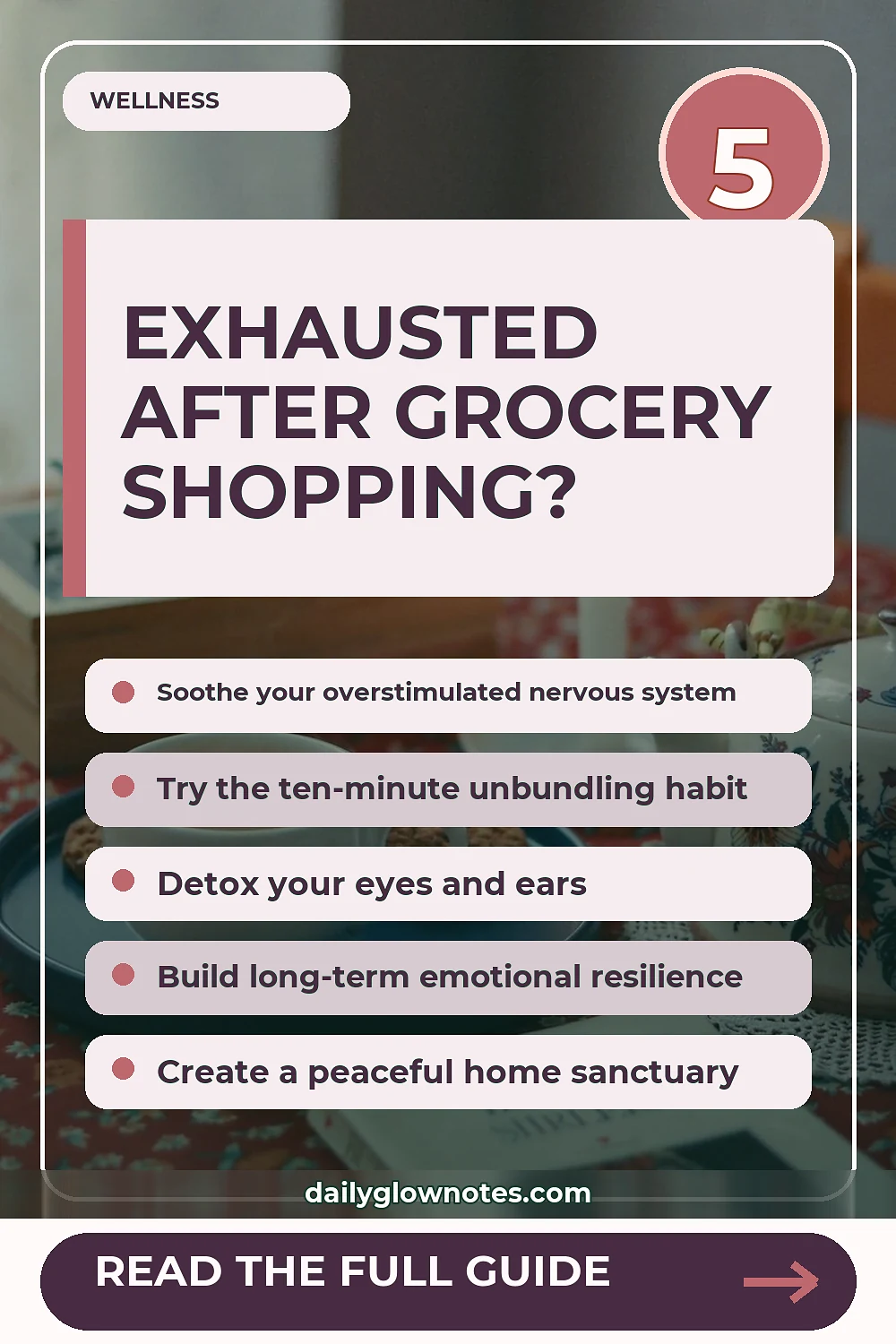
Crowded spaces demand constant micro-adjustments from your brain. You dodge other carts, track prices, calculate totals, and process dozens of brand choices under harsh overhead bulbs. This relentless barrage keeps your sympathetic nervous system mildly activated. By the time you unload your bags on the kitchen counter, your body is swimming in residual tension. Recognizing that this exhaustion is sensory rather than purely physical helps you stop fighting the fatigue and start treating it with targeted self-care. When your nervous system stays locked in this heightened state, even minor domestic sounds can feel magnified and irritating, prolonging the recovery window if you do not consciously intervene.
Step One: The Ten-Minute Unbundling Habit
The moment you cross your threshold, resist the urge to immediately check your phone, sort mail, or answer messages. Instead, commit to a strict ten-minute unbundling protocol. Leave the non-perishable bags in the hallway for a moment, wash your hands with warm water, and drop your shoulders away from your ears. This physical shedding of the outside world signals to your brain that the high-stimulation environment is officially behind you. Allowing yourself this initial breathing room creates a vital mental boundary between the public demands of the grocery store and the private sanctuary of your living space.
Step Two: Visual and Auditory Detoxing
Sensory recovery requires starving your brain of excess inputs. Step away from brightly lit rooms and loud appliances. Dim your overhead lights, turn off background television noise, and sit in a quiet corner or by a sunlit window. Some people choose to sip a cool glass of water while focusing entirely on the sensation of breathing deeply. If quiet feels uncomfortable, soft instrumental music or ambient soundscapes can gently bridge the gap between chaotic noise and complete silence. Giving your eyes and ears a complete rest allows your overstimulated cognitive processing centers to finally switch off and recover their baseline energy.