
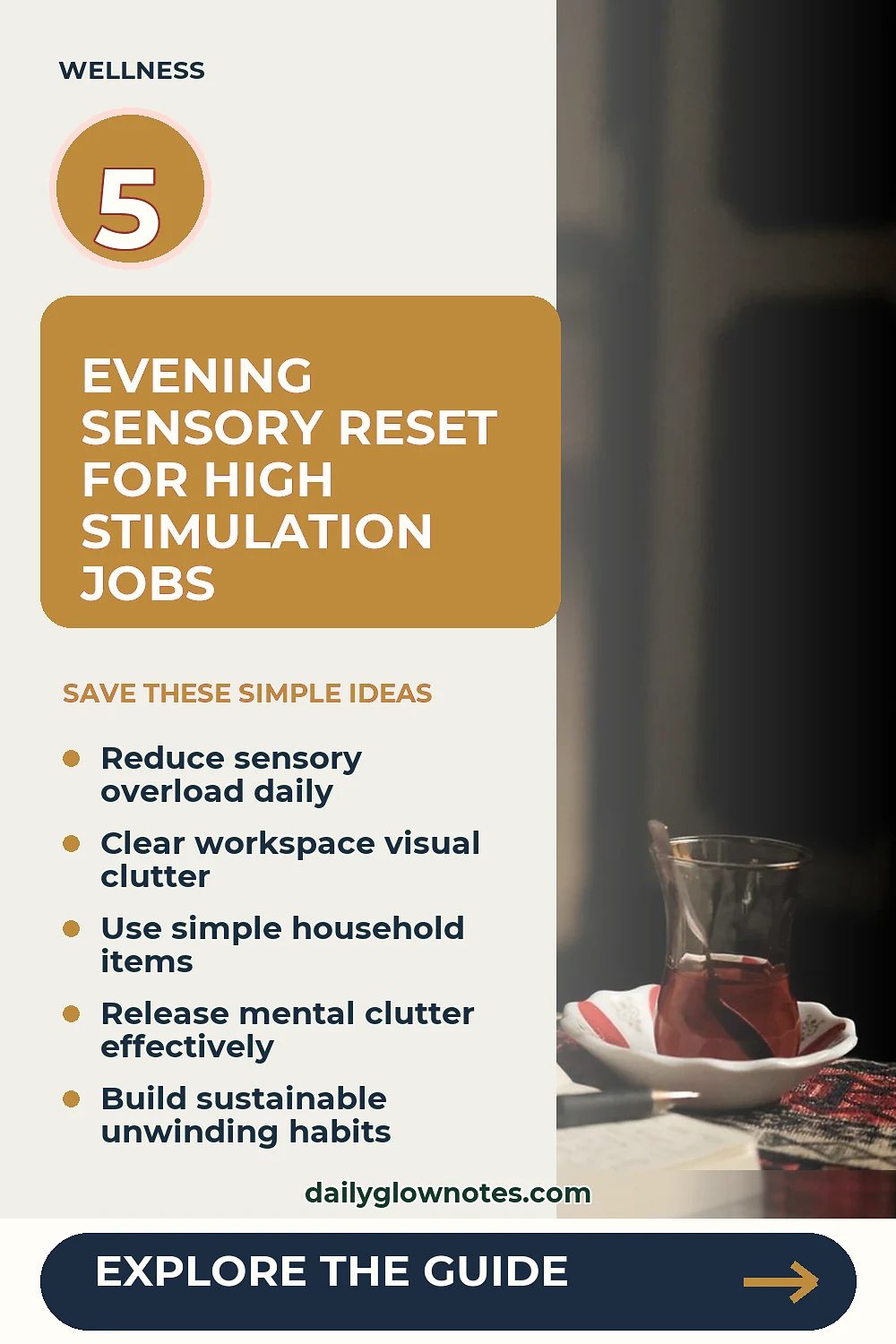
Constant notifications, glowing screens, and back-to-back meetings leave many professional women feeling entirely depleted by the time the workday ends. When your mind is racing and your nervous system is caught in a loop of high alert, traditional relaxation tips like reading a book or watching television can sometimes feel like just another task. Practicing an evening sensory reset for high stimulation jobs offers a gentle way to dial down the mental chatter without demanding extra effort from your already tired brain. By intentionally reducing sensory input, you give your body the physical space it needs to transition smoothly from a demanding workday into a restorative evening.
Recognizing the Hidden Weight of Sensory Fatigue
Mental exhaustion is rarely just about the volume of work you complete; it is frequently driven by the sheer amount of sensory data your brain processes before five o'clock. Fluorescent lighting, keyboard clatter, background chatter, and the constant flicker of monitors force your senses to work overtime. Over the course of a week, this accumulation builds into a subtle form of nervous system overload that can leave you irritable, tense, and physically exhausted.
Understanding this fatigue changes how you approach rest. Instead of adding more stimulation through podcasts or phone scrolling, the goal is subtraction. Creating a quiet pocket of time where bright lights are dimmed and loud sounds are silenced allows your nervous system to naturally downshift. This foundational shift supports long-term resilience and makes it easier to unwind before sleep.
Furthermore, recognizing these early signs of sensory burnout helps you intercept chronic tension before it manifests as physical stiffness or headaches. Many professionals overlook how micro-stressors accumulate throughout the day, treating exhaustion as an inevitable cost of career ambition. By validating the physical toll of a high-stimulation environment, you grant yourself permission to pause and recalibrate without guilt.
Setting Up Your Low-Stimulation Workspace Transition
The transition away from work should begin before you even leave your desk. Taking two minutes to tidy your physical environment clears visual clutter that subconsciously feeds mental restlessness. Placing items neatly away—much like arranging smooth stones in a small ceramic bowl—signals to your brain that the productive phase of the day has concluded.
Next, adjust your immediate surroundings by turning off overhead lights and relying solely on soft natural window light if available, or a warm lamp. Muting device notifications and closing browser tabs prevents the lingering temptation to check messages. These micro-adjustments create an immediate boundary between professional demands and personal time, helping you shed the day's stress before you step away from your workspace.
Creating a deliberate physical threshold between work and home activities reinforces this boundary. If you work remotely, this might mean packing away your laptop into a designated drawer or closing the home office door firmly at the end of the shift. For those commuting, utilizing the journey home to listen to ambient soundscapes or simply resting in silence rather than reviewing emails can profoundly alter your arrival state.