
When you are navigating the subtle shifts of midlife, it is easy to feel like your body and mood are playing a game of constant hide-and-seek. One afternoon you feel entirely grounded, and the next, a sudden wave of irritability makes you want to retreat from the world. If you have ever tried to track these changes before, you might have felt overwhelmed by complex apps, endless symptom checklists, and the pressure to document every single detail of your day. It often feels like a second job, leading many of us to abandon the practice altogether.
You do not need a clinical spreadsheet to understand your body. Instead, a low-pressure approach to tracking can help you find patterns without adding stress to your busy schedule. By focusing on simple, neutral observations, you can gain a clearer picture of your day-to-day wellbeing during perimenopause, helping you recognize both the challenging moments and the quiet, peaceful windows in between.
The Trap of Tracking Only Your Hardest Days
Many of us only reach for a journal or tracker when things feel difficult. When a sudden hot flash occurs or your patience wears thin, you write it down. While this captures the challenging moments, it creates a skewed record that makes it look as though every single day is a struggle. It is easy to look back at a month of entries and assume everything is going wrong, forgetting the many hours of calm and comfort you experienced.
To build a more realistic picture of your midlife transition, your tracking should capture the neutral and positive moments too. If you only log when you feel irritable, you miss the quiet mornings when you felt entirely at ease. A balanced record helps you realize that your symptoms do not define your entire experience, offering a sense of emotional relief and perspective when you need it most.
Visual and Rating Methods for Daily Tracking
If writing down long descriptions feels daunting, visual scales and rapid ratings are excellent ways to track how you feel. These methods require minimal effort and remove the pressure of finding the perfect words to describe your symptoms.
The Simple Color-Coded Calendar
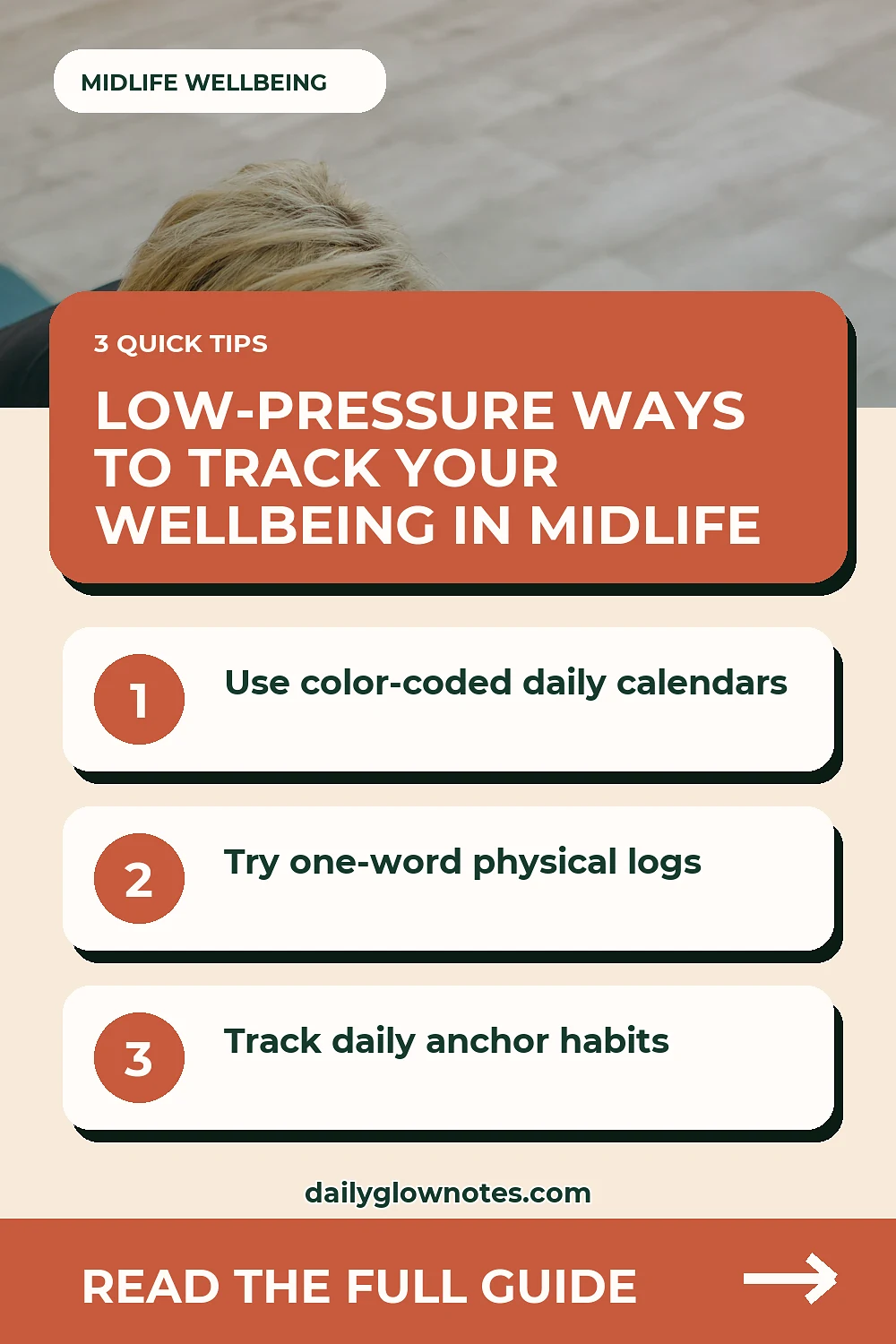
Instead of writing paragraphs, use a simple wall or desk calendar with three colored pens or highlighters. Assign one color to a high-energy, comfortable day, another to a neutral, average day, and a third to a day where you felt noticeably off or uncomfortable. At the end of the evening, simply place a small dot or slash on that day's square. This visual method takes less than five seconds. Over a few weeks, you will start to see a gentle tapestry of colors that reveals your natural rhythm, often showing that neutral and comfortable days far outnumber the challenging ones.
The Daily Ten-Minute Peace Rating
Our mornings set the tone for how we process physical and emotional changes. Rather than tracking your mood all day long, focus on a single, consistent window. You can combine this with your morning routine to make it effortless. For instance, while learning how to find peace in the first ten minutes of your day, take a quick mental snapshot of your comfort levels. Rate your physical and mental state on a scale of one to five, write it in the margin of your planner, and move on with your morning.
The Energy Level Flow Chart
Our energy levels during perimenopause can fluctuate in ways that feel entirely unpredictable. Try tracking your vitality by drawing a simple line graph in a notebook once in the morning and once in the evening, marking your energy on a low, medium, or high scale. Connecting these dots over a week creates a visual wave that helps you see when your natural energy peaks and valleys occur, allowing you to plan your most demanding tasks for high-energy windows.