
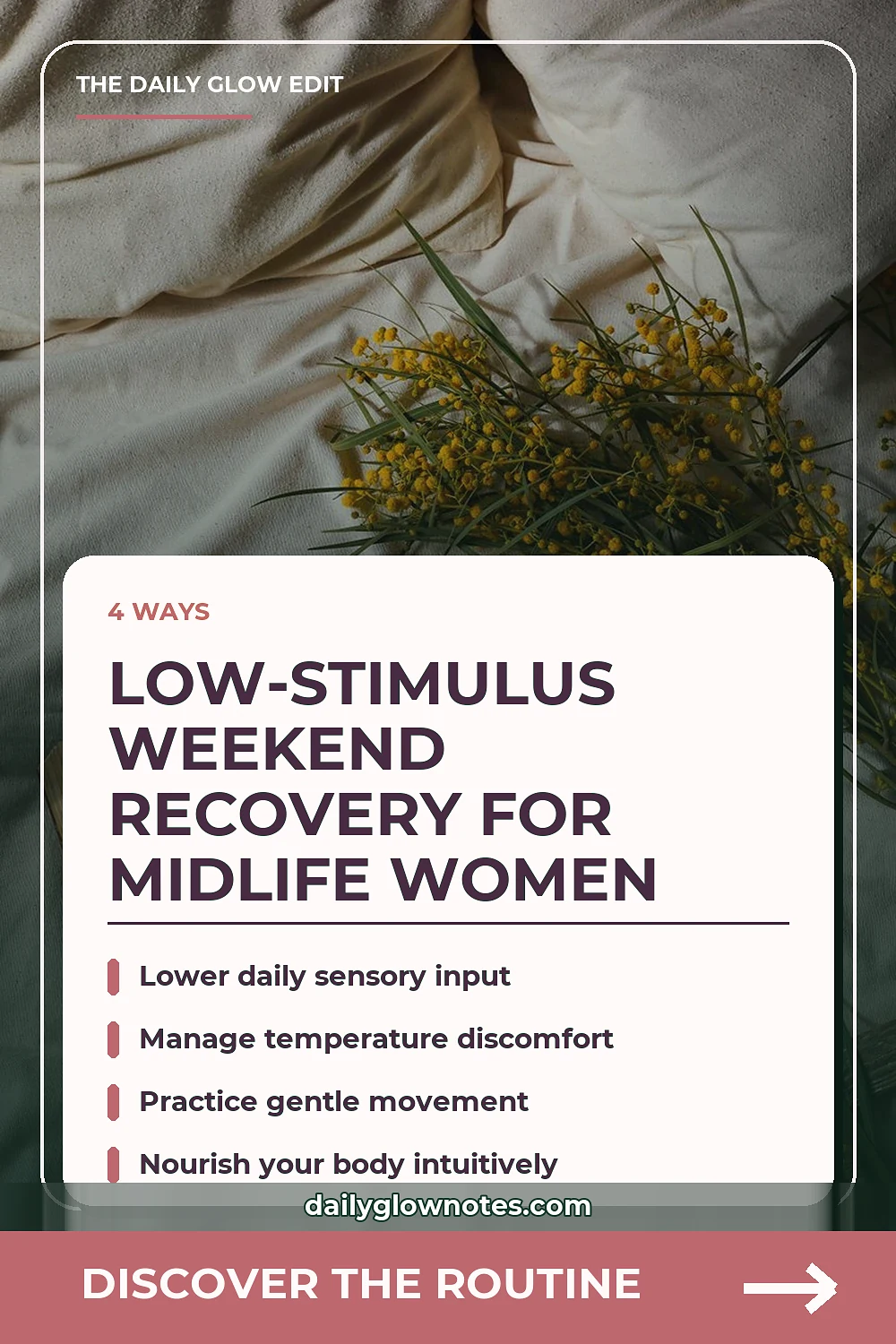
For many women in their forties and fifties, the feeling of exhaustion goes far beyond simple lack of sleep. Juggling demanding careers, family responsibilities, and the fluctuating physical shifts of perimenopause creates a constant state of low-grade sensory overload. By the time Friday evening arrives, your nervous system is often running on fumes, having spent five full days masking fatigue and pushing through unpredictable temperature shifts, brain fog, and mounting stress. Traditional weekend advice often suggests packed social calendars, intensive exercise classes, or hyper-productive home organization projects. However, for an overextended mind and body, these activities only demand more energy reserves that simply are not there. A genuine perimenopause weekend recovery routine for deep nervous system decompression requires a complete shift away from input and toward absolute restoration. It is about deliberately stripping away unnecessary demands to create a pocket of profound quiet.
Understanding Deep Nervous System Fatigue in Midlife
Setting the Stage for Sensory Reduction
The first step in reclaiming your weekend energy is acknowledging that sensory input is a major drain on your stamina. Bright lights, constant notifications, background noise, and even the clothes you wear can contribute to sensory fatigue when your hormonal landscape is shifting. Begin your Saturday by lowering the volume of your daily life. Keep lighting soft, trade restrictive daytime clothing for loose, breathable linen layers, and silence non-essential phone alerts. When you minimize the incoming noise, your brain finally receives the signal that it is safe to let down its guard. This intentional quiet allows your internal thermostat and stress response a much-needed break from the relentless pacing of the workweek. As you establish these gentle boundaries around your time and space, you may also find it helpful to explore resources like Navigating Perimenopause Social Energy Boundaries and Evening Recovery Tips to protect your peace throughout the busier weekdays.
Prioritizing Temperature Comfort and Restful Sleep
Physical comfort is paramount when you are actively trying to soothe a depleted system. Hormonal fluctuations frequently disrupt natural temperature regulation, leading to unexpected warmth and restless nights that leave you feeling hollowed out by morning. Design your weekend sleep environment to actively combat this discomfort. Choose light, moisture-wicking bedding, keep your bedroom cool, and grant yourself permission to sleep in or take an unhurried afternoon rest without guilt. Incorporating gentle, grounding daily practices can also support your overall rhythm. Some women choose to integrate supportive daily habits alongside optional wellness supplements like NuviaLab Meno to help navigate midlife comfort routines smoothly. Remember that rest during this phase is not a luxury or a reward to be earned; it is a biological necessity for resetting your baseline vitality.