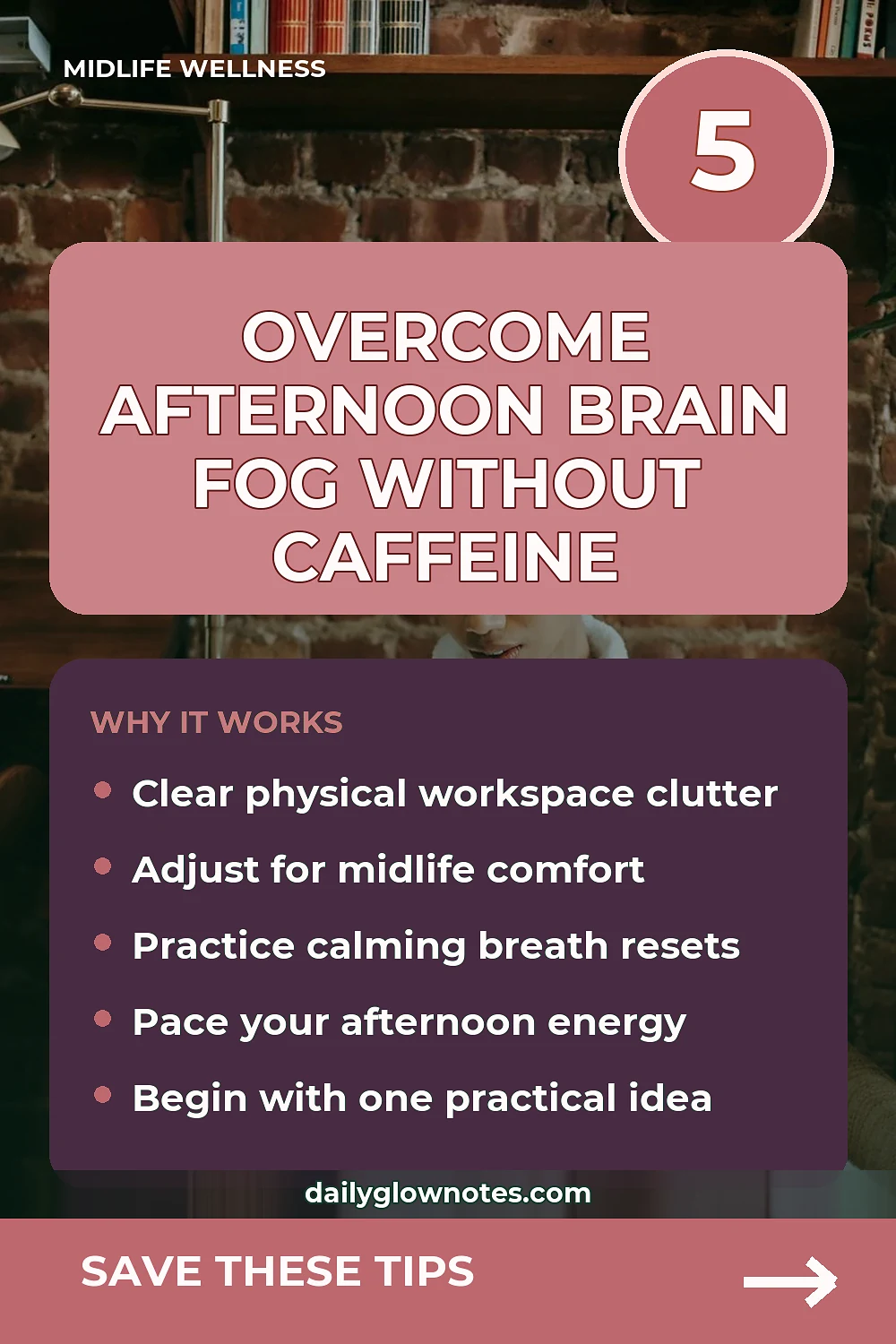

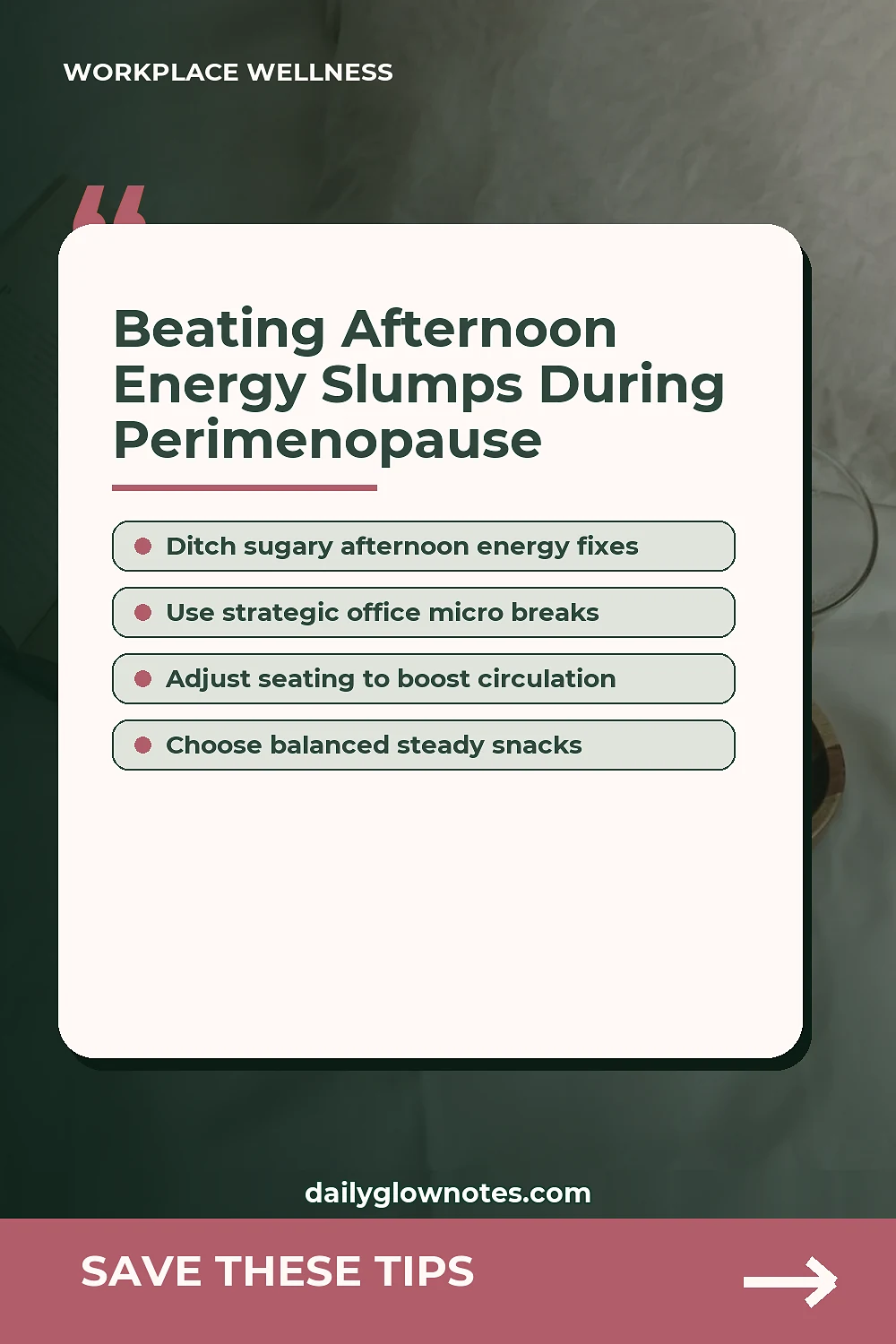
Managing afternoon energy slumps during perimenopause at work requires a shift away from quick fixes like sugary snacks or excessive caffeine. For women over forty navigating demanding careers, the 3 PM crash is not just about a lack of sleep. Hormonal fluctuations can directly impact daily vitality, making traditional productivity hacks feel frustratingly ineffective. When your focus dips right as important client calls or complex reports pile up, fighting through the exhaustion often leads to burnout. Instead of treating fatigue as an enemy, viewing it as a natural signal to adjust your pace can completely transform your workday. Building a sustainable approach means acknowledging that your body operates differently now than it did in your twenties or thirties, requiring kindness, flexibility, and intelligent energy management rather than sheer willpower.
Understanding the Midday Energy Slump in Midlife
The mid-afternoon dip is a universal human phenomenon, but during perimenopause, it is often magnified by fluctuating estrogen and progesterone levels. These hormonal shifts can influence neurotransmitters responsible for alertness, mood regulation, and cognitive processing. When you experience a sudden drop in concentration, it is frequently your nervous system asking for a moment to recalibrate. Recognizing this biological reality helps eliminate self-blame, allowing you to approach your professional responsibilities with greater self-compassion. Instead of pushing past your limits until you feel completely depleted, you can begin to anticipate these natural rhythms and schedule your tasks accordingly. High-focus analytical work is best tackled during your peak morning hours, leaving administrative or creative tasks that require less intense concentration for the afternoon slump window.
The Micro-Break Pacing Framework
Sustaining focus without relying on stimulants starts with intentional pacing. Traditional work culture encourages continuous output, but midlife physiology thrives on strategic pauses. Try breaking your afternoon schedule into manageable ninety-minute blocks punctuated by intentional micro-breaks. Step away from your screen for three to five minutes, stretch your shoulders, or take a few slow, deep breaths. These brief pauses prevent cognitive overload and help stabilize your energy levels before absolute exhaustion sets in. Incorporating gentle eye-rest exercises, such as the 20-20-20 rule—looking at something twenty feet away for twenty seconds every twenty minutes—can also significantly reduce the physical strain of prolonged computer work, keeping your mind clearer and more resilient as the hours tick by.
Leveraging Temperature and Physical Posture Shifts
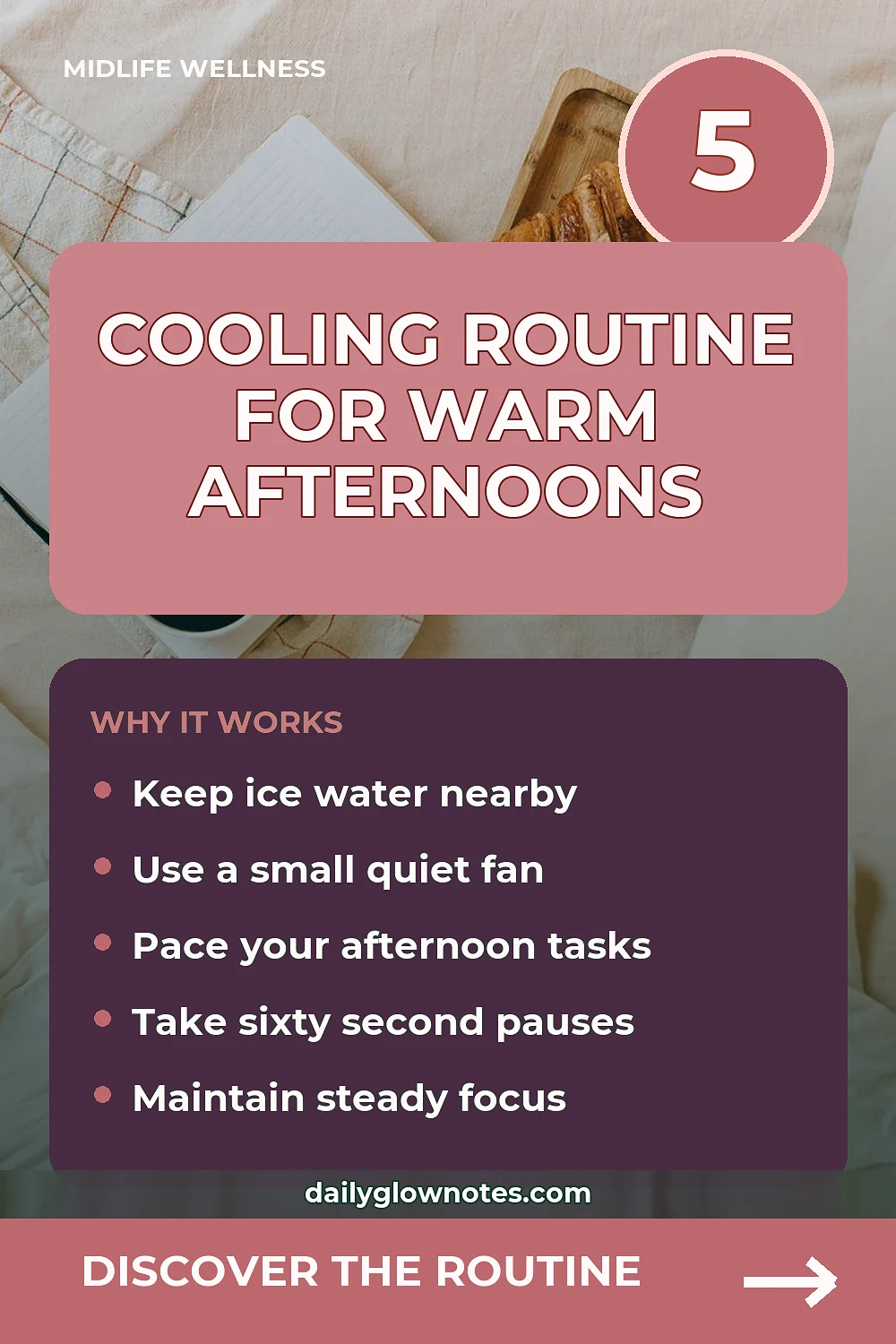
Office environments can easily exacerbate midlife temperature sensitivities and sluggishness. Warm office air or stagnant desk routines can intensify afternoon fatigue, making you feel drowsy and irritable. Introduce small physical shifts to reset your system. Keep a glass of refreshing water nearby, perhaps infused with lemon or cucumber, to stay hydrated without caffeine spikes. Adjust your workspace seating or stand up to review documents, changing your posture to stimulate circulation. Simple adjustments like opening a window, stepping into cooler air for a moment, or using a small personal fan at your desk can offer a remarkably refreshing reset that clears away mental fog and restores your alertness naturally.