
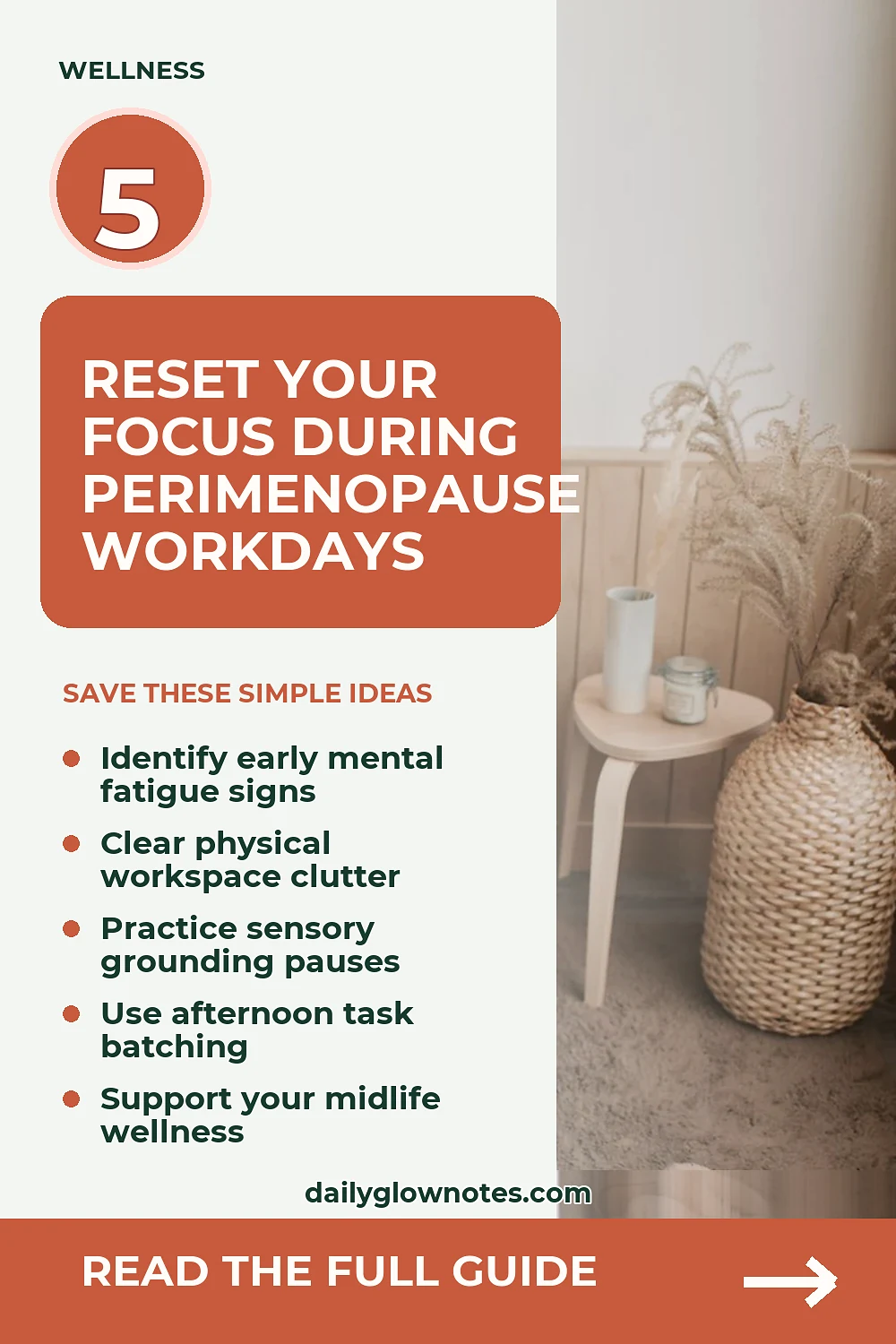
A Midlife Workday Focus Reset for Managing Perimenopause Brain Fog becomes easier to understand when the main ideas are organized into practical, realistic steps. This guide explains the core considerations and shows how to apply them thoughtfully in everyday life.
Navigating a demanding career while experiencing unexpected mental fatigue can feel like trying to type on a keyboard with mittens on. If you have ever found yourself staring at a blinking cursor, completely forgetting the brilliant idea you had just two minutes prior, you are certainly not alone. The shifting hormone levels of perimenopause often bring unexpected cognitive static right into the middle of a busy workday. Instead of fighting through the haze with sheer willpower or reaching for a third cup of afternoon coffee that might only add to your jittery stress, a structured midday perimenopause brain fog workday focus reset can completely change the trajectory of your afternoon.
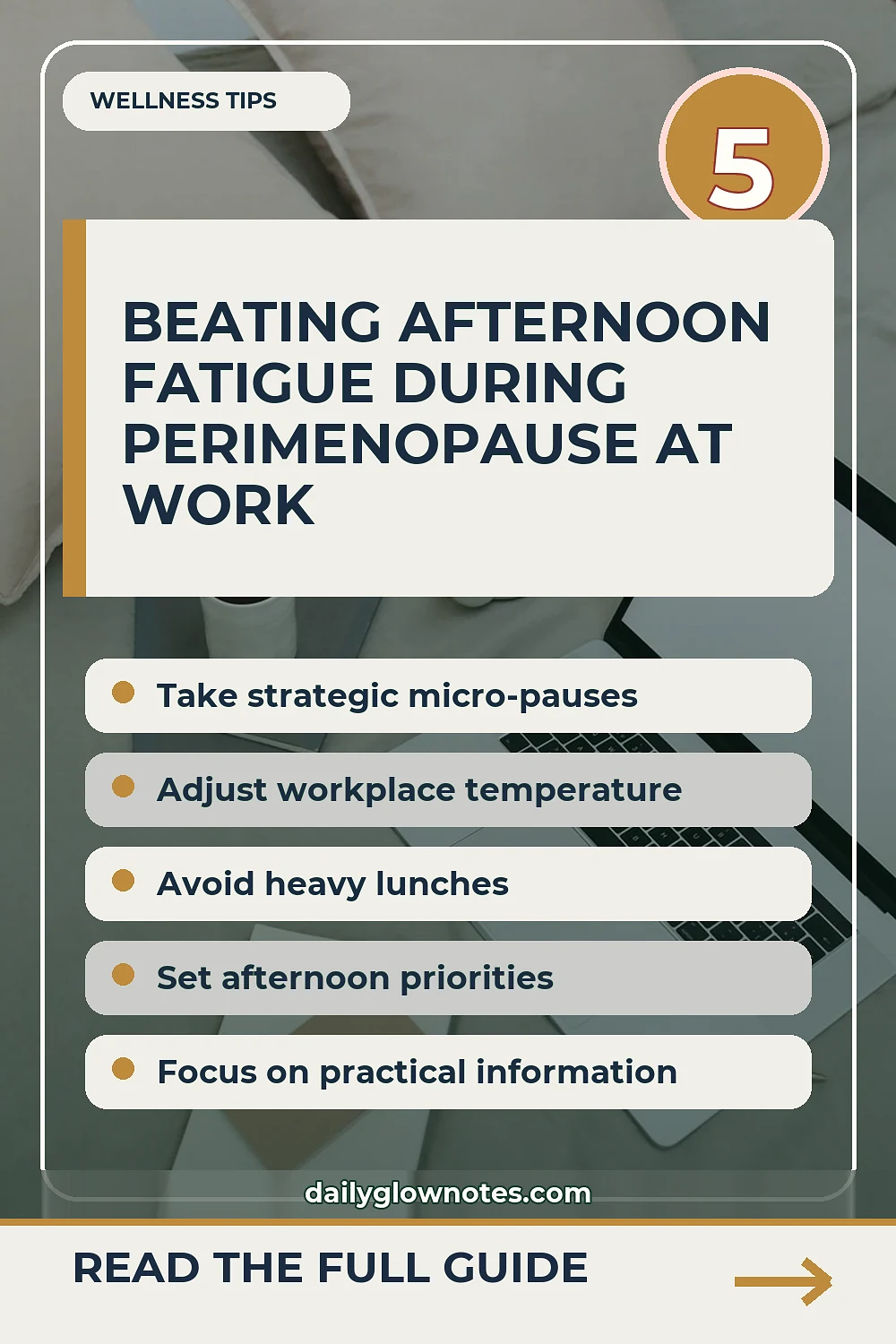
Midlife cognitive fluctuations are entirely normal, yet traditional corporate environments rarely account for the physical and mental shifts women navigate in their forties and fifties. When brain fog rolls in during a high-stakes project, frustration mounts quickly. Recognizing that your brain simply needs a strategic pause rather than a harsh reprimand is the first step toward reclaiming your afternoon productivity. By stepping away from the screen for just fifteen minutes and engaging in a low-friction sensory and mental reset, you can clear out the cognitive clutter and approach your remaining tasks with renewed ease.
Recognizing the Early Signs of Midlife Mental Fatigue
Before you can reset your focus, you need to identify the subtle cues that signal your cognitive battery is draining. Unlike standard physical exhaustion, perimenopause brain fog often feels like wading through thick water while trying to recall simple vocabulary, track meeting action items, or manage your usual task list. You might notice yourself rereading the same email three times or feeling uncharacteristically overwhelmed by a routine spreadsheet.
Ignoring these early signs often leads to burnout by mid-afternoon. When you feel the mental friction building, treat it as a gentle biological reminder to shift gears rather than a personal failure. Acknowledging that your internal rhythm requires a little extra care during this season of life helps reduce the anxiety that frequently worsens mental fatigue.
Step One: Clear the Desk and the Mental Canvas
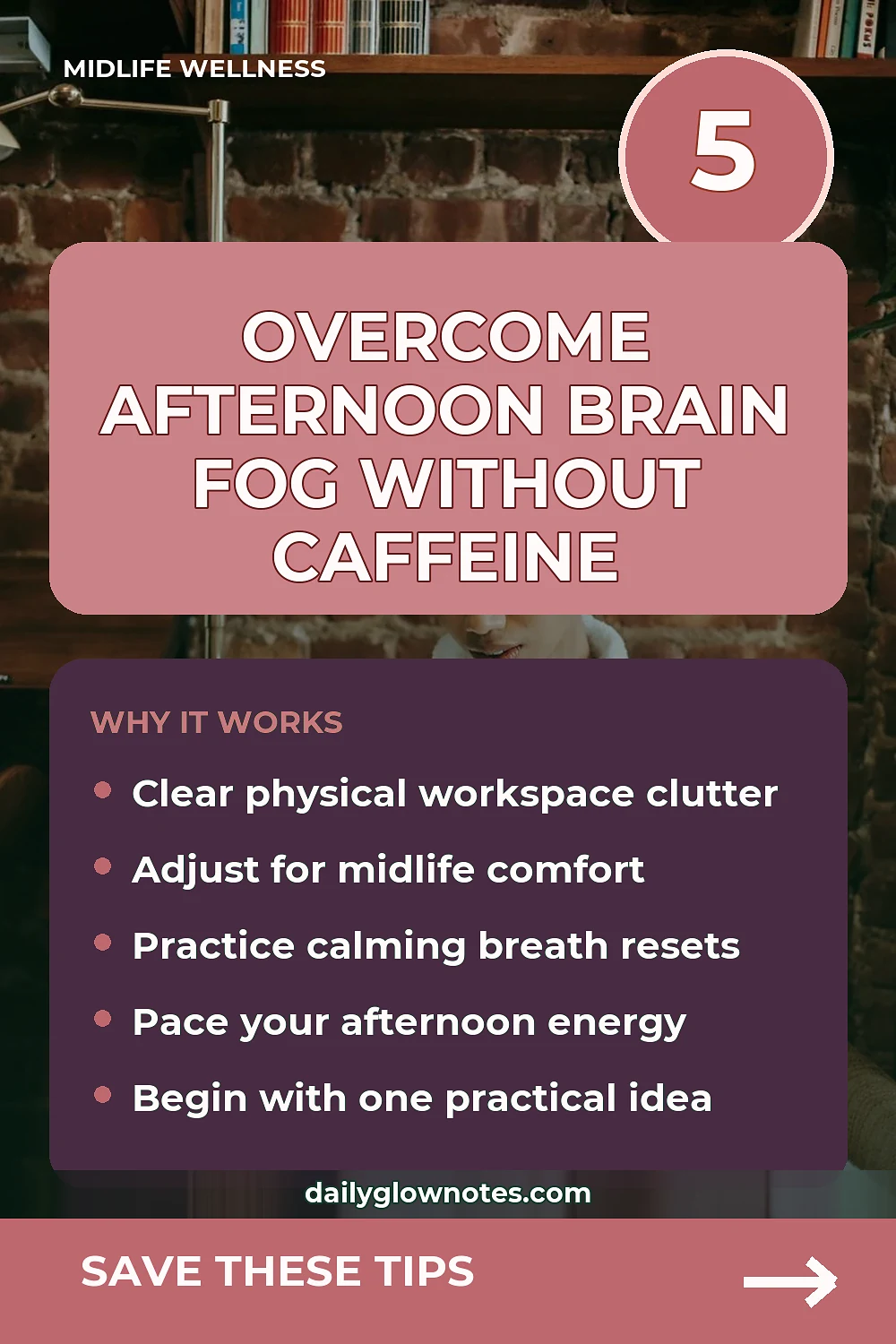
Physical clutter is a quiet thief of mental bandwidth. When your workspace is piled high with sticky notes, half-drunk mugs, and loose paperwork, your brain expends unnecessary energy just processing the visual noise. Take two minutes to clear your immediate desk area, leaving only your notebook and a fresh cup of herbal tea within reach.
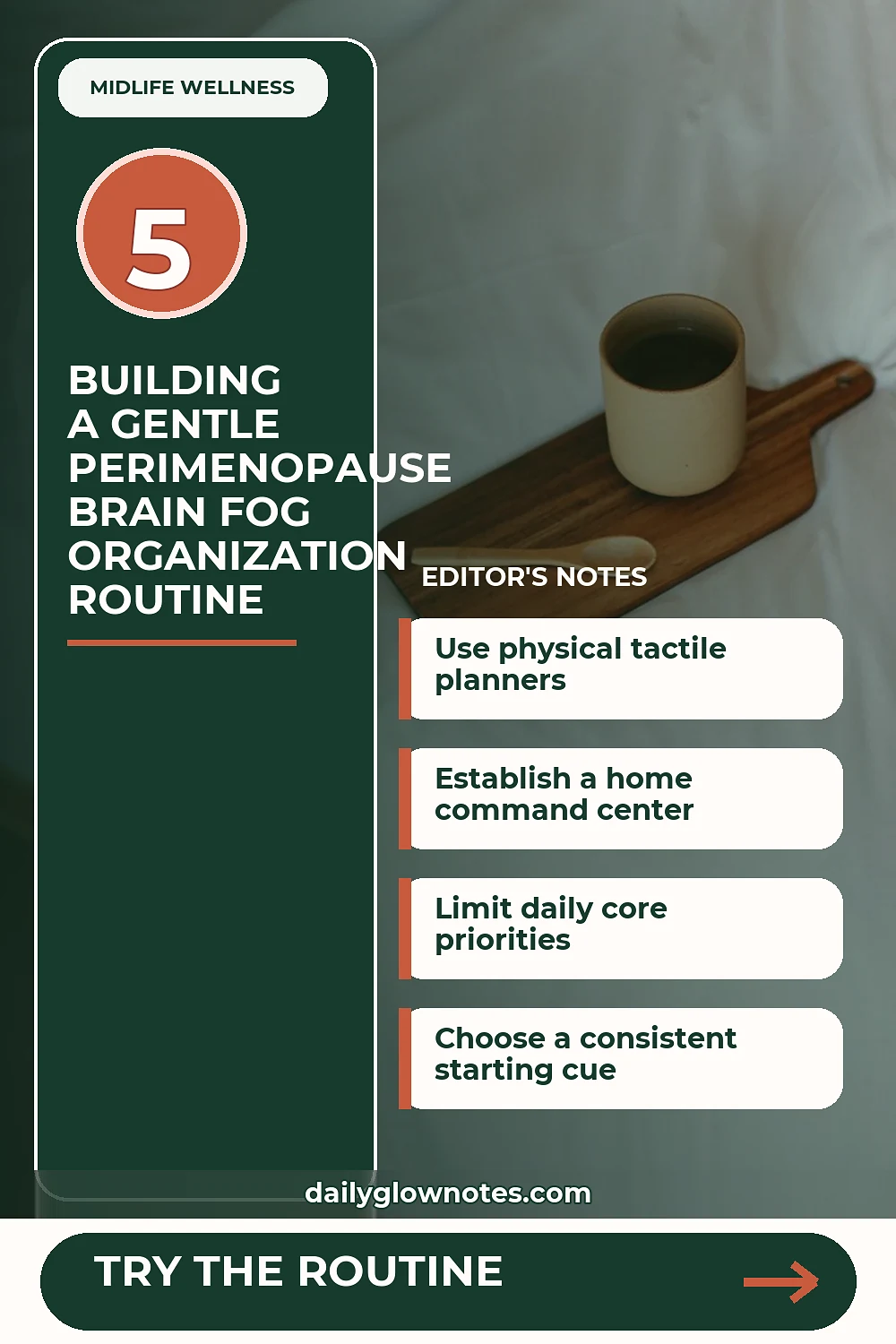
Use your paper planner to do a quick brain dump. Write down every floating task, looming deadline, and random errand swirling in your head. Getting these thoughts out of your working memory and onto paper instantly frees up cognitive space. Once your tasks are neatly captured on the page, select just one realistic priority for the remainder of your workday. This simple act of organization transforms a chaotic cloud of responsibilities into a clear, manageable path forward.
Step Two: Engage in a Sensory Grounding Pause
When mental fog sets in, your nervous system is often caught in a subtle state of overstimulation. A sensory grounding pause helps pull your focus away from the glowing screen and back into your physical body. Stand up from your chair, roll your shoulders back, and take a few slow, deliberate breaths.
Temperature regulation is another crucial component of midlife comfort during the workday. If a sudden wave of internal warmth or mild tension hits you while working remotely or traveling to an office, taking proactive steps to stay cool makes all the difference. For those balancing busy schedules on the go, similar principles apply when managing external elements, much like staying comfortable while Road Tripping in Perimenopause: Managing Car Cabin Heat and Comfort on warmer days. Inside your workspace, sip cool water, adjust your environment, and let your nervous system settle.