
Midlife brings a wonderful depth of experience, but it can also introduce unexpected moments of forgetfulness and mental sluggishness. When hormonal fluctuations make holding onto daily details feel like carrying water in a sieve, building a perimenopause brain fog organization routine becomes an act of gentle self-care. Instead of relying solely on an exhausted memory, externalizing your tasks onto paper creates a reliable anchor for your day. A tactile approach—using a physical planner, color-coded sticky notes, and soft earth-tone highlighters—engages your senses and helps ground your attention. When your brain is experiencing the transient fog of hormonal transition, visual and physical cues act as a bridge between intention and action, reducing frustration and creating a soothing environment for your daily tasks.
Creating External Memory Systems to Ease Mental Overload
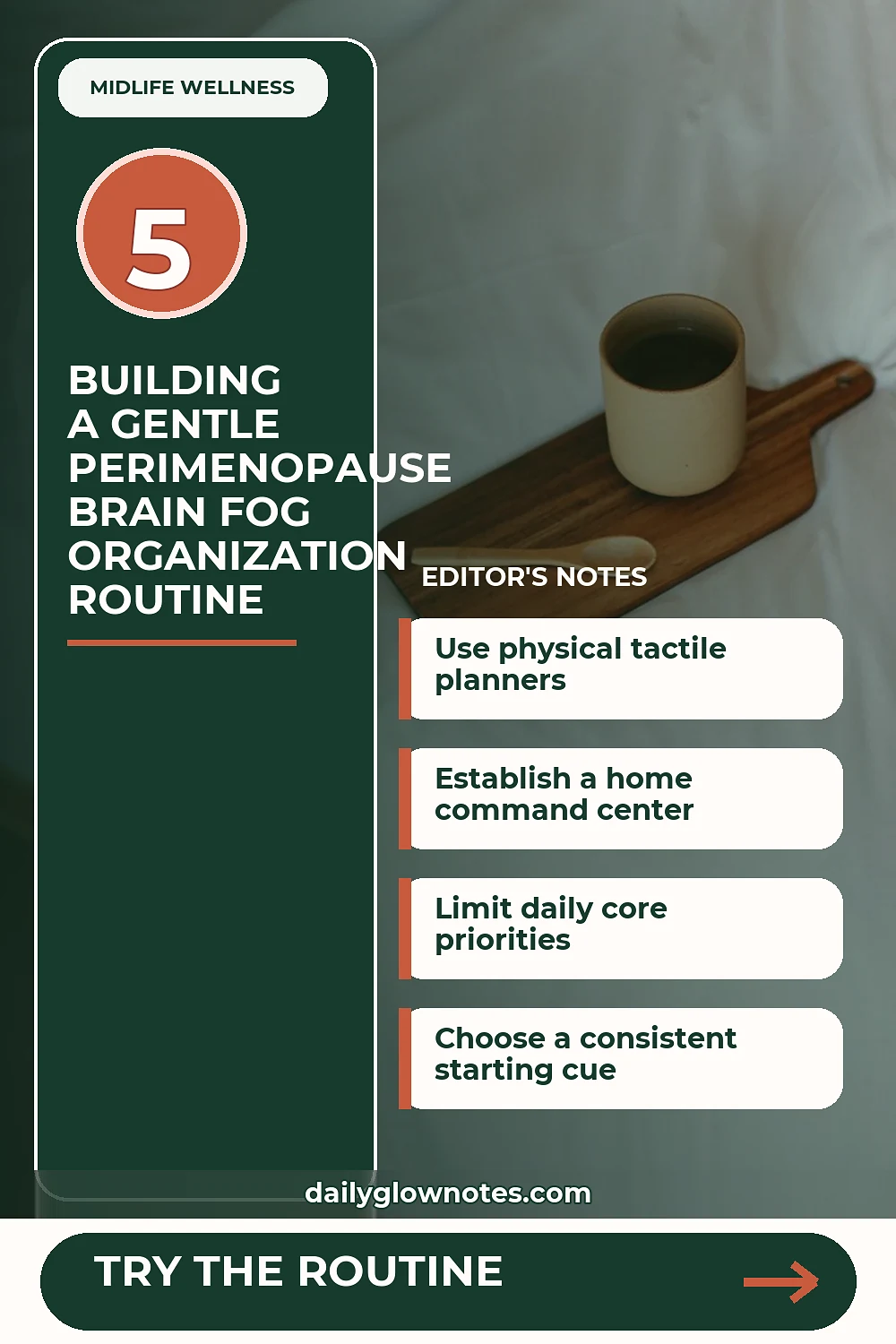
Starting this practice does not require an elaborate system or rigid scheduling. In fact, keeping things simple prevents the very overwhelm you are trying to avoid. When you offload your to-do list onto a dedicated notebook, you free up cognitive space for creativity, rest, and deeper focus. Consider establishing a central command center in your home—a designated spot where your keys, planner, and daily notes always live. By removing the micro-decisions of where you left essential items, you conserve precious mental energy for things that truly matter. This external brain acts as a safety net, allowing you to release the constant anxiety of potentially forgetting an important appointment or task.
Designing a Low-Pressure Daily Anchoring Habit
Mornings during perimenopause can feel rushed or foggy before the coffee even kicks in. Establishing a predictable anchoring habit sets a calm tone for the hours ahead. Spend five quiet minutes each morning reviewing your daily planner while sipping a warm beverage. Write down no more than three primary priorities for the day. Limiting your core tasks reduces decision fatigue and protects your energy. If other tasks pop into your mind, capture them on a separate parking-lot list rather than letting them clutter your immediate focus. This compartmentalization helps your nervous system recognize that everything is accounted for, lowering cortisol levels and promoting a sense of grounded capability.
If you enjoy tracking your personal rhythms alongside your daily tasks, you might appreciate exploring A Low-Pressure Guide to Tracking Your Wellbeing in Midlife to find gentle ways to tune into your body's changing needs without adding pressure to your schedule.