
Keeping a well-stocked dry shelf makes everyday culinary habits and beauty-from-within routines far more effortless. Plain gelatin powder is an exceptionally versatile kitchen staple, often utilized in morning beverages, homemade fruit gummies, broth enhancements, and nutrient-dense desserts. However, because powdered gelatin is highly hygroscopic—meaning it actively absorbs humidity from the air—poor storage conditions can quickly cause clumping, stale odors, or compromised bloom strength. Learning how to store plain gelatin in the pantry properly protects its shelf life and ensures your unflavored gelatin dissolves cleanly every single time you cook.
Understanding How Moisture and Temperature Impact Unflavored Gelatin
Unflavored gelatin consists of dehydrated protein derived from collagen. In its dry state, it remains shelf-stable for long periods, provided it stays completely shielded from humidity and ambient heat. Moisture is the primary catalyst for premature degradation. When air humidity penetrates dry gelatin packaging, the fine granules begin to swell and stick together, creating hard clusters that refuse to hydrate evenly later on.
Temperature fluctuations also play a subtle role in pantry stability. Storing gelatin near heat-generating appliances, such as directly above an oven, dishwasher, or coffee maker, creates micro-climates of warm air within the cupboard. When the warm air cools down at night, internal condensation forms on container walls. Positioning your storage bins on a cool, internal pantry shelf away from steam sources helps maintain the dry, free-flowing consistency needed for consistent blooms.
Decanting Envelopes versus Bulk Powder into Airtight Pantry Containers
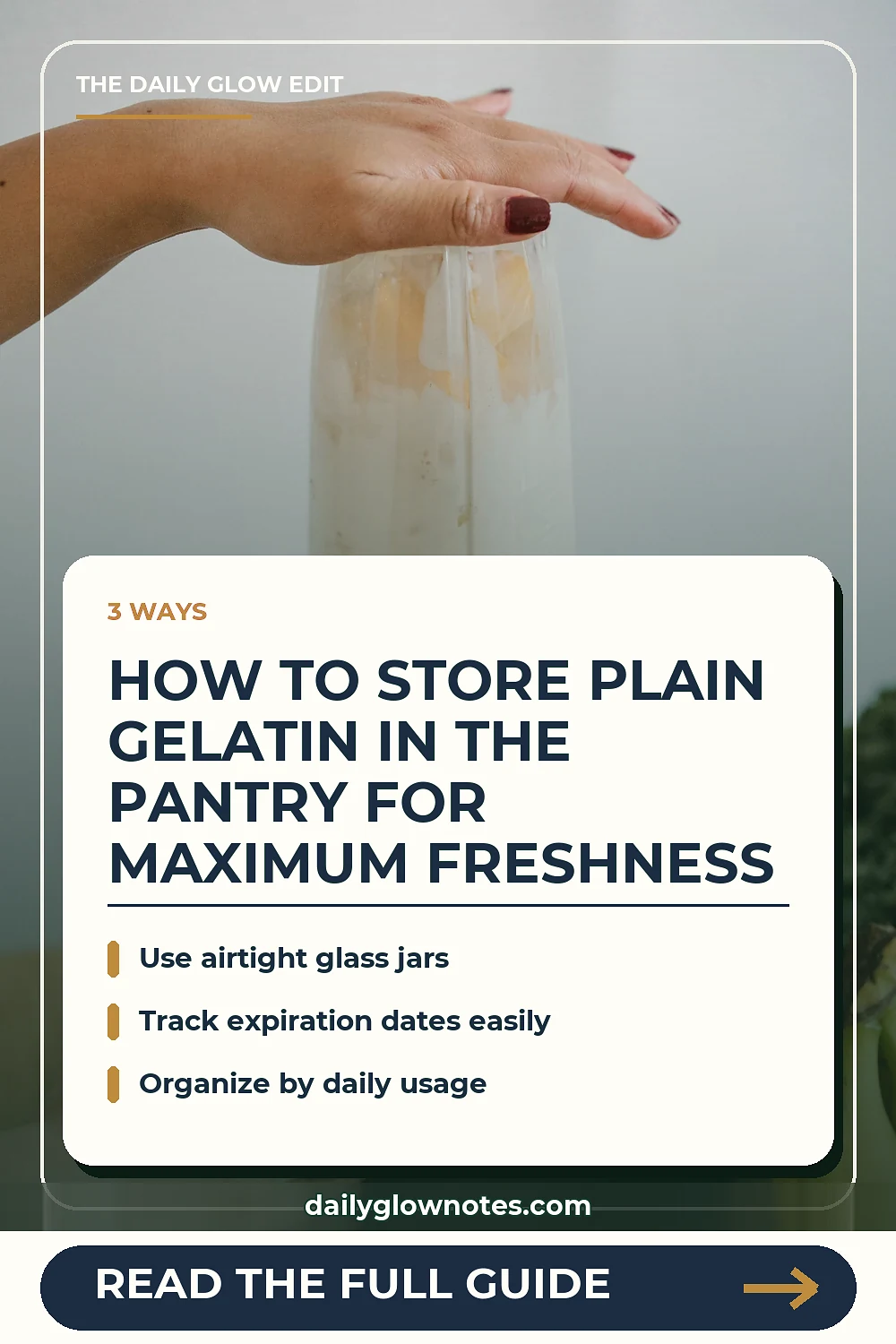
Plain gelatin is typically sold in individual paper envelopes or bulk tubs. While cardboard boxes and paper sachets are convenient for purchasing, paper is permeable to ambient humidity. Transferring your stock into hard-sided, airtight containers is one of the most effective upgrades you can make to your kitchen organization.
- Glass Jars with Gasket Lids: Glass provides an completely non-porous barrier against moisture, pantry pests, and ambient odors. A wide-mouth glass jar equipped with a silicone sealing gasket offers clear visibility and easy access for measuring spoons.
- BPA-Free Acrylic Latch Containers: High-density acrylic containers with airtight locking clamps are lightweight and durable. They stack neatly, making them ideal for vertical shelf arrangements.
- Keeping Envelope Packets Neat: If you prefer individual single-serve envelopes, refrain from leaving loose packets floating around cupboard corners. Store paper packets upright inside a small, dedicated acrylic bin to protect them from accidental tears or moisture spills.
Shelf Organization and Container Sequencing for Daily Kitchen Staples
Organizing a wellness-focused pantry works best when containers are arranged according to daily usage frequency. Grouping unflavored gelatin alongside complementary recipe ingredients—such as vanilla bean powder, raw cacao, cinnamon, and collagen-supportive pantry items—streamlines your morning workflow.
Place your most frequently opened jars on the middle shelf at eye level. If you prepare warm gelatin-bloomed drinks or nutrient-rich recipes every day, position your primary decanted jar right in front. Keep backstock bulk containers stored on higher shelves until refills are required. When adding new batches, practice the first-in, first-out rule by placing older stock near the front so nothing sits forgotten at the back of the cabinet.