
Preparing a batch of homemade broth is one of the most rewarding kitchen habits for supporting everyday vitality and skin-supportive nutrition. However, a large pot of stock often turns into a storage puzzle. Without an intentional approach, fresh broth can sit in the refrigerator past its prime or end up as a solid block in the freezer that takes hours to defrost. Establishing a clear broth portion planning for weekly meals system allows you to effortlessly add nutrient-dense, warm hydration to your daily schedule without unnecessary waste.
A thoughtful portioning strategy transforms a rustic kitchen basic into a functional staple. For adult women focusing on healthy aging and beauty-from-within habits, integrating pre-measured broth into weekday cooking offers an easy way to elevate everyday meals. Whether you are simmering grains or creating a quick midday sip, organizing your supply in advance ensures that wholesome support is always within reach.
Choosing the Right Container Sizes for Daily Versatility
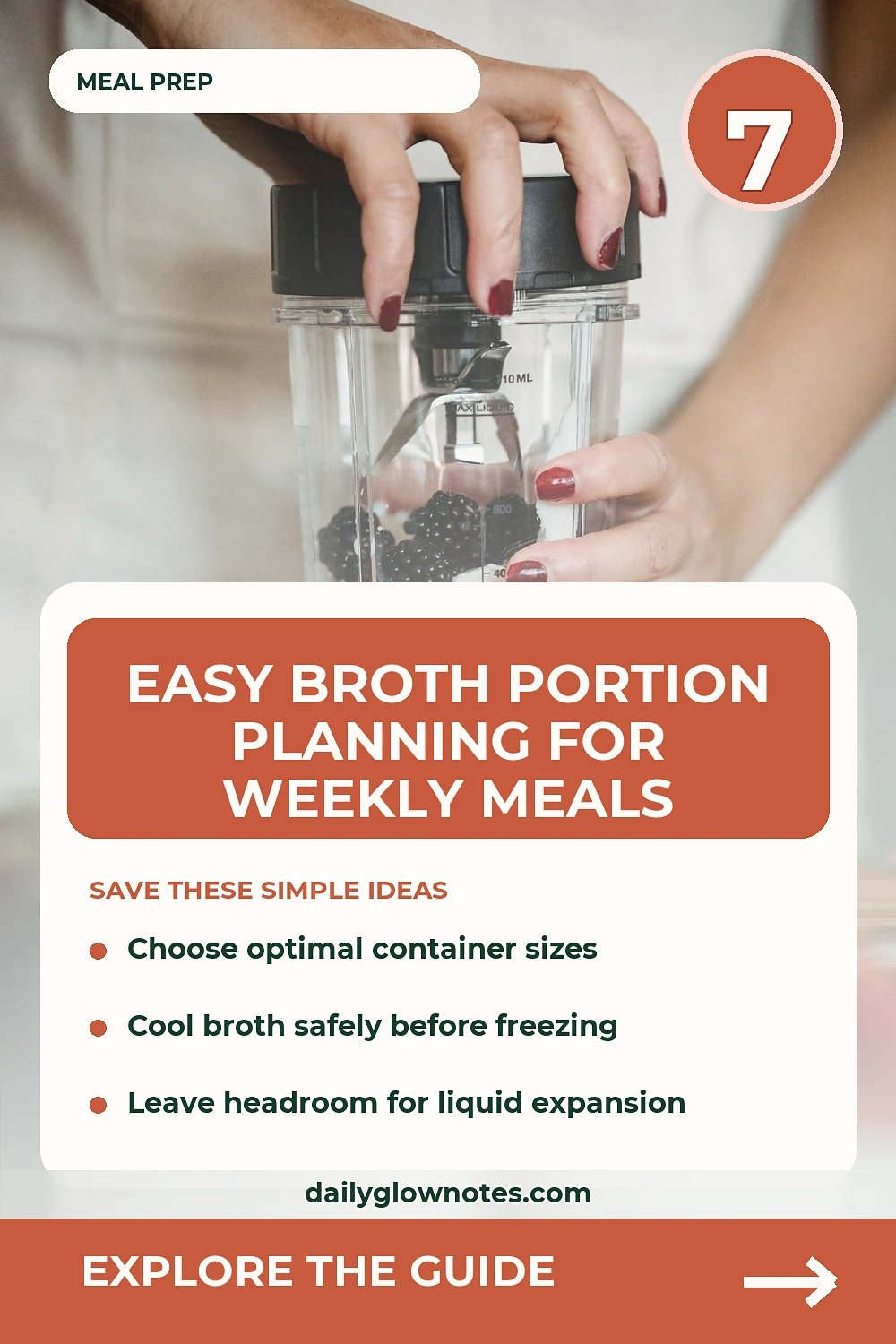
The foundation of an efficient broth portion planning system lies in selecting storage vessels that match your realistic cooking patterns. Rather than freezing entire batches in single oversized tubs, dividing your liquid gold into distinct volume categories creates ultimate flexibility during busy weeknights.
- Single-Serve Cups (8 to 12 ounces): Ideal for a warm mug sip, a quick soup base for one, or rehydrating leftovers.
- Medium Containers (2 cups): Perfect for cooking grains like quinoa or brown rice, pan-deglazing, or light sauces.
- Large Pouches or Jars (4 cups): Best suited for family-sized stews, slow-cooker recipes, or weekend meal prep bases.
Silicone molds, wide-mouth glass jars, and food-grade freezer bags all serve specific roles. Molds allow you to freeze precise two-ounce or four-ounce blocks that can be popped directly into a hot skillet, while flat-frozen bags save precious freezer shelf space.
Cooling and Pre-Portioning Safely for Freshness
Before any broth enters a container, proper cooling is essential for preserving flavor and maintaining food safety. Pouring hot liquid directly into sealed containers or freezing it immediately can trap heat and degrade the quality of your batch.
Allow your strained broth to cool in a wide, shallow pot or an ice bath until it reaches room temperature. Skim off any excess surface fat if desired, though leaving a thin layer can help protect the broth from freezer burn. Pour the cooled liquid into your chosen containers, leaving at least half an inch of headspace at the top. Liquids expand as they freeze, and omitting this gap can lead to cracked glass or popped lids.