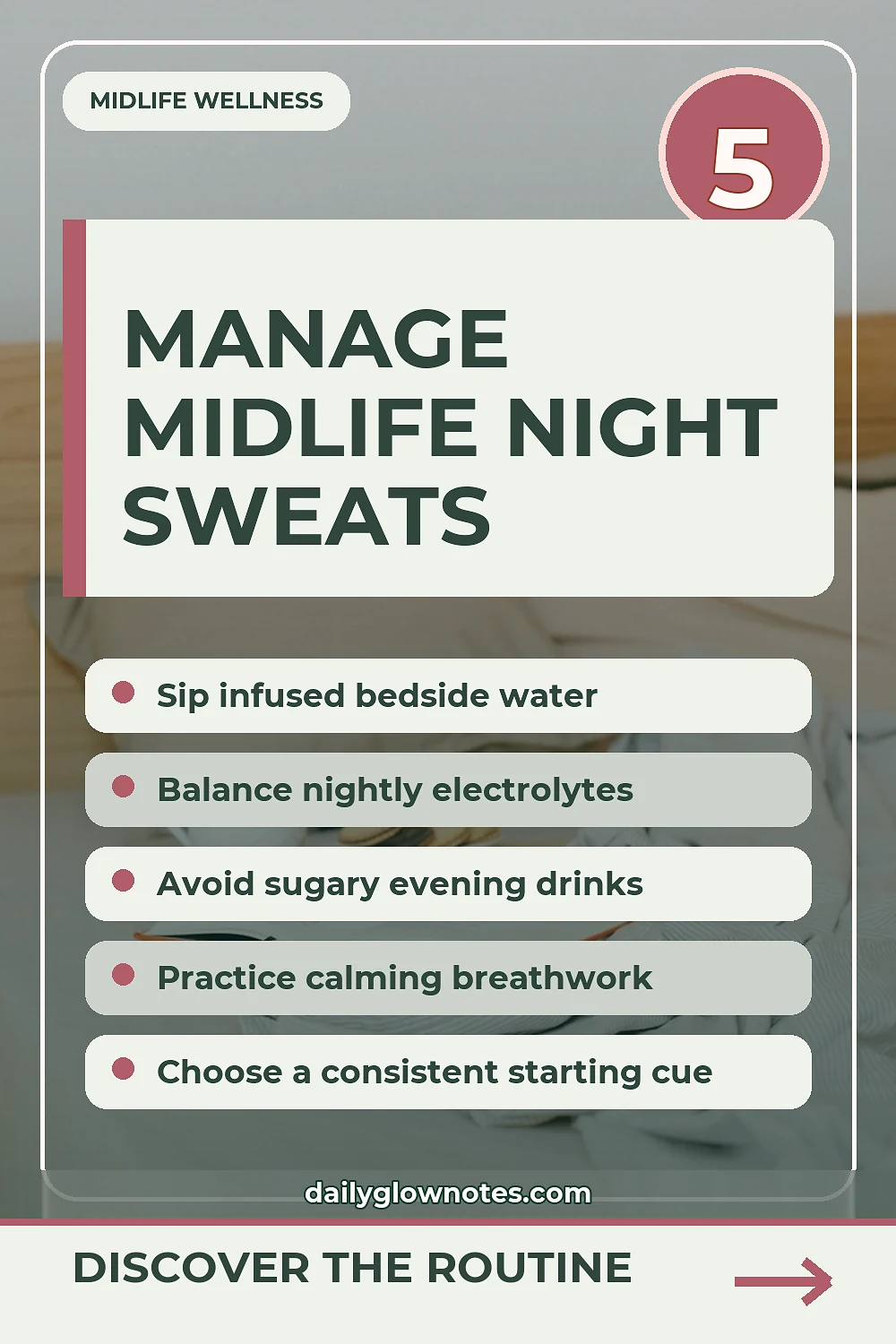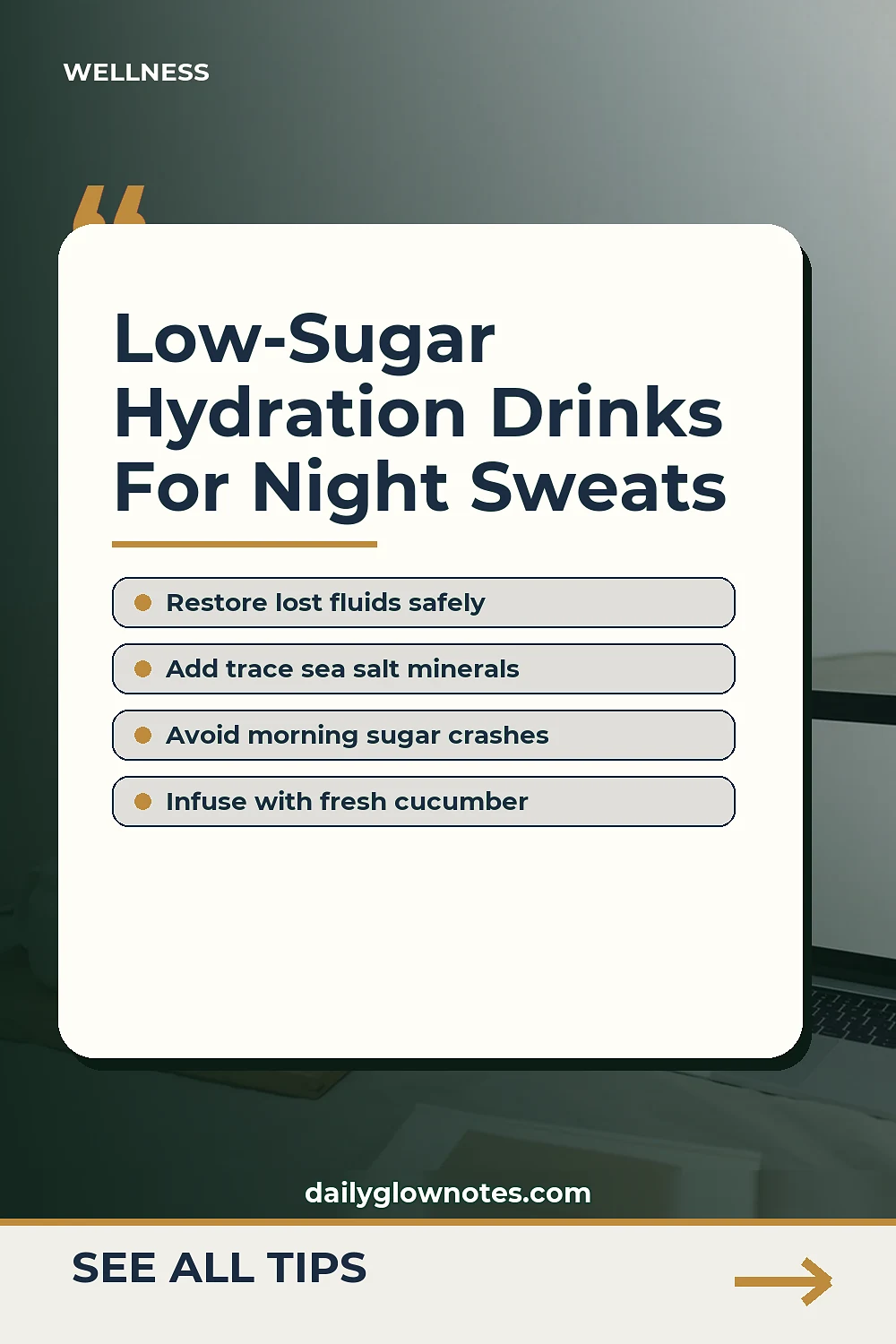

Evening routines are supposed to prepare our bodies for restorative rest. Yet, when dealing with midlife temperature fluctuations, small habits can unintentionally disrupt our comfort. One common misstep involves reaching for an intensely chilled glass of ice water just as the lights go out. While staying hydrated is essential, the temperature of your evening beverage and the timing of your intake play a surprising role in how comfortably you sleep. When managing night sweats during perimenopause or menopause, evaluating your hydration habits can offer a simple yet effective way to support more peaceful nights. Understanding how your body reacts to different fluid temperatures and consumption schedules can empower you to make small, impactful adjustments to your nightly wind-down process.
Understanding Night Sweat Hydration Mistakes Before Bed
Many individuals unknowingly sabotage their sleep quality through simple beverage choices made right before turning off the lights. During midlife, the body's internal thermostat becomes exceptionally sensitive. Hormonal shifts can cause sudden surges of heat, and introducing extreme temperatures or heavy volumes of liquid can exacerbate these physical sensations. By identifying and correcting these subtle hydration mistakes, you can create a much more stable internal environment that is conducive to deep, uninterrupted sleep.
How Temperature Shocks Affect Your Core Balance
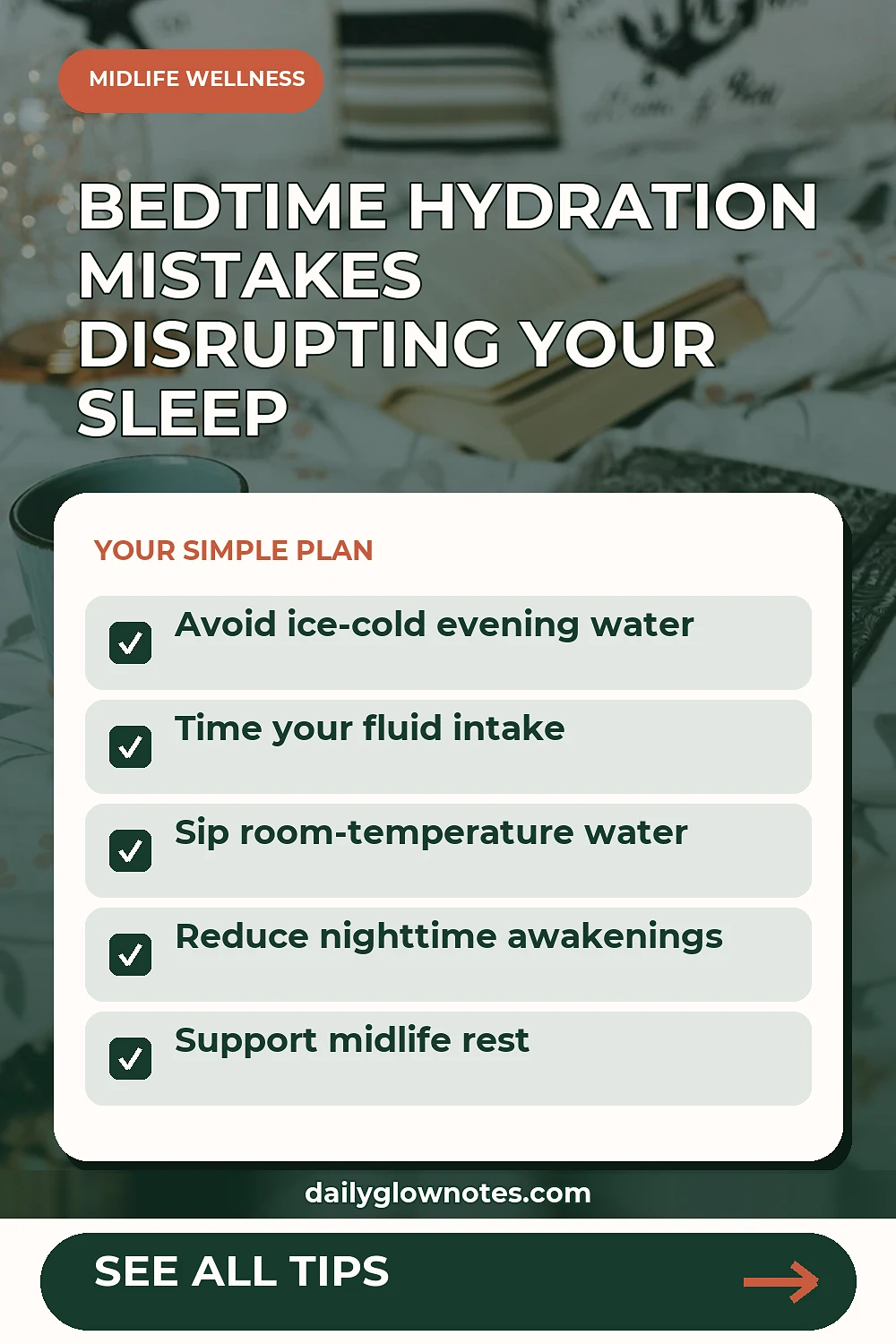
Gulping down freezing cold liquids right before sleep sends a sudden temperature shift through your digestive tract. Your body naturally works to maintain a stable internal core temperature. When you introduce ice-cold water, your system may respond by trying to balance that sudden chill, potentially triggering internal responses that make you feel overly warm shortly afterward. Instead of cooling you down, that icy beverage can sometimes prompt an unwelcome wave of internal heat as your body processes the extreme temperature difference. Giving your digestive system a break from extreme cold right before bed allows your internal organs to settle more naturally, reducing the likelihood of sudden temperature spikes that can jolt you awake.
The Timing Dilemma of Late-Night Hydration
Beyond the temperature of the water, the exact timing of your evening fluid intake matters significantly. Drinking large amounts of any liquid right before bed often leads to nighttime awakenings, which disrupt your natural sleep cycles. When your sleep is already sensitive to temperature shifts, waking up frequently can worsen overall fatigue. Shifting the bulk of your hydration earlier into the evening allows your body to process fluids before you lie down, reducing both nighttime bathroom trips and unnecessary internal disturbances. Establishing a clear cutoff window for heavy drinking—such as finishing your last large glass an hour or two before sleep—can make a profound difference in how continuously you rest.
For those looking at broader wellness habits during this stage of life, incorporating a low-pressure approach to daily tracking can be remarkably grounding. To explore how to monitor your changing needs without stress, consider reading our A Low-Pressure Guide to Tracking Your Wellbeing in Midlife for gentle ways to stay in tune with your body.