
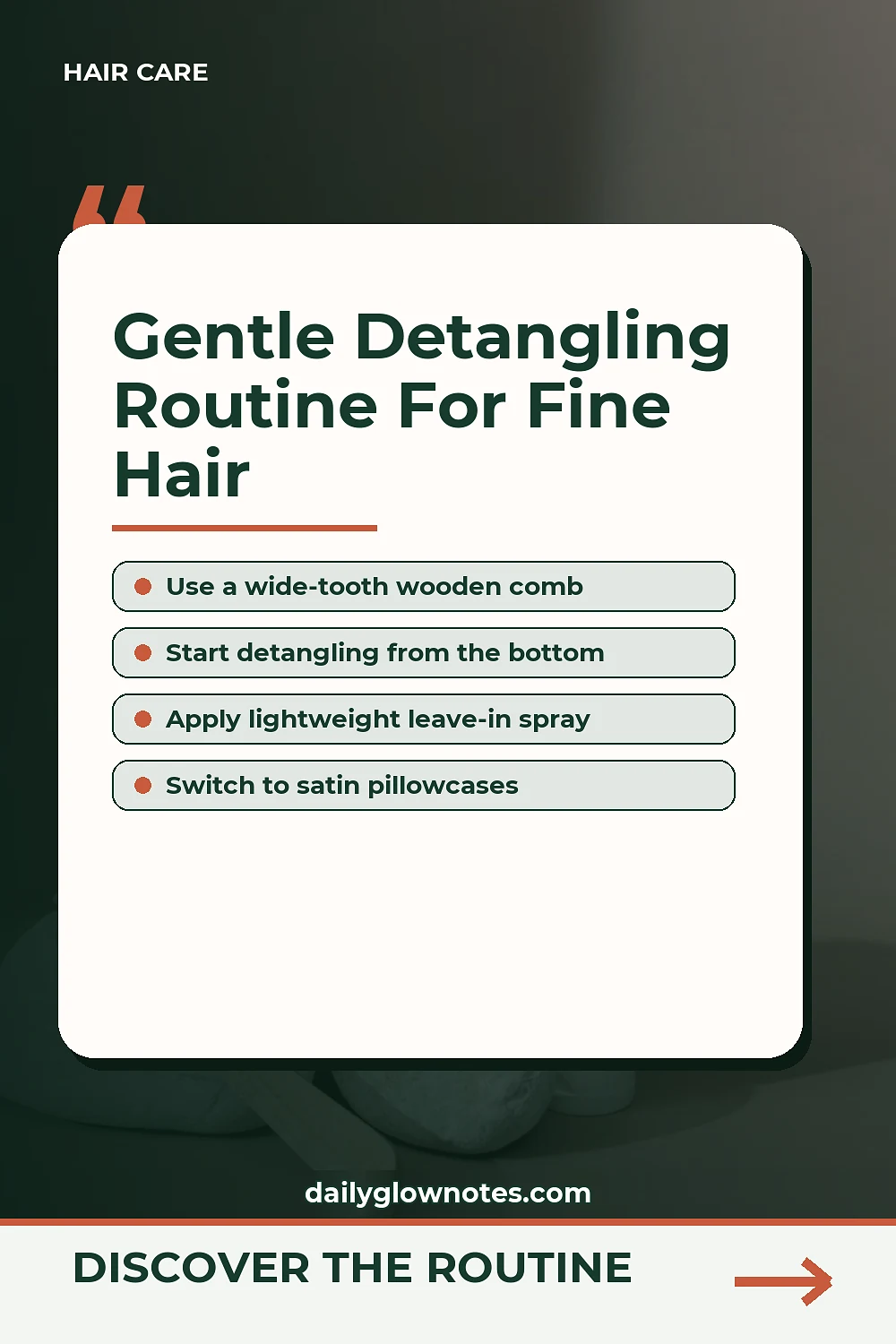
When you have fine, thinning hair, watching strands collect in your brush after a wash day can feel disheartening. Wet hair is in its most fragile state, and traditional brushing habits often pull, snap, and stress delicate strands right at the root. Mastering a gentle detangling routine for fine thinning hair transforms wash day from a stressful chore into a soothing act of self-care that protects your length and minimizes unnecessary shedding.
Understanding the Vulnerability of Fine Strands
Fine and thinning hair lacks the robust structural density of thicker hair types. Each individual strand has a smaller diameter, making it far more susceptible to mechanical friction and tension. When water molecules penetrate the hair cuticle, the inner cortex swells, temporarily weakening the bonds holding the structure together. Pulling a standard bristle brush through damp, knotty hair acts like a tiny saw, catching on tangles and snapping delicate fibers.
Protecting your hair starts long before you pick up a comb. For instance, adopting a mindful wash-day temperature and handling audit for fragile hair helps ensure your scalp and strands experience minimal thermal and physical shock from the very start of your routine. Hot water strips the scalp of its natural protective lipids, leaving already vulnerable roots even more exposed to environmental stressors and mechanical damage.
Furthermore, recognizing the natural growth phases of fine hair helps set realistic expectations. Hair goes through active growth, resting, and shedding cycles. When strands are fine, normal daily shedding can sometimes appear more dramatic because the individual hairs lack volume, making every single lost strand feel like a major setback when viewed collectively in a drain or brush.
The Anatomy of a Safe Detangling Tool
Choosing the right implements makes all the difference when working with fragile hair. Ditch narrow-tooth plastic combs and stiff paddle brushes that create sharp friction points. Instead, invest in a wide-tooth wooden comb or a flexible, soft-bristle wet detangling brush designed specifically to glide through slip rather than yank through resistance.
Wooden combs offer a distinct advantage because wood is naturally anti-static. Unlike plastic, which charges fine strands with electricity and causes them to fly away and wrap around each other, a smooth wooden comb allows hair to pass effortlessly between polished tines. Keeping your tool clean and free of product buildup ensures it never catches or snags vulnerable hairs over time.
Regular maintenance of your detangling tools is equally important. Wash your combs and brushes weekly with mild soap and warm water to remove accumulated oils, dead skin cells, and residual styling products. A clean tool glides smoothly, whereas a dirty tool creates microscopic drag that can tear the delicate outer layer of fine hair shafts.