
As the crisp air of autumn settles in, many of us notice a sudden and unsettling sight in the shower drain or caught in our hairbrushes. Finding more strands than usual scattered around can spark immediate worry. A proper hair shedding routine for women seasonal change damage check becomes essential during this transition, helping you separate normal seasonal shifts from actual breakage. While watching extra hairs fall out can feel alarming, understanding why this happens allows you to approach your daily hair care with calm confidence and practical preparedness.
Understanding the Autumn Transition and Your Scalp
Hair shedding follows natural biological rhythms that often respond to environmental shifts. During the warmer months, daylight and temperature patterns encourage more strands to stay in their growth phase. When autumn arrives, those hairs frequently transition into the resting and shedding phases all at once. This synchronization creates a noticeable spike in everyday hair fall that can catch anyone off guard.
Distinguishing between natural shedding from the root and physical breakage along the hair shaft is crucial for proper assessment. Root shedding typically features a small white bulb at the end, whereas broken strands are shorter and lack this bulb entirely. Paying close attention to this difference helps you determine whether your strands are simply completing their natural cycle or suffering from environmental stress and physical friction.
Upgrading Your Shower and Washing Habits
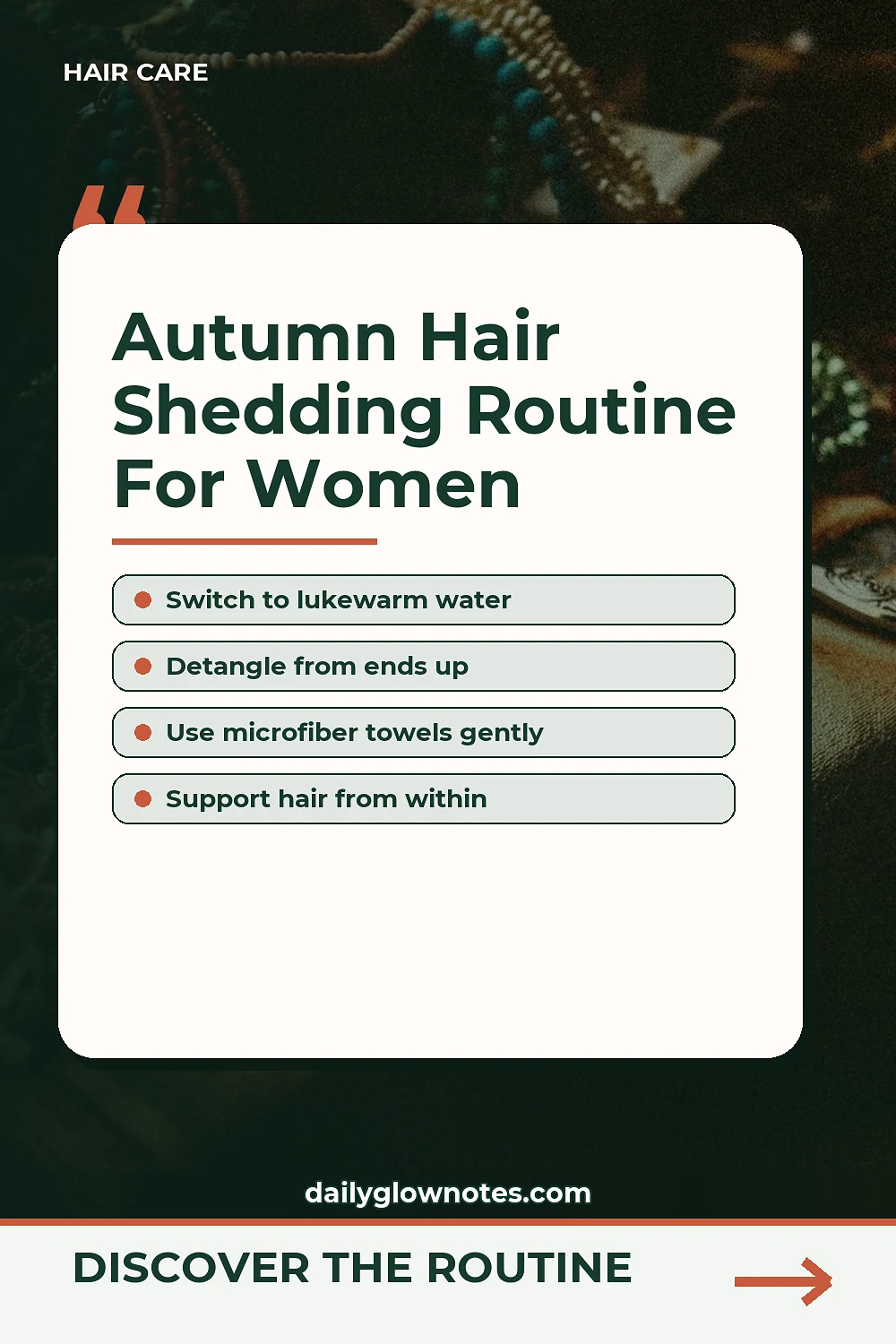
Hot water feels exceptionally comforting as the weather cools down, but high temperatures can strip natural oils from both your scalp and hair fibers. Scalp wellness relies heavily on maintaining a balanced moisture barrier. Switching to lukewarm water during your wash routine helps protect delicate cuticles from unnecessary thermal stress while keeping your scalp comfortable.
Shampoos should be massaged gently into the scalp using the pads of your fingers rather than harsh fingernails. Vigorous scrubbing can tangle fine hair and weaken strands near the root. When applying conditioner, focus primarily on the mid-lengths and ends where hair is older and more prone to dryness. Detangling while conditioner is still in your hair provides slip, reducing the need for aggressive pulling later.