
How Constant Office Air Conditioning Dries Out Fine Hair (And How to Shield Strands) becomes easier to understand when the main ideas are organized into practical, realistic steps. This guide explains the core considerations and shows how to apply them thoughtfully in everyday life.
The Science Behind Office Air Conditioning and Fine Hair
If you sit under a constant stream of office air conditioning all day, you might notice your fine hair feels remarkably brittle by mid-afternoon. Climate-controlled indoor environments pull ambient moisture straight out of the air, creating an invisible drying effect that is particularly harsh on delicate, fine strands. Unlike coarse hair types that possess a thicker protective cuticle layer, fine hair loses internal hydration rapidly. By three o'clock, professional environments can turn soft, manageable hair into a statically charged, fragile mess prone to midday breakage.
Understanding how indoor cooling systems affect the hair fiber is the first step toward preserving your strands. Air conditioning units work by chilling air and simultaneously removing humidity. While this keeps offices comfortable for typing, it creates an arid microclimate around your desk. Fine hair has less structural protein and a smaller surface area, meaning it cannot hold onto moisture as effectively when exposed to constant, artificial airflow. Over time, this chronic lack of humidity lifts the hair cuticle, leaving the inner cortex exposed and vulnerable to friction from clothing, chair backs, and even hair ties.
Building a Lightweight Protective Barrier
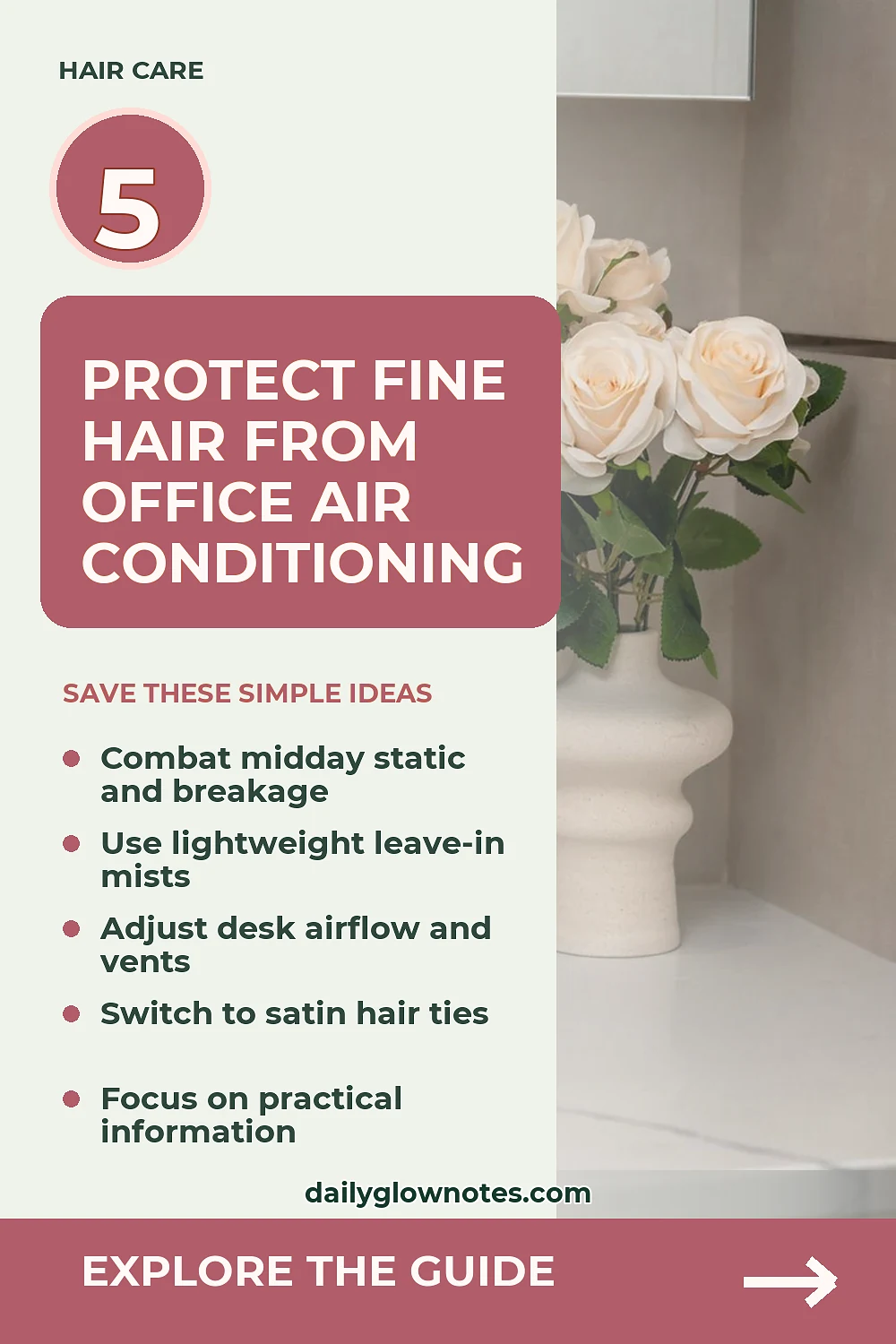
Creating a protective barrier before you leave for work helps mitigate daily environmental stress. Lightweight leave-in conditioners and hydrating mists formulated with humectants like glycerin or hyaluronic acid can draw moisture into fine hair without weighing it down. Instead of heavy oils that tend to flatten delicate textures, opt for a fine-mist spray that you can easily reapply at your desk. Applying a small amount of a smoothing serum exclusively to the mid-lengths and ends acts as an invisible shield against dry office drafts, keeping the cuticle flat and sealed throughout the morning hours.
When choosing your morning products, look for formulas specifically labeled as weightless or volumizing. Heavy silicones can build up quickly on fine hair, making it look greasy while still feeling dry underneath. A water-based leave-in conditioner penetrates the hair shaft more effectively, offering true hydration rather than just surface-level slickness. Spritzing a tiny amount onto your hands and gently pressing it over your hair can tame midday frizz without ruining your morning blowout or natural style.
Optimizing Your Workstation Environment
Your workstation setup also plays a surprisingly large role in how well your hair survives the workday. If a ceiling vent or wall unit blows directly onto the back of your neck or shoulders, that constant stream of dry air will rapidly dehydrate your hair. Whenever possible, slightly reposition your chair or desk to avoid direct airflow. Keeping a sleek glass of water nearby serves as a dual reminder: staying hydrated supports overall bodily wellness, and maintaining ambient moisture near your desk can subtly benefit your immediate microclimate.
Additionally, gathering your hair into a loose, satin-lined scrunchie rather than a tight elastic band prevents friction-based breakage when you lean back in your office chair. Desk positioning adjustments do not have to be drastic; even shifting your monitor slightly or angling your chair a few inches away from a direct vent can reduce the volume of dehydrating air hitting your strands over an eight-hour shift.
Consider also the materials you interact with at your desk. Synthetic chair fabrics can generate static electricity, which interacts poorly with air-conditioned, low-humidity air. Placing a small silk or satin pillow against the back of your office chair can minimize friction and keep your hair smooth as you move throughout the day.