

Navigating a demanding career while experiencing the shifting physical rhythms of perimenopause and midlife can feel like driving with the parking brake engaged. Traditional productivity advice often assumes a steady, unchanging baseline of stamina throughout the day. However, women over forty frequently encounter sudden fatigue dips, brain fog, and shifting thermal comfort that make rigid schedules unsustainable. Adopting a midlife workday energy pacing strategy allows you to align your professional tasks with your body's natural peaks and valleys instead of fighting against them. By acknowledging that daily physical stamina fluctuates, you can build a workflow that protects your focus, minimizes exhaustion, and leaves room for essential self-care.
Understanding Midlife Energy Fluctuations at Work
Hormonal shifts during midlife can introduce unpredictable changes in alertness and concentration. Recognizing that your body is undergoing a major physiological transition is the first step toward reclaiming your workday productivity. Instead of viewing afternoon fatigue or morning brain fog as personal failures, frame them as biological signals requiring tactical adjustments. Mapping your personal energy patterns over the course of a typical workweek provides invaluable data. By paying attention to when you feel most alert and when your focus inevitably wanes, you lay the groundwork for a truly sustainable schedule that respects your physiological reality.
The Core Principles of Energy-First Task Batching
Standard time management tells you to tackle your hardest tasks first thing in the morning. While this works for some, midlife energy patterns often demand a more nuanced approach. Your focus might peak mid-morning or dip right after lunch due to poor sleep quality or nocturnal temperature shifts. Instead of forcing deep concentration during a natural lull, try batching your administrative duties, email sorting, and light organization into your lower-energy windows. Reserve your highest-clarity hours for complex problem-solving, creative writing, or strategic planning. This intentional arrangement prevents burnout and ensures that your cognitive resources are spent where they matter most, without draining your entire reserve before the afternoon even begins.
Building Intentional Micro-Breaks into Your Schedule
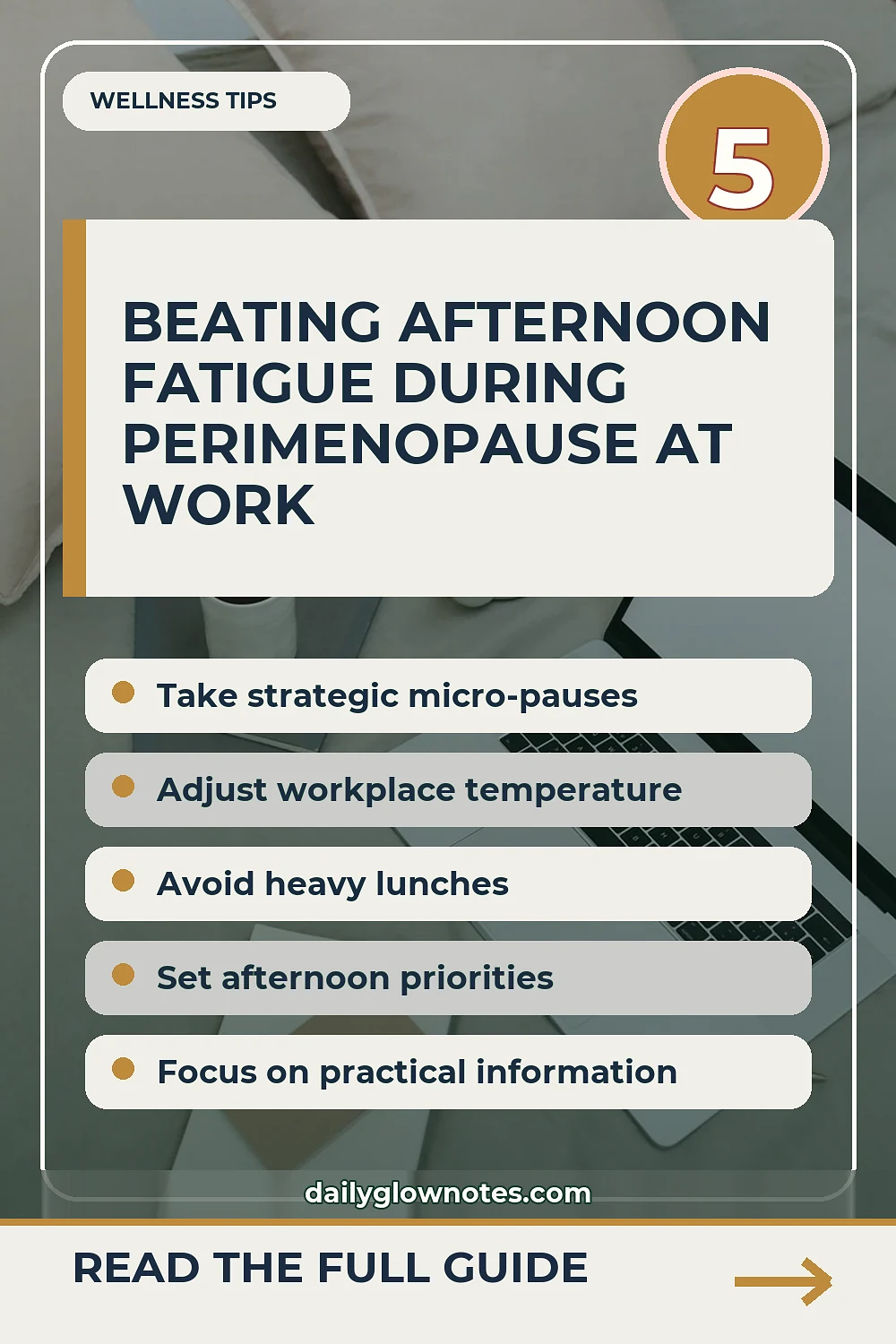
When focus begins to fracture, pushing through rarely yields good results. Instead, it often leads to frustration and physical tension. Designing a realistic workday routine involves scheduling brief, intentional pauses that act as reset buttons for your nervous system. These micro-breaks do not need to be long; even a two-minute pause to step away from the screen, stretch your shoulders, or take a few slow breaths can help clear mental clutter. If you find yourself struggling with sudden warmth or restlessness during a heavy task, stepping away for a glass of water can make a remarkable difference. For those managing more intense physical disruptions like night sweats, maintaining proper daytime hydration is crucial. You can explore creative ways to support your body's fluid balance with ideas like Hydration Recovery Drinks After Night Sweats Without Sugar Spikes to keep your internal systems steady during long working hours.