
Mini Fridge Meal Prep: How to Store Balanced Lunches in Compact Spaces becomes easier to understand when the main ideas are organized into practical, realistic steps. This guide explains the core considerations and shows how to apply them thoughtfully in everyday life, ensuring that spatial limitations never compromise your nutritional goals or your commitment to wholesome eating.
Living in a compact urban apartment or studio space often means dealing with a miniature refrigerator that feels more like a puzzle than a kitchen appliance. When your shelf space is limited, keeping up with balanced meal prep for apartment dwellers with mini fridges can feel intimidating. Yet, having limited square footage does not mean sacrificing fresh, nourishing food during your busy workweek. Maximizing a compact fridge requires a smart approach to containers, stacking, and ingredient choices so you can enjoy wholesome, balanced lunches without the clutter. Working with a small kitchen setup invites creativity, turning efficient food storage into a simple, satisfying daily habit that supports your active lifestyle, everyday walking routines, and overall well-being. By taking the time to audit your available space and removing items you do not truly need, you can create a clean foundation for successful weekly food preparation.
Choosing the Right Containers for Compact Stacking
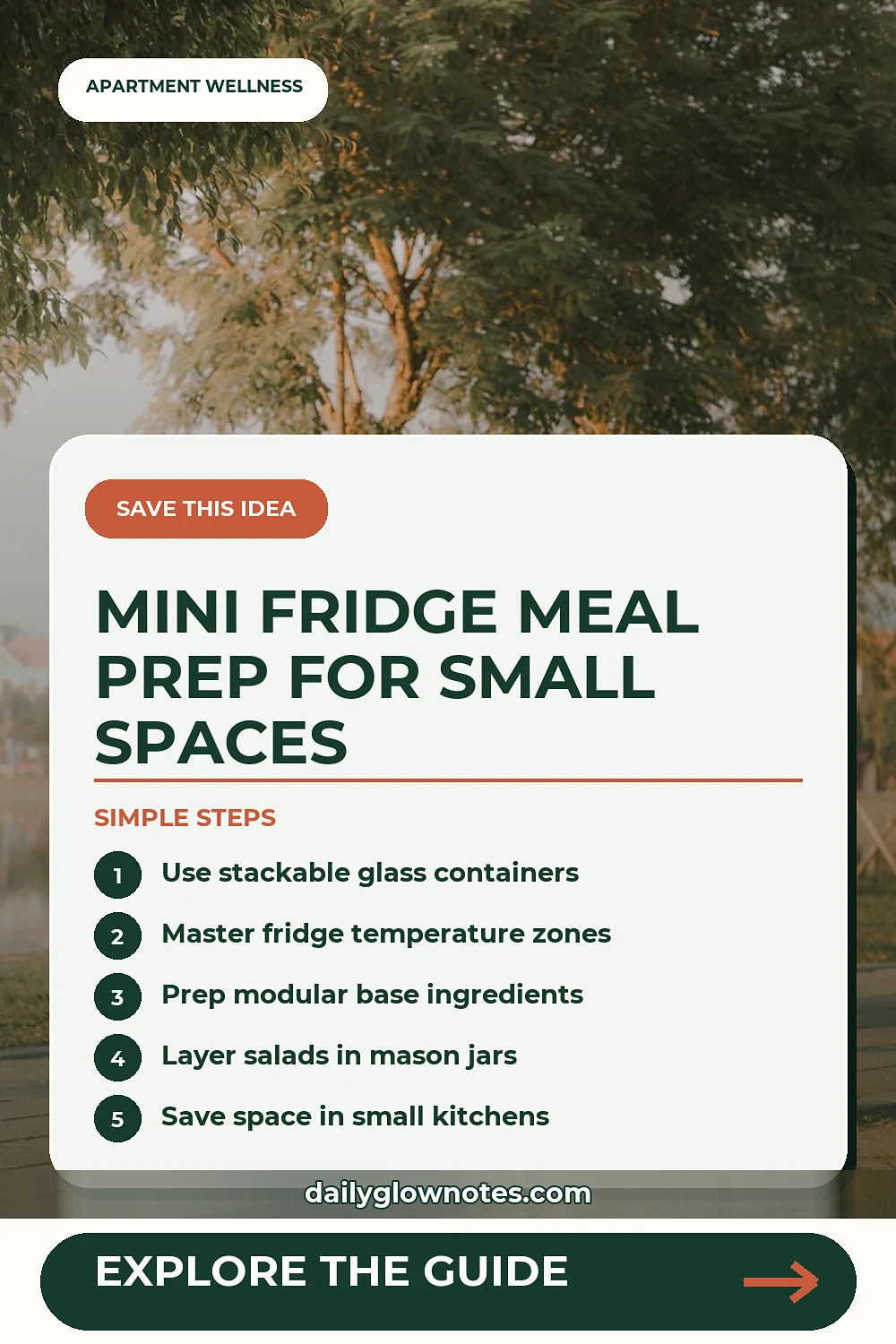
Standard round meal prep bowls are notorious space-wasters in a mini refrigerator. To make the most of every square inch, rectangular or square glass containers with flat, stackable lids are essential. Glass not only keeps food fresher for longer without absorbing odors or stains, but it also allows you to see exactly what is inside at a glance. When selecting your containers, look for uniform brands or sets designed to nest or stack securely on top of each other. This vertical approach transforms chaotic piles into an organized grid system, making it easy to slide out your lunch without disturbing breakfast items or snacks. Flat containers also leave room along the sides of the door shelves for small jars of dressings, seeds, or condiments. Investing in a few high-quality, perfectly sized containers will ultimately save you time, reduce food waste, and eliminate daily frustration when you are in a rush.
Strategic Zone Organization Inside a Mini Fridge
Temperature zones matter significantly in compact refrigerators, where cooling efficiency can vary between the back wall and the door. The back of the lowest shelf is typically the coldest spot, making it the ideal home for proteins like grilled chicken, tofu, or lean turkey. Vegetables and delicate greens belong in the crisper drawer or upper shelves where they are less likely to freeze and wilt. By assigning specific zones to your meal components, you streamline the assembly process and reduce food waste. When you know precisely where your leafy greens, grains, and proteins reside, grabbing a healthy lunch takes seconds. This streamlined routine pairs wonderfully with other time-saving habits, such as planning your daily routes with The Smart Errands Walking Strategy: Turn Daily To-Dos Into Step Goals, ensuring your nutrition and movement routines flow effortlessly together. Understanding your appliance's unique temperature quirks is an essential step in preventing premature spoilage.