
Waking up in the middle of the night drenched in sweat, wrestling with heavy covers, and trying to cool down without freezing your partner is a frustratingly familiar ritual during midlife. When a sudden thermal flare hits at three in the morning, the sudden surge of heat demands immediate action. Yet, sitting up to strip the entire bed disrupts your sleep state even further, turning a brief physical event into hours of tossing and turning. Managing these sudden temperature spikes requires a practical shift in how you dress your sleep space.
A thoughtful menopause night sweats bedding setup tips approach focuses on modularity rather than heavy insulation. By rethinking your bedding as a system of independent, breathable layers rather than one thick duvet, you can manage 3 A.M. nocturnal heat spikes effortlessly, swapping out sweaty textiles with minimal movement and getting back to rest faster.
The Anatomy of a Modular Bedding System
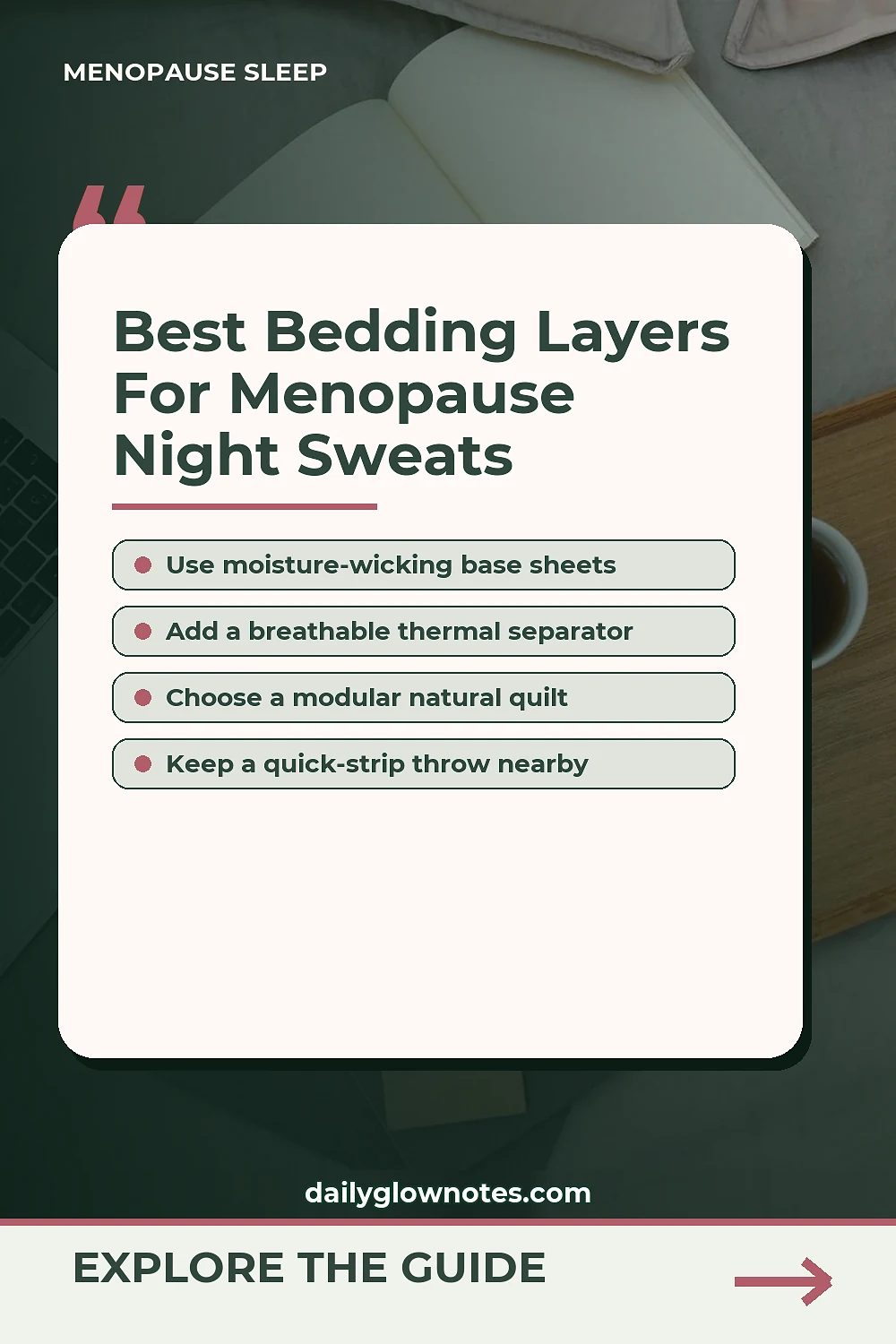
Traditional bed-making relies on heavy top layers like thick down comforters or synthetic quilts that trap warm air directly against your body. When a night sweat occurs, this trapped ambient heat intensifies the sensation of warmth, making recovery much slower. A modular bed setup replaces heavy bulk with multiple light, high-breathability layers that can be shed or pulled up individually without waking you up entirely.
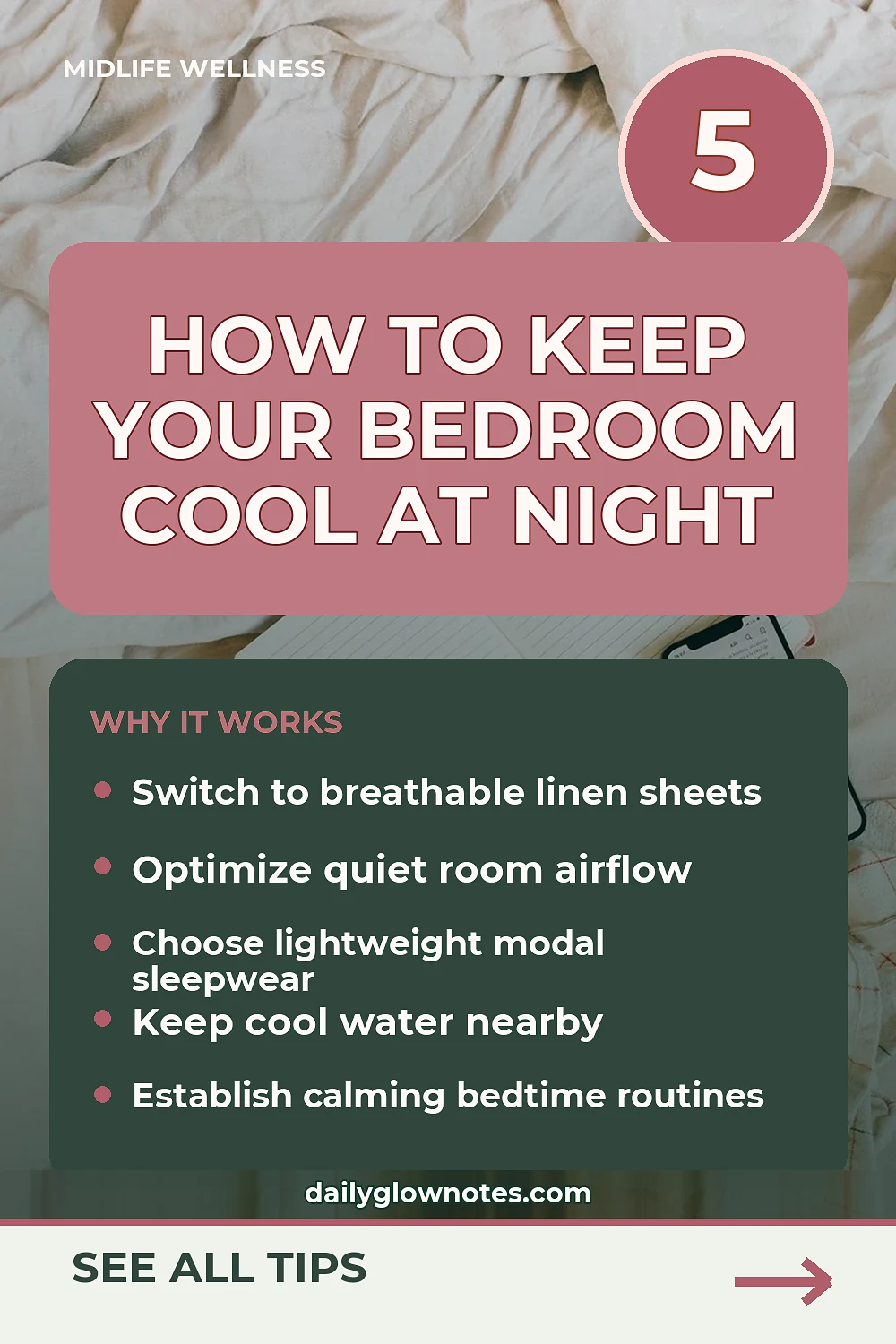
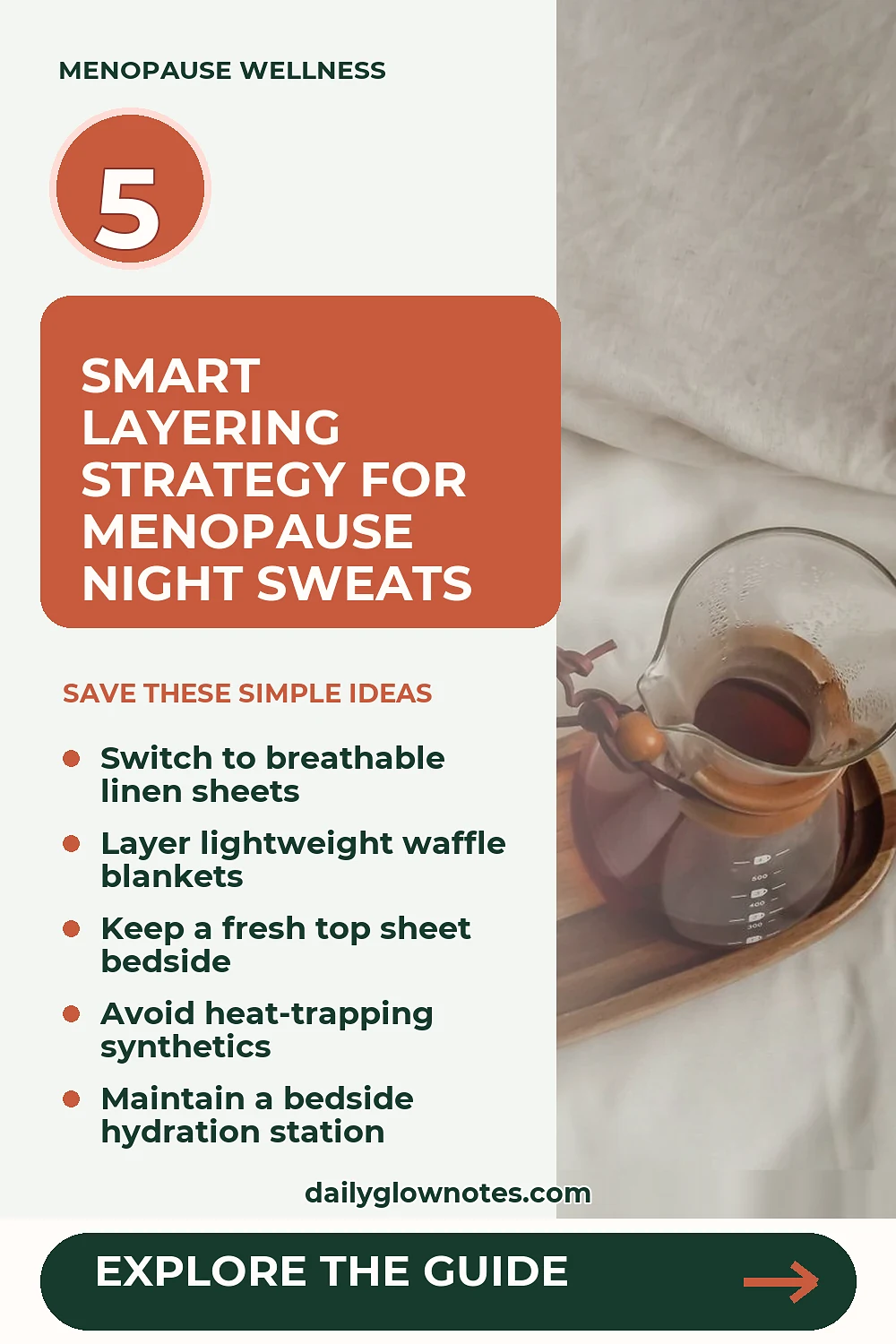
- Base Layer: A moisture-wicking fitted sheet made of natural, breathable fiber like crisp crisp linen, bamboo-derived viscose, or long-staple organic cotton.
- Mid Layer: A lightweight thermal waffle blanket or loose-weave cotton coverlet that adds comfortable weight without locking in body heat.
- Top Layer: An optional, ultra-breathable duvet or throw placed loosely across the foot of the bed, ready to pull up if a post-sweat chill sets in.
By arranging your bed in these distinct, breathable tiers, you gain immediate control over your microclimate. Instead of throwing off everything and shivering ten minutes later, you can adjust a single lightweight layer to recalibrate your thermal balance effortlessly.
Selecting High-Performance Natural Textiles
The fabrics touching your skin throughout the night play a crucial role in how quickly heat dissipates. Synthetic materials like standard polyester retain moisture and trap heat, creating a humid microclimate beneath the covers. Natural, long-staple fibers allow airflow and encourage natural evaporation.
Linen is particularly effective for nighttime temperature fluctuations. Its natural hollow fibers allow air to circulate freely, making it feel cool to the touch while absorbing excess skin moisture without feeling damp. Long-staple percale cotton offers a crisp, airy structure that prevents the fabric from clinging to skin when you get warm. For the top layers, open-weave cotton meshes or cellular blankets provide gentle weight while allowing trapped body heat to escape upward.