
Dealing with oily roots while managing fragile, thinning hair creates a daily styling paradox. Washing every single day can strip delicate mid-lengths and increase breakage, yet letting sebum accumulate weighs down fine strands and stresses the scalp. Finding how to space out hair washes when dealing with oily roots and thinning hair requires a structured, intentional approach rather than guesswork. When natural oils travel too quickly down fine hair textures, the scalp often overproduces sebum in response to harsh, stripping cleansers. Shifting toward a balanced cadence protects vulnerable ends while keeping the scalp environment fresh and comfortable.
Understanding the Root and Strand Dilemma
Creating this balance is not about enduring greasy days or abandoning hygiene. Instead, it involves retraining your scalp and supporting your hair from multiple angles. For those navigating seasonal shifts, winter static can add extra friction and breakage to fragile strands, making proper care even more critical. You can explore practical strategies for this in our guide on Managing Winter Static Breakage: A Practical Guide for Fine Hair. By addressing both the scalp surface and the fragile lengths, you lay the groundwork for resilient hair.
Mapping Out Your Weekly Wash Cadence
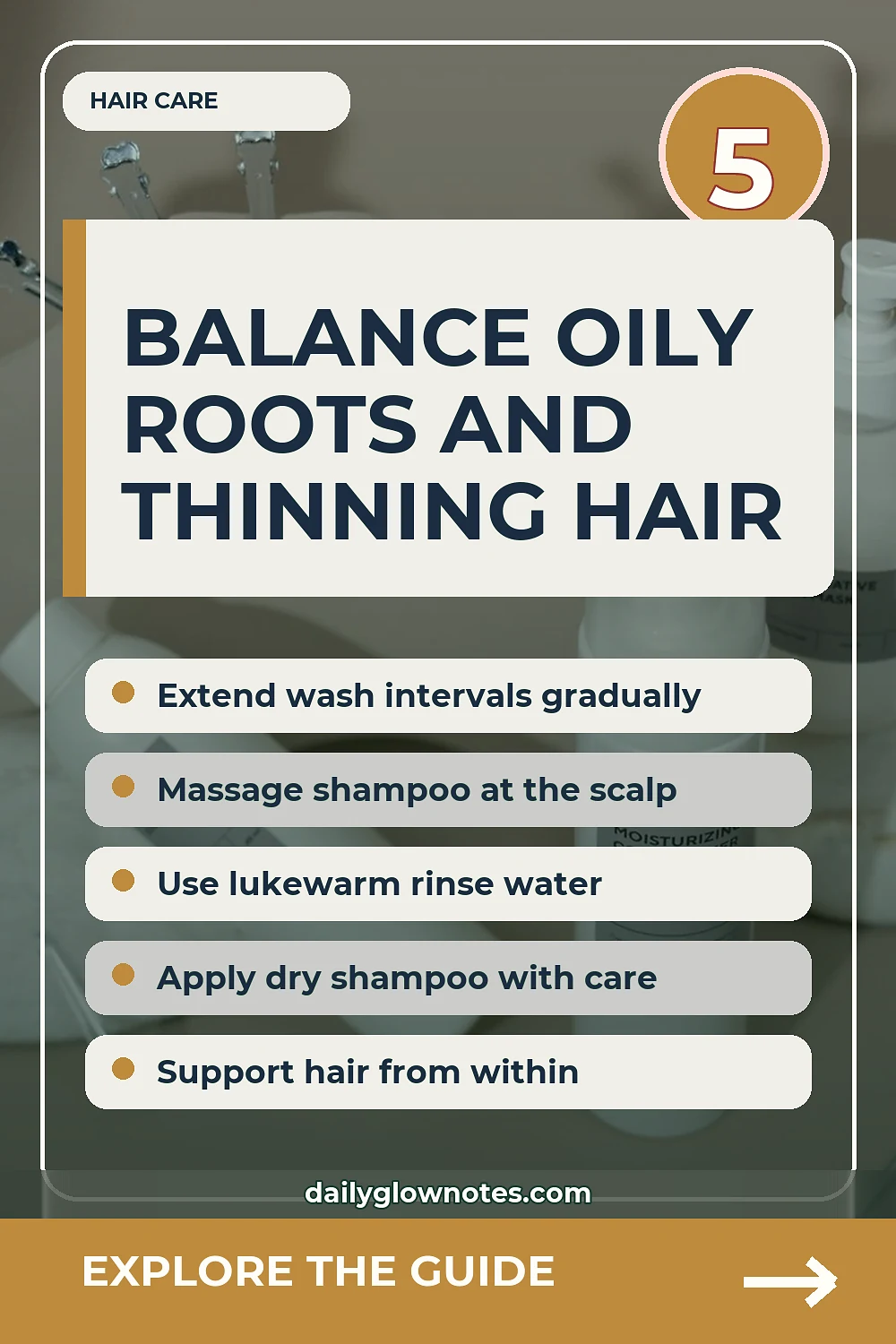
A predictable calendar framework helps eliminate the daily dilemma of whether to shampoo. Instead of reacting to grease on a moment-by-moment basis, a planned schedule allows your hair to adapt. Start by identifying your current washing frequency and gently extending the interval by a single day each week. If you currently wash daily, aim for every other day for two weeks before pushing toward a three-day gap.
During non-wash days, mechanical brushing with a clean wooden brush helps distribute natural oils away from the roots while clearing away loose strands gently. This habit stimulates the scalp without over-manipulating delicate hair shafts. As you space out your wash days, pay close attention to how your scalp feels. If irritation or heavy buildup occurs, adjust your timeline rather than forcing a rigid schedule that does not suit your biology.
Gentle Cleansing Techniques for Fragile Hair
When wash day finally arrives, the technique matters just as much as the products you use. Fine and thinning hair demands a softer touch to prevent unnecessary mechanical damage. Concentrate your shampoo exclusively on the scalp, massaging it in with the pads of your fingers rather than your fingernails. Allow the suds to cleanse the mid-lengths and ends as you rinse, rather than aggressively scrubbing the fragile parts of your hair.
Water temperature also plays a subtle yet vital role in maintaining scalp comfort. Lukewarm water helps dissolve excess sebum without shocking or drying out the skin barrier. Follow with a lightweight, targeted conditioner applied only from the mid-lengths to the ends, ensuring your roots remain free of heavy, weighing-down formulas. Thorough rinsing prevents residue accumulation, which can mimic oiliness and attract dust and debris between wash cycles.
Physical habits throughout your day can also place unnecessary stress on delicate strands, particularly during long hours at a desk. To minimize tension and protect your hair structure, consider reviewing workplace styling habits detailed in The Workday Hairstyle Tension Audit: Protecting Thinning Hair and Preventing Breakage. Small adjustments to how you pin, tie, or secure your hair during work hours can significantly reduce daily breakage.