
Working with culinary gelatin can completely transform homemade desserts, fruit jellies, and savory aspics, yet many home cooks encounter a frustrating obstacle: a rubbery, dense, or overly firm texture. Learning how to use gelatin without rubbery texture comes down to understanding simple physical properties—specifically blooming, proper hydration ratios, and heat management. When handled correctly, gelatin creates a delicate, melt-in-your-mouth set that elevates both everyday breakfasts and sophisticated desserts.
For adult women who prioritize collagen-supportive nutrition and mature-skin wellness, incorporating functional ingredients like gelatin and hydrolysed collagen into kitchen routines offers both culinary pleasure and beauty-from-within benefits. Mastering gelatin techniques ensures your recipes turn out silky and smooth every single time.
Understanding the Science of Blooming Gelatin Properly
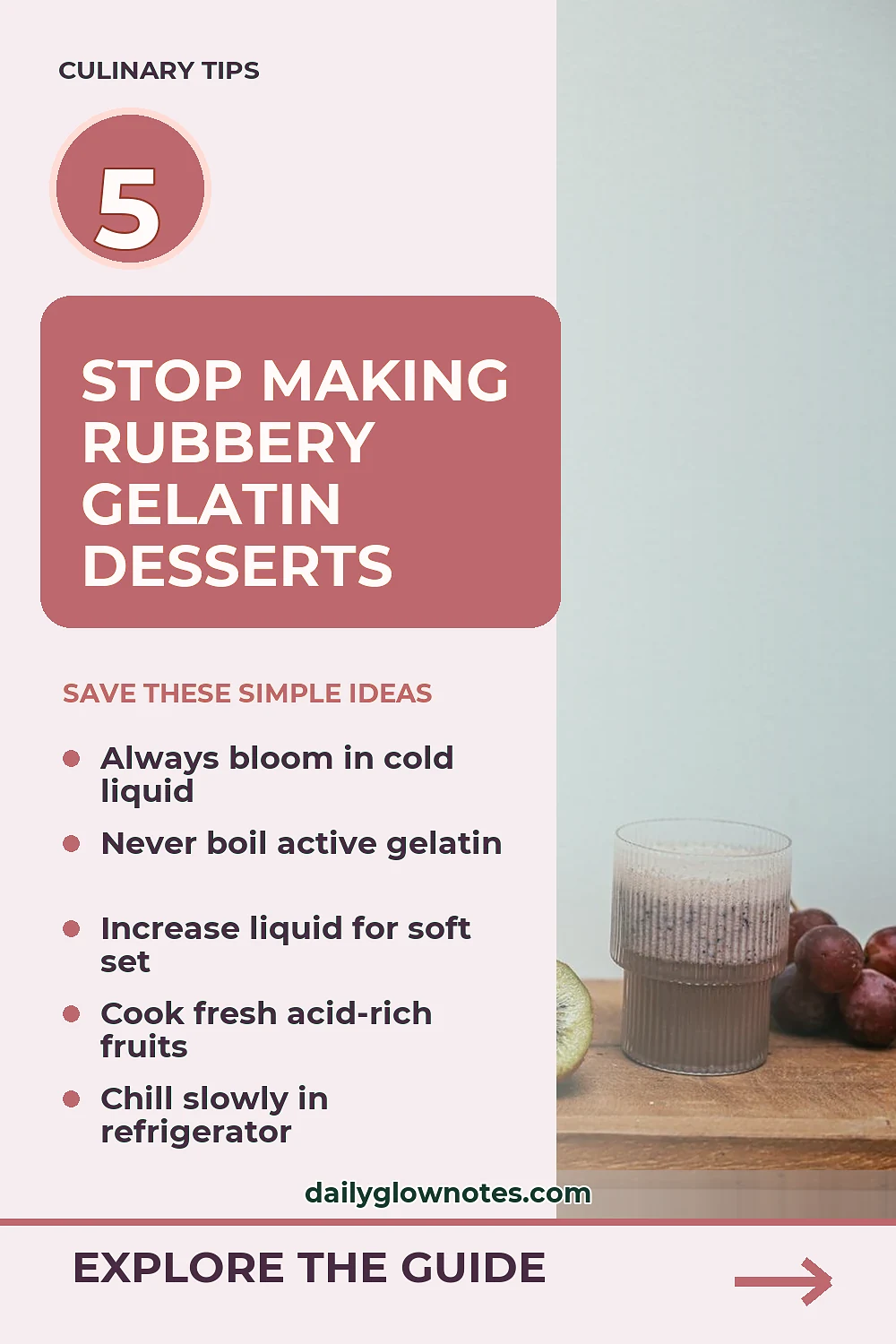
The single most important step in preventing a tough, chewy outcome is blooming. Blooming allows the dried gelatin granules or sheets to absorb cold liquid and swell evenly before any heat is introduced. If you drop dry gelatin powder directly into a hot liquid, the outer layer hydrates instantly and creates a waterproof barrier around the dry core. This creates unappealing rubbery clumps that never dissolve properly.
To bloom powdered gelatin, sprinkle it evenly over cold water or juice—never pour it in a concentrated heap. Let it sit untouched for five to ten minutes until the surface looks wrinkled and spongy. For leaf gelatin, submerge the sheets in a bowl of ice-cold water for about five minutes, then gently squeeze out the excess moisture before stirring them into warm liquids.
Mastering the Liquid-to-Gelatin Ratio for a Soft Set
Achieving a silky, gentle set rather than a bouncy block depends heavily on your fluid measurements. Standard recipes often call for one envelope (about 2.5 teaspoons or 7 grams) of powdered gelatin per two cups of liquid. However, if your goal is a tender, spoonable texture similar to a delicate panna cotta, increasing the total liquid to two and a half or three cups yields a much softer result.
Keep in mind that certain ingredients alter setting strength:
- High acidity: Citrus juices, wine, and vinegar weaken gelatin bonds, requiring slightly more blooming time or a reduced liquid ratio.
- Enzymes: Fresh pineapple, papaya, kiwi, and figs contain enzymes that break down protein structure completely. Always use cooked or canned versions of these fruits if you plan to set them in gelatin.
- Dairy and fats: Cream and whole milk create a rich mouthfeel that softens the perception of the set, yielding a luxurious texture.
Temperature Control: Avoiding Overheating and Boiling
Heat is another critical factor when working with gelatin. While you need warmth to melt the bloomed gelatin into a uniform liquid, excessive heat degrades the protein chains, leading to an unpredictable set. Boiling gelled mixtures can either cause them to fail entirely or leave behind a tough, leathery texture.
Once your gelatin is bloomed, gently warm your liquid base until it reaches a low simmer—around 140°F to 150°F (60°C to 65°C) is ideal. Remove the pan from the stove burner, add the bloomed gelatin, and whisk softly until every granule completely dissolves. Never boil the mixture after the gelatin has been added.