
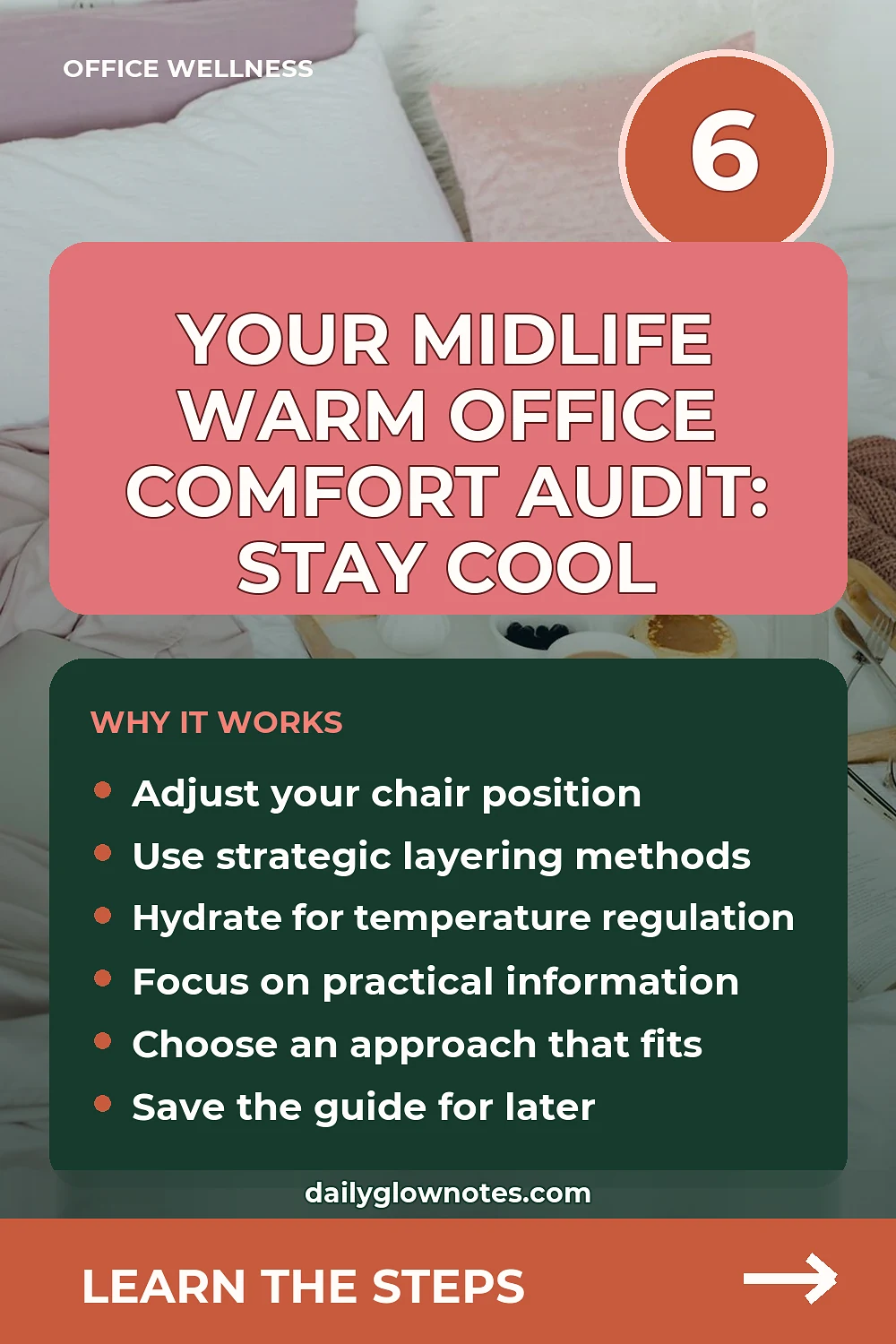
The Warm-Office Comfort Audit for long workdays becomes easier to understand when the main ideas are organized into practical, realistic steps. This guide explains the core considerations and shows how to apply them thoughtfully in everyday life. Midlife often brings unexpected shifts in how we experience our physical surroundings, especially in professional settings where temperature control is rarely personalized. When the office thermostat feels perpetually misaligned with your comfort, it can turn a standard workday into a frustrating exercise in endurance. Conducting a warm-office comfort audit is not about changing the building infrastructure; it is about reclaiming your personal space through small, intentional adjustments that prioritize your well-being throughout the day.
Assessing Your Micro-Climate
Before you reach for the thermostat, look at your immediate environment. Most office setups are designed for efficiency rather than individual comfort, which often leaves us sitting in drafts or stagnant pockets of air. A simple shift in your seating position can make a significant difference. If you are near a window, the afternoon sun might be creating a localized greenhouse effect, even if the rest of the office remains cool. Conversely, sitting directly under an air conditioning vent can trigger muscle tension as your body reacts to the sudden chill. Experiment with moving your chair just a few feet to the left or right. Sometimes, simply avoiding a direct line of sight with a heating element or a vent can stabilize your personal temperature. If moving your desk is not an option, consider how your chair height affects your airflow; sitting slightly higher or lower can change how the ambient air circulates around your core.
The Strategic Layering Method
One of the most effective ways to manage temperature fluctuations is through a layering system that is easy to modify in seconds. Relying on a single heavy sweater often leads to overheating, which is difficult to reverse quickly. Instead, adopt a base layer strategy. A lightweight, breathable fabric like cotton, bamboo, or silk worn under a professional blouse can help wick away moisture and regulate body heat more effectively than synthetic blends. Keep a cardigan or a structured blazer on your chair—not as a fashion statement, but as a functional tool. When you feel a sudden wave of heat, removing a layer provides immediate relief. Having a lightweight wrap or scarf nearby can also provide comfort if the office air suddenly turns brisk. This system is about agility; you want to be able to add or remove warmth without disrupting your workflow or feeling exposed.
Hydration and Temperature Regulation
Your internal hydration levels play a crucial role in how you perceive external temperatures. When we are dehydrated, our body’s ability to regulate its own temperature is compromised, making us more susceptible to feeling overheated or sluggish. Keep a large glass of cool water at your desk at all times. Sipping throughout the day helps maintain core temperature stability. Avoid relying solely on hot coffee or tea, which can contribute to that flushed feeling. Instead, infuse your water with cucumber, mint, or citrus for a refreshing, cooling effect. Remember that cellular hydration is a gradual process, so consistent sipping is far more effective than chugging water only when you feel thirsty. By viewing water intake as a temperature regulation tool rather than just a health requirement, you can better manage your internal thermostat.