
Noticing more strands winding up in your hairbrush or tangled around your fingers can spark an immediate wave of worry. Many adults begin searching frantically for ways to encourage hair growth faster, assuming that expensive serums or intensive treatments are the only solution. Yet, the root cause of increased shedding and fragile strands often hides in plain sight within daily routines. When dealing with thinning hair care mistakes to avoid, the habits you repeat mindlessly each morning and night play a far larger role than you might think. Recognizing these micro-habits is the first step toward preserving long-term hair health and supporting natural density.
Protecting your existing hair density requires a careful look at mechanical friction, tension, and thermal stress. Small adjustments to how you treat your delicate strands can dramatically minimize breakage over time. Here are seven everyday habits that may be quietly working against your hair-wellness goals, along with gentle ways to correct them.
1. Pulling Damp Strands Into High, Tight Ponytails
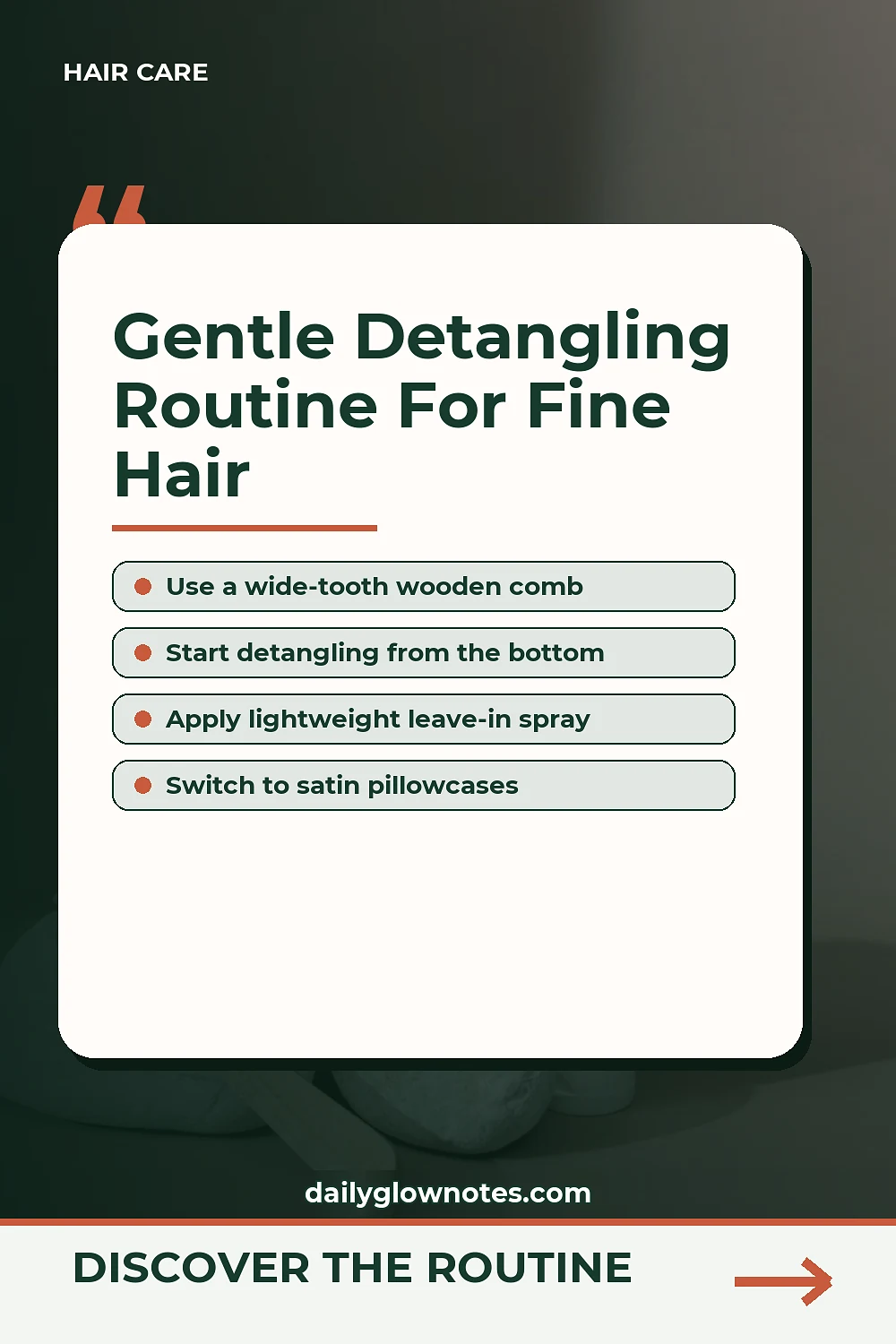
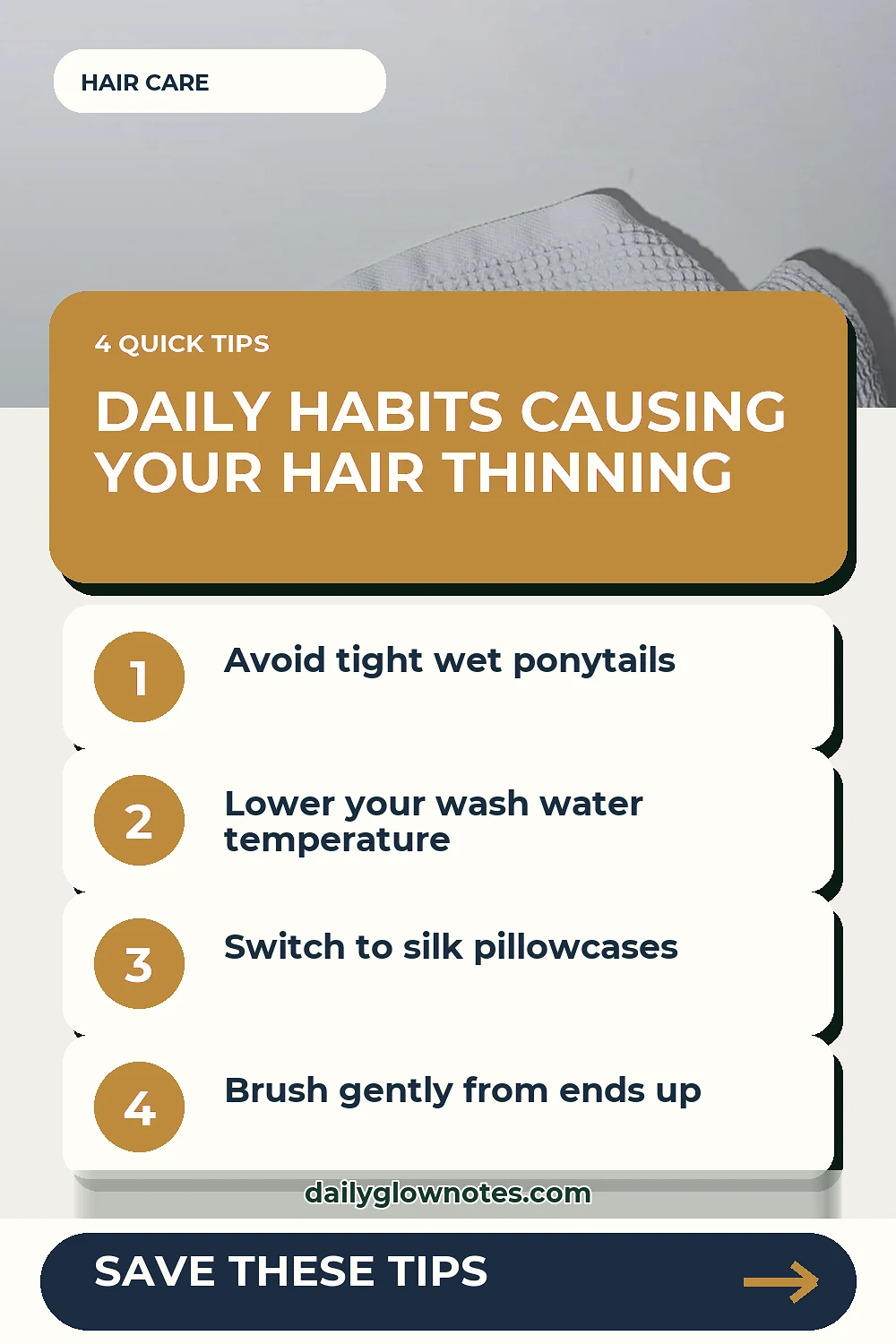
Hair is at its most vulnerable and elastic state when it is wet. When water penetrates the hair cortex, it swells the internal structure, making the strands significantly more susceptible to snapping under pressure. Securing freshly washed hair into a tight, high ponytail or slicked-back bun stretches the hair shaft beyond its natural limit. Over time, this constant mechanical tension leads to traction breakage around the hairline and crown, sometimes resulting in permanent follicle fatigue. Instead of twisting soaking-wet hair into harsh styles, gently blot excess moisture with a microfiber towel and opt for a loose silk scrunchie while your hair air-dries naturally.
2. Overlooking Environmental Friction During Cold Weather
Winter coats, chunky sweaters, and woolen scarves keep you warm, but they create a harsh abrasive environment for fragile ends. As you move your head throughout the day, coarse fabrics rub against loose hair, causing friction that frays the cuticle and snaps delicate strands. To combat this, tuck your hair inside your coat or scarf rather than letting it whip around freely in the wind. For more insights on protecting your length during colder months, read our guide on shielding fine hair from wool scarf friction and winter snapping.
3. Washing With Water That Is Too Hot
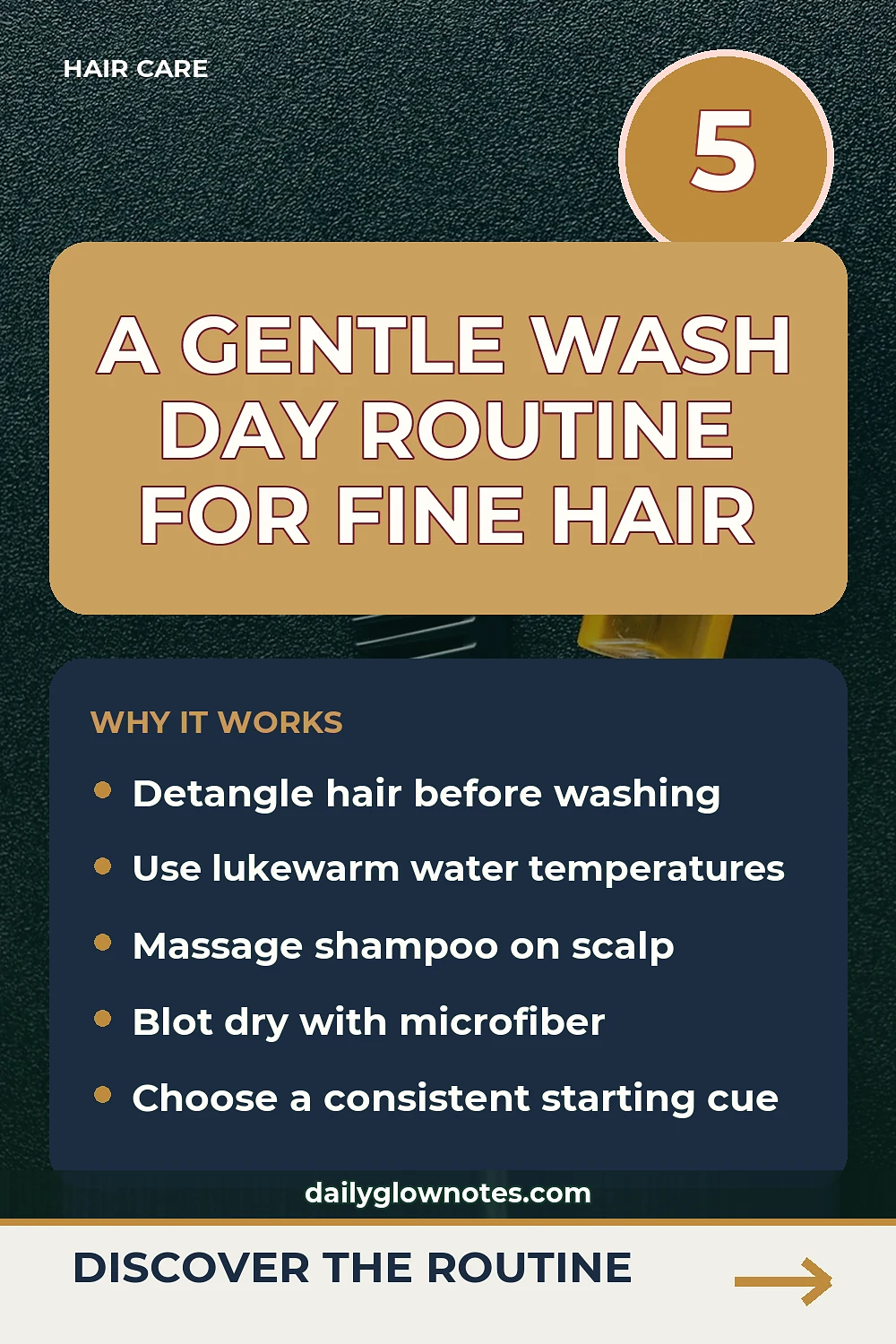
A steaming hot shower feels deeply relaxing, but high water temperatures strip the scalp and hair of their natural lipid barrier. This leaves the scalp dry, irritated, and unbalanced while making individual strands more brittle and prone to split ends. Lowering the water temperature to a comfortable lukewarm setting during your final rinse helps seal the hair cuticle and lock in essential moisture. Incorporating a wash-day temperature and handling audit for fine hair can help you identify whether your cleansing routine is inadvertently contributing to breakage and lackluster shine.