
Long hours at a desk often leave your lower back feeling stiff, aching, and completely fatigued by mid-afternoon. If you recently invested in an adjustable standing desk to combat a sedentary routine, you might be surprised to find that standing all day brings a whole new set of discomforts. Making the switch requires a thoughtful pacing strategy rather than an abrupt leap from sitting for eight hours straight to standing for the entire shift. A standing desk transition plan for sedentary office workers helps build core and postural endurance gradually, keeping your energy high and your lower back comfortable.
Start with Short Increments and Listen to Your Body
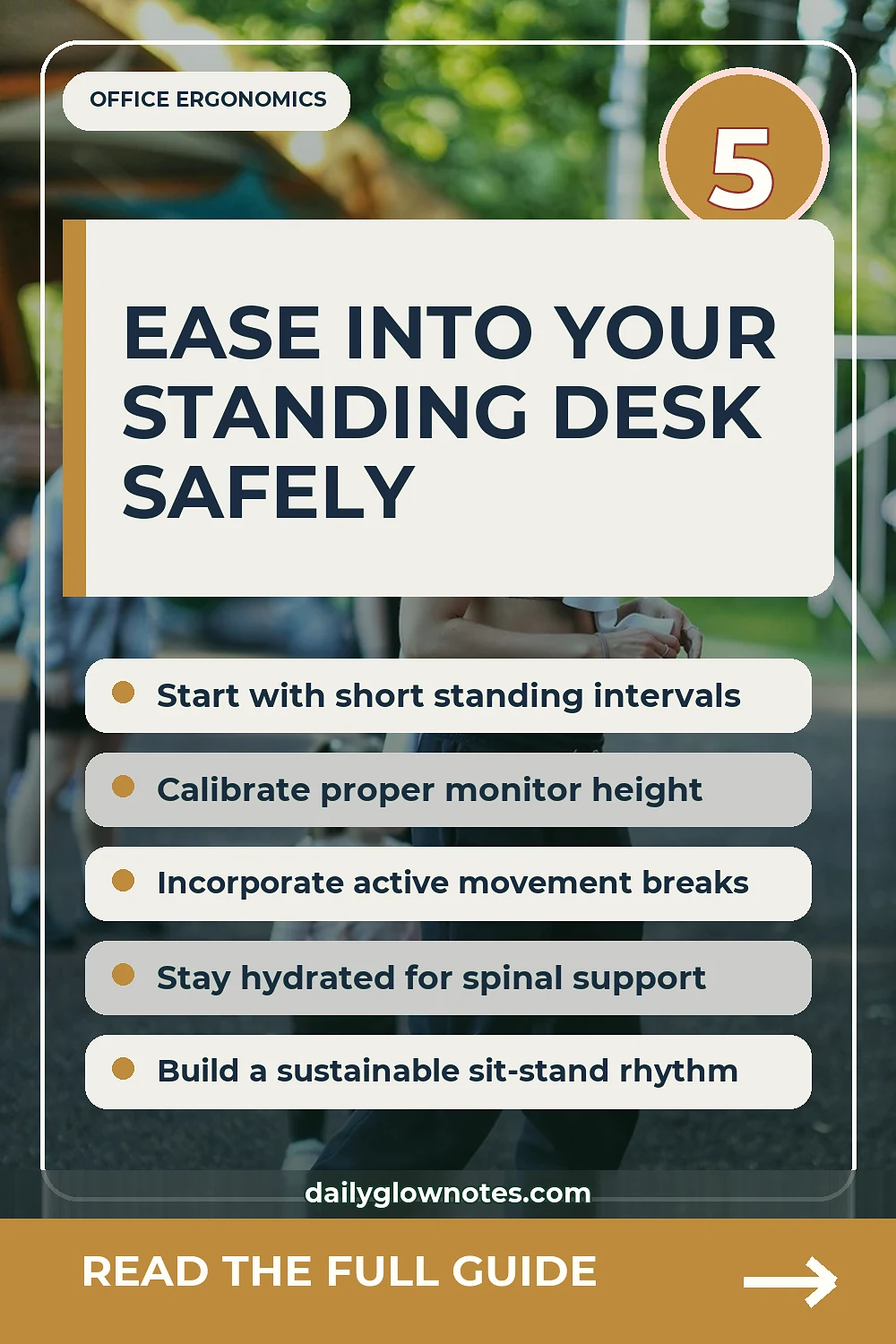
Your muscles need time to adapt to new postural demands. Plunging into a full day of standing often leads to slouching, locked knees, and intense lower back strain as supporting stabilizers fatigue. Begin your transition by standing for just fifteen to twenty minutes once every hour. Notice how your body responds before extending the duration. If you feel tightness in your lower back or tension in your shoulders, sit down immediately rather than pushing through the discomfort. Building endurance is a slow, steady process that rewards patience. Consistency is far more important than raw duration when you are first starting out. Over time, your posterior chain, glutes, and core muscles will naturally grow stronger, allowing you to stand comfortably for longer stretches without experiencing premature fatigue or sharp pain. Paying attention to these early signals prevents minor muscular fatigue from turning into chronic discomfort.
Optimize Your Desk Height and Monitor Position
Even the best transition plan will fail if your ergonomic setup forces your body into awkward alignments. When you adjust your standing desk, your elbows should bend at a comfortable ninety-to-one-hundred-degree angle, with your wrists resting flat on the keyboard tray without straining upward or downward. Your computer monitor needs to be positioned directly at eye level, or tilted slightly upward, so that your neck remains in a neutral, relaxed position. If your screen is too low, you will naturally begin to hunch forward, which instantly shifts unhealthy pressure onto your cervical spine and lower back. Taking five minutes to properly measure and calibrate your desk, chair, and screen height prevents chronic upper body strain before it starts. Proper alignment also reduces the unnecessary muscular effort required to keep your head balanced over your spine during long tasks.