
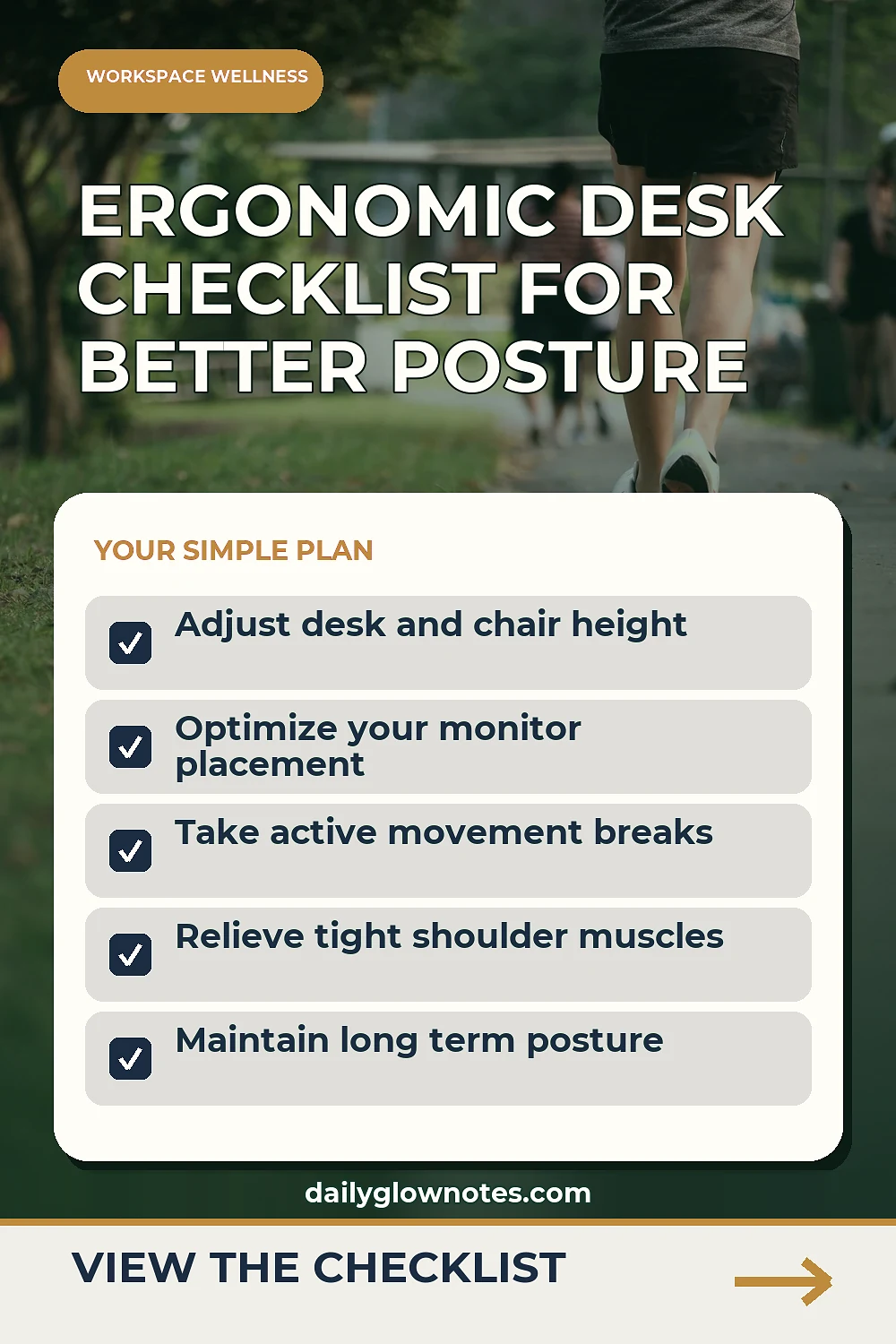
Long hours spent at a desk often lead to subtle upper back fatigue, tight shoulders, and an unconscious slide into a slouched posture by mid-afternoon. When your workstation lacks proper alignment, your body works harder than necessary just to stay upright. Creating a supportive environment goes beyond simply buying a fancy chair; it requires an intentional home office workspace ergonomic setup checklist for active movement breaks that keeps you physically comfortable and mentally energized throughout your workday.
Evaluating Your Desk and Chair Height
The foundation of any comfortable workspace begins with how your body interacts with your primary furniture. If your chair is too low or your desk is too high, your shoulders naturally hunch upward to reach the keyboard, creating instant tension in your neck. Adjust your seat height so that your feet rest flat on the floor or on a sturdy footrest, with your knees bent at a comfortable ninety-degree angle.
Next, examine your elbows. When typing, your arms should form a similar ninety-degree angle, allowing your hands to float effortlessly across the keyboard without straining your wrists. If you use a laptop, elevating the screen on a stand and plugging in an external keyboard can prevent the downward gaze that triggers chronic slouching. Small tweaks here make a massive difference in how your upper body feels after a four-hour focus block.
Optimizing Monitor Placement for Neck Alignment
Where you look dictates where your spine follows. If your monitor or laptop screen sits too low, your head tilts downward, placing a surprising amount of pressure on your cervical spine. The top third of your display screen should sit directly at or slightly below eye level, ensuring your gaze is naturally forward or slightly down.
If you use dual screens, position your primary monitor directly in front of you to avoid twisting your torso for hours at a time. For those who frequently reference physical paperwork, a document holder placed directly between your keyboard and screen keeps your head aligned and prevents repetitive side-to-side neck movements.
Integrating Active Movement into Your Sedentary Routine
Even the most ergonomic chair in the world cannot replace the human need for movement. Muscles thrive on variation, and staying locked in a single static position for hours drains your physical stamina. Building gentle activity cues into your daily schedule helps reset your posture naturally without requiring a complete disruption of your workflow.
Consider pairing your new physical setup with supportive daily habits. Taking short, intentional pauses to stretch your chest, roll your shoulders, and reset your spinal alignment can completely shift your afternoon energy levels. For days when focus is high and motivation to step away is low, exploring a gentle indoor walking routine for low energy days can provide a refreshing reset without derailing your productivity.