

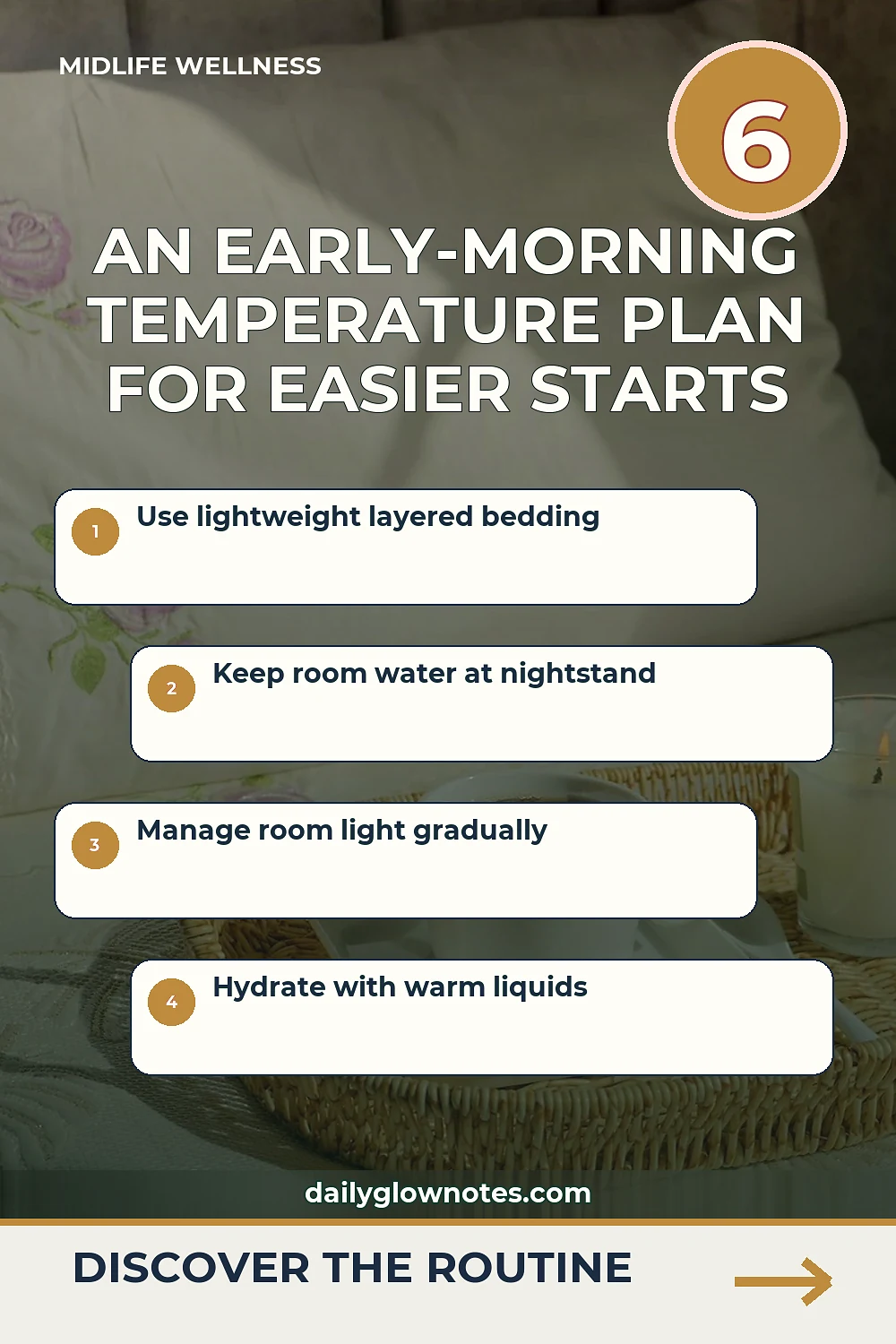
Waking up during midlife often comes with unpredictable shifts in body temperature. One moment you are shivering under the duvet, and the next you are throwing off the covers to escape a sudden wave of heat. Establishing a thoughtful midlife early morning temperature routine can transform those chaotic initial minutes into a calm, steady start to your day. By making simple adjustments to your environment and morning habits, you can lower decision fatigue and help your body transition smoothly into waking life.
Designing a Layered Bedding System for Immediate Comfort
Your sleep environment plays a central role in how comfortable you feel the moment you open your eyes. Instead of relying on a single heavy blanket, arrange your bed with breathable, lightweight layers. Natural fabrics such as cotton, linen, or bamboo allow air to circulate while giving you precise control over your personal climate.
Keep a light throw folded at the foot of the bed. If you wake up chilled, pulling up a thin layer takes minimal effort. Conversely, if you wake up feeling uncomfortably warm, removing one layer keeps you cozy without exposing you to a sudden ambient chill. This low-effort bed setup reduces the need to fumble around in the dark or make complex decisions before you are fully awake.
Preparing Your Nightstand Essentials the Evening Before
A smooth morning start begins with intentional evening preparation. Placing a few supportive items on your nightstand ensures that immediate physical comfort is always within arm's reach.
- A Glass of Room-Temperature Water: Rehydrating right after waking helps refresh your system without shocking your body with icy cold temperatures.
- A Breathable Morning Robe: Storing a lightweight robe or soft cardigan right next to the bed allows you to step out into the room without experiencing a sudden drop in surface temperature.
- A Cooling Face Mist: A gentle, fragrance-free facial mist can offer immediate refresh if you wake up feeling flushed.
Having these items organized eliminates unnecessary steps during those vulnerable first ten minutes of the day.
Managing Room Light and Airflow Gradually
Abrupt changes in light and air movement can heighten sensory discomfort when your body is already sensitive to temperature swings. Instead of immediately flipping on bright overhead lights or flinging windows wide open, ease into your morning environment.
Start by drawing back heavy drapes to let in soft daylight, or use layered window treatments that filter early illumination. If your bedroom feels stuffy, open an interior door first to allow gentle air circulation before introducing cooler outdoor air. This measured approach supports your body's natural waking rhythm without triggering physical startle responses.