
Waking up in the middle of the night drenched in sweat can completely derail your rest, leaving you exhausted before the day has even begun. For women navigating midlife, perimenopause, and menopause, nocturnal temperature fluctuations are a very common hurdle. When your internal thermostat decides to spike while you are fast asleep, your bedroom environment becomes the first line of defense. Designing a dedicated bedroom cooling setup for night sweats menopause management does not require a total home renovation. Instead, it involves thoughtful adjustments to your bedding, airflow, and evening routines to help you stay comfortable through the night.
Creating a sanctuary that actively works against trapped heat allows your body to regulate its temperature more naturally. By looking closely at the textiles you sleep on, the way air circulates through your room, and how you wind down before bed, you can significantly minimize sleep interruptions. Here is how to transform your sleeping space into a cool, restorative haven.
Upgrading Your Bedding Layers for Breathability
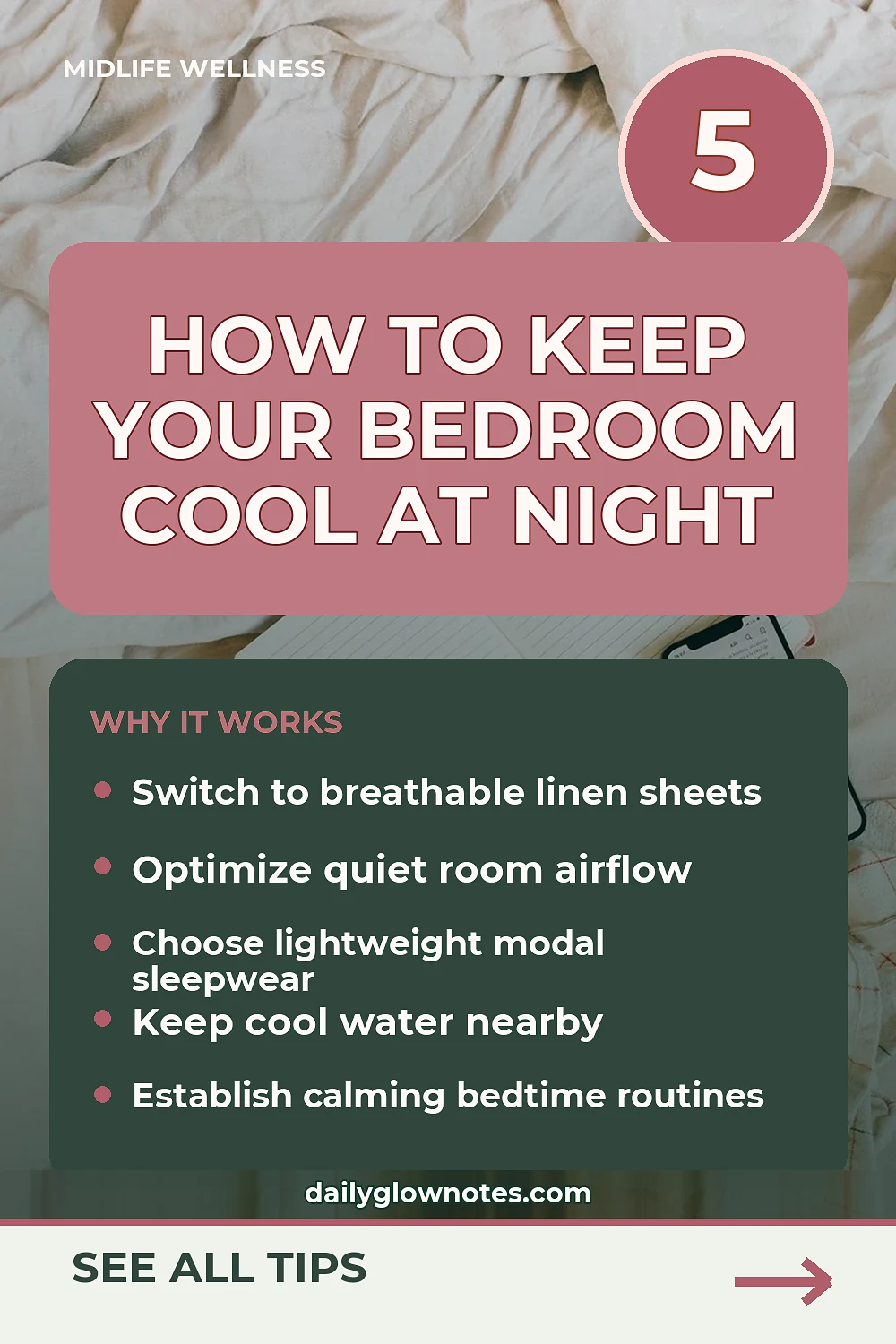
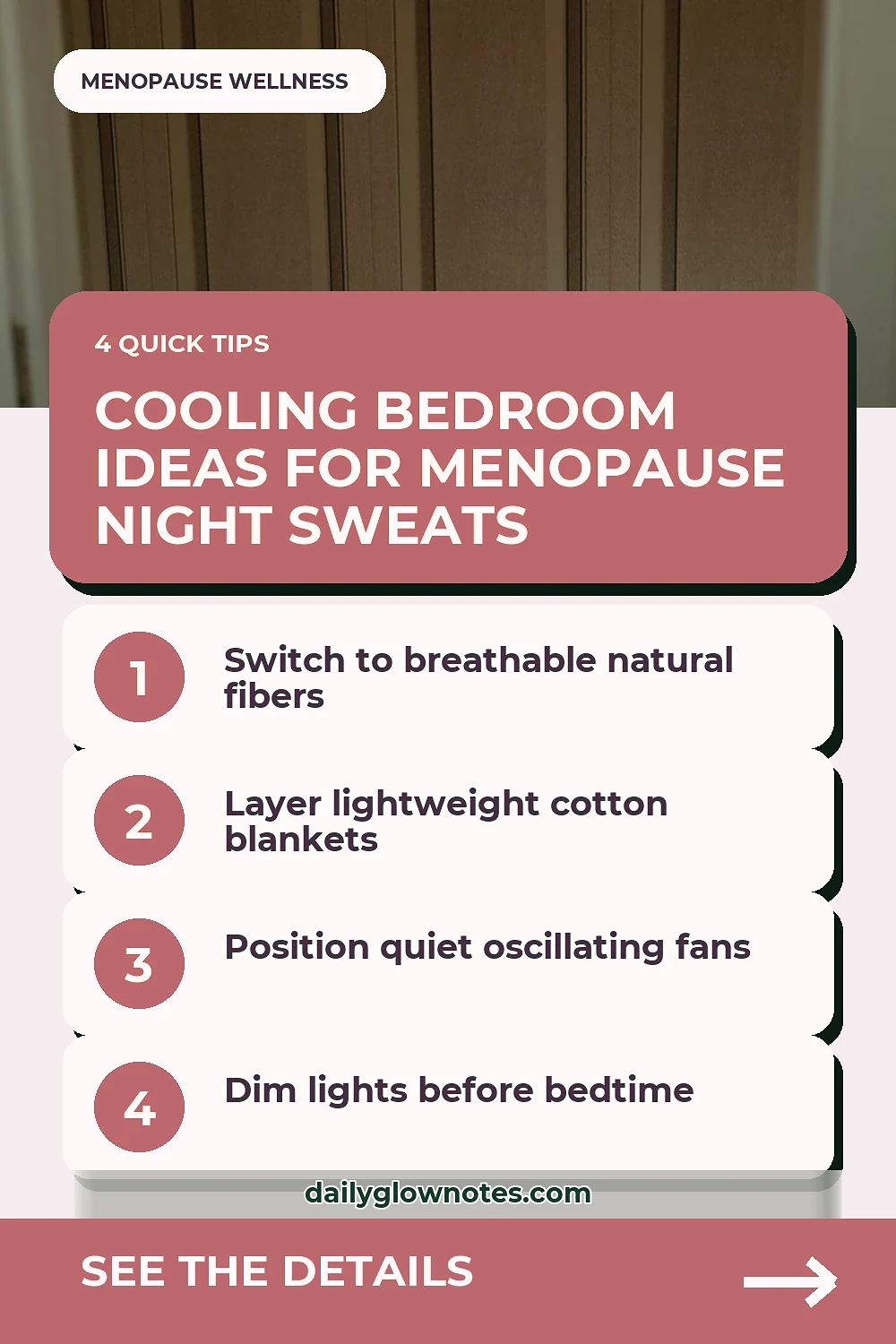
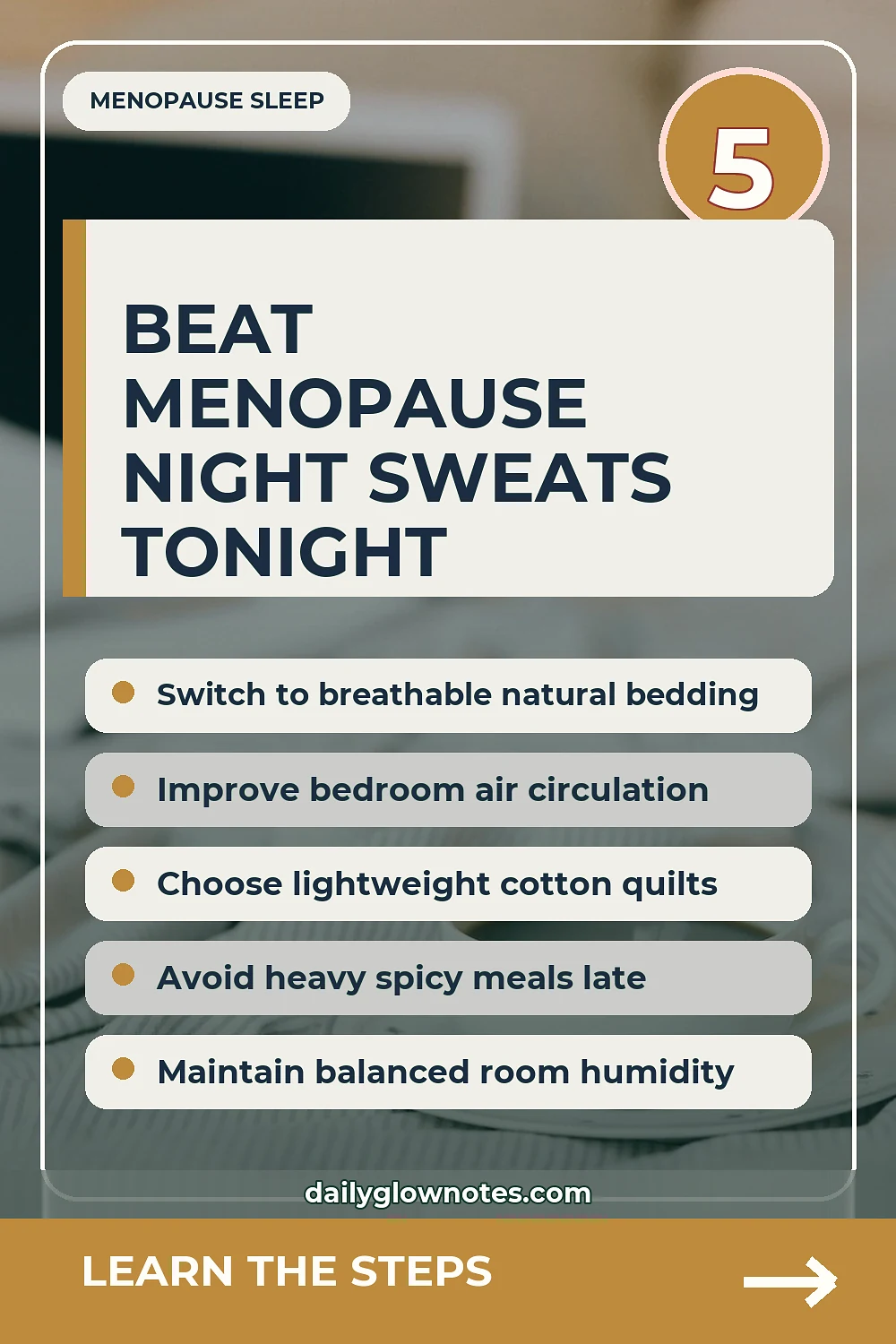
Traditional heavy comforters and synthetic sheets often trap body heat, creating a microclimate of warmth right where you need it least. When night sweats strike, switching to breathable, natural textiles makes an immediate difference. Pure linen, lightweight organic cotton, and bamboo-derived fabrics allow air to circulate freely around your skin and wick away moisture before it settles. Synthetic materials like polyester or microfiber tend to retain heat and inhibit airflow, which can make nighttime sweating feel significantly more intense.
Instead of one heavy blanket, adopt a layered bedding approach. Use a lightweight cotton quilt or a loose-weave blanket paired with crisp, breathable sheets. This allows you to easily cast off a layer in the middle of the night without waking up completely or disturbing your sleep partner. Many women also find relief in using specialized cooling pillowcases, moisture-wicking mattress pads, or flipping their pillows frequently to seek out a cool surface throughout the night.
Optimizing Airflow and Room Micro-Climate
Even the best sheets will struggle if the air in your bedroom remains stagnant. Strategic air circulation is essential for keeping your sleeping space refreshing. If you prefer sleeping with windows open, position a bedside fan to draw fresh air across your body. For those who rely on air conditioning, keeping the room a few degrees cooler than the rest of the house can anchor a deeper sleep cycle and prevent sudden overheating.
Ceiling fans should ideally rotate counterclockwise during warmer months to push a cooling breeze straight down. If you do not have a ceiling fan, a quiet oscillating tower fan placed at the foot of the bed can keep the air moving continuously without creating a disruptive, direct draft on your face. Paired with blackout curtains that keep harsh afternoon sunlight from heating up the room during the day, these small adjustments dramatically alter the room's overall temperature. Keeping bedroom humidity levels balanced with a dehumidifier can also prevent the heavy, sticky feeling that worsens nighttime discomfort.