

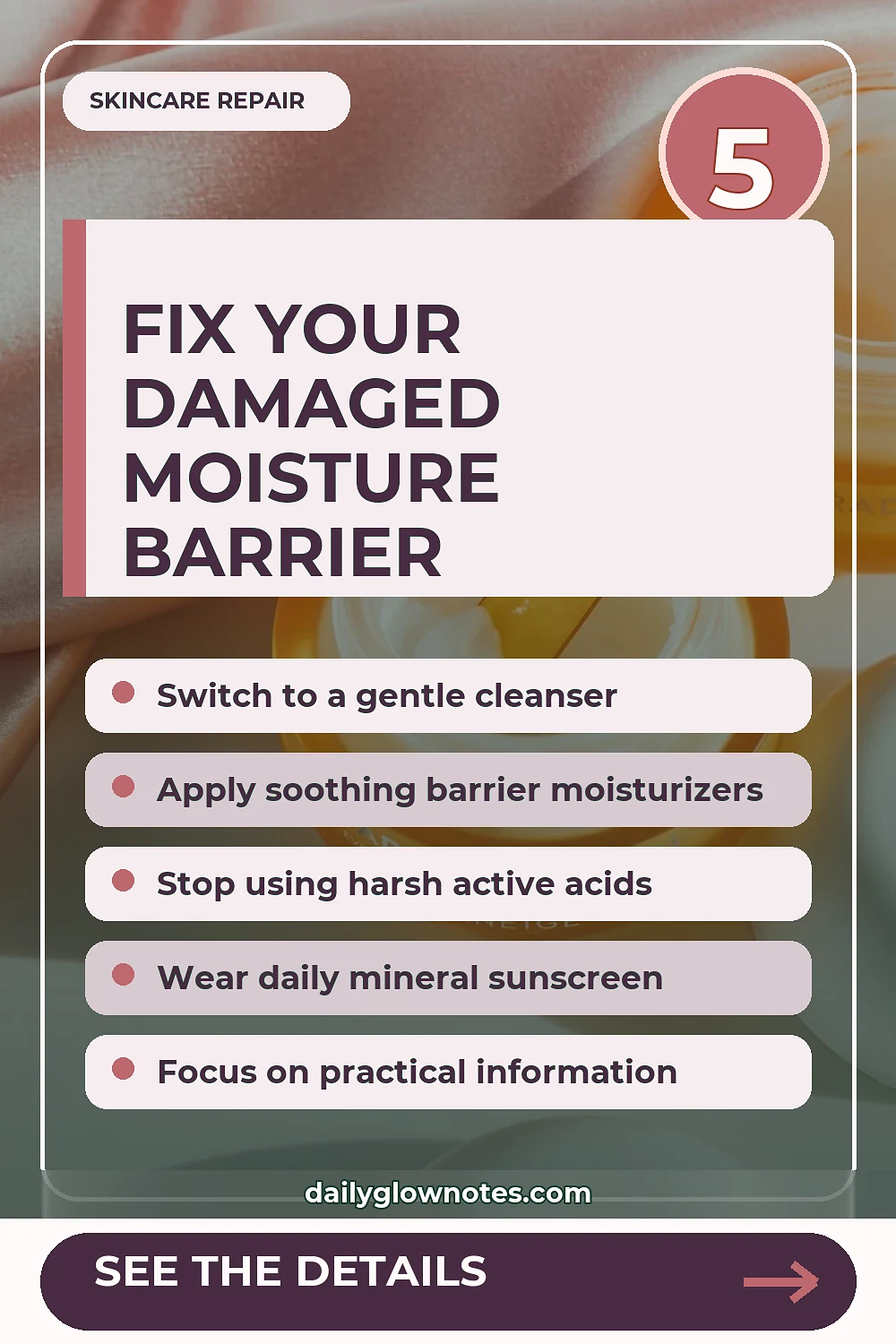
When you are dealing with persistent breakouts, it is easy to fall into the trap of aggressive skincare. You might layer on salicylic acid, benzoyl peroxide, and physical scrubs in an attempt to force your skin into submission. Instead of achieving clarity, you end up with a stinging, red, and reactive complexion. Knowing how to repair over exfoliated skin blemish prone areas requires a complete shift in your mindset. Rather than fighting your skin, you need to nurture it and respect its natural physiological limits.
Understanding Over-Exfoliated Skin
A compromised skin barrier loses its vital ability to retain moisture and keep out environmental irritants. This leads to a vicious cycle where your skin feels tight and dry yet still produces excess oil to compensate for the underlying dehydration. Recognizing the signs of an over-stripped moisture barrier is the absolute first step toward lasting comfort, restored balance, and long-term clarity.
The Signs of a Stressed Moisture Barrier
How do you know if your blemish routine has crossed the line from helpful to harmful? The symptoms usually appear quickly and unmistakably. Your regular gentle cleanser might suddenly sting upon application. Moisturizers that you have used for months without issue may cause a warm, uncomfortable sensation. You might notice flaky patches sitting right on top of oily zones, or a glossy shine that is actually tight, dehydrated skin struggling to protect itself.
When your skin is in this vulnerable state, adding more active ingredients will only worsen the inflammation and prolong the healing process. For a deeper dive into protecting your complexion, read our guide on Restoring Your Skin Barrier: A Gentle Approach to Blemish-Prone Skin to understand how subtle shifts in your daily habits can prevent future irritation.