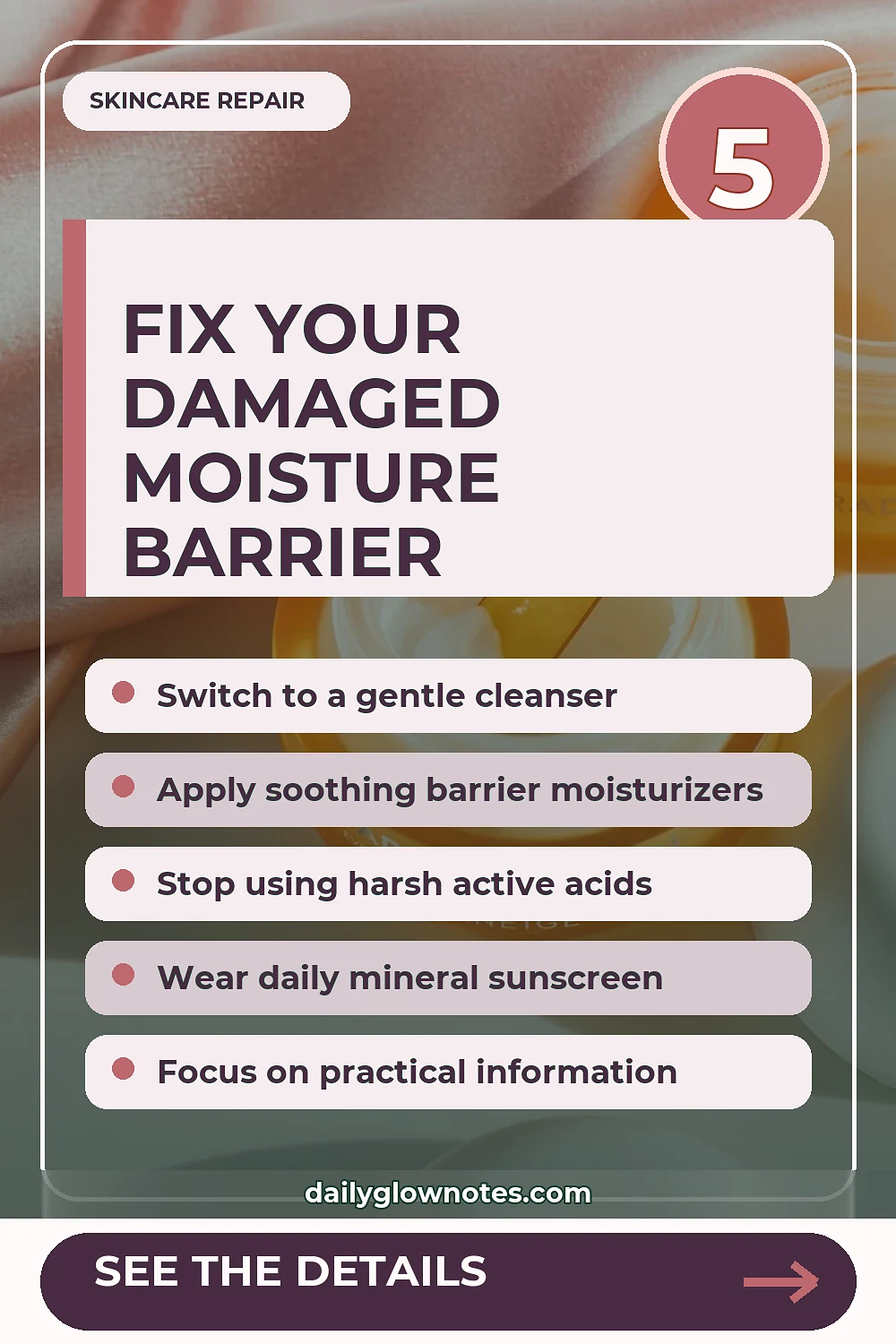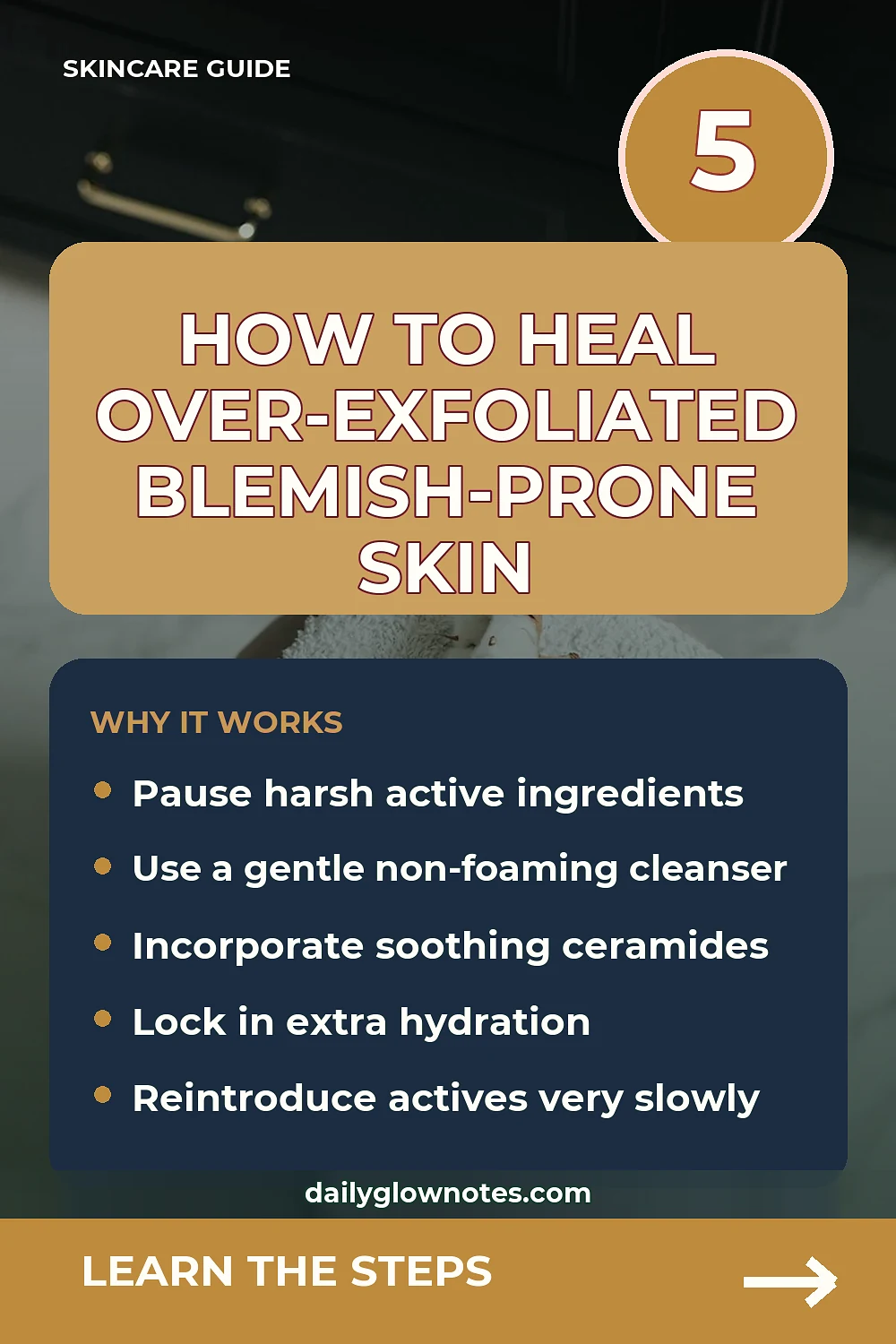

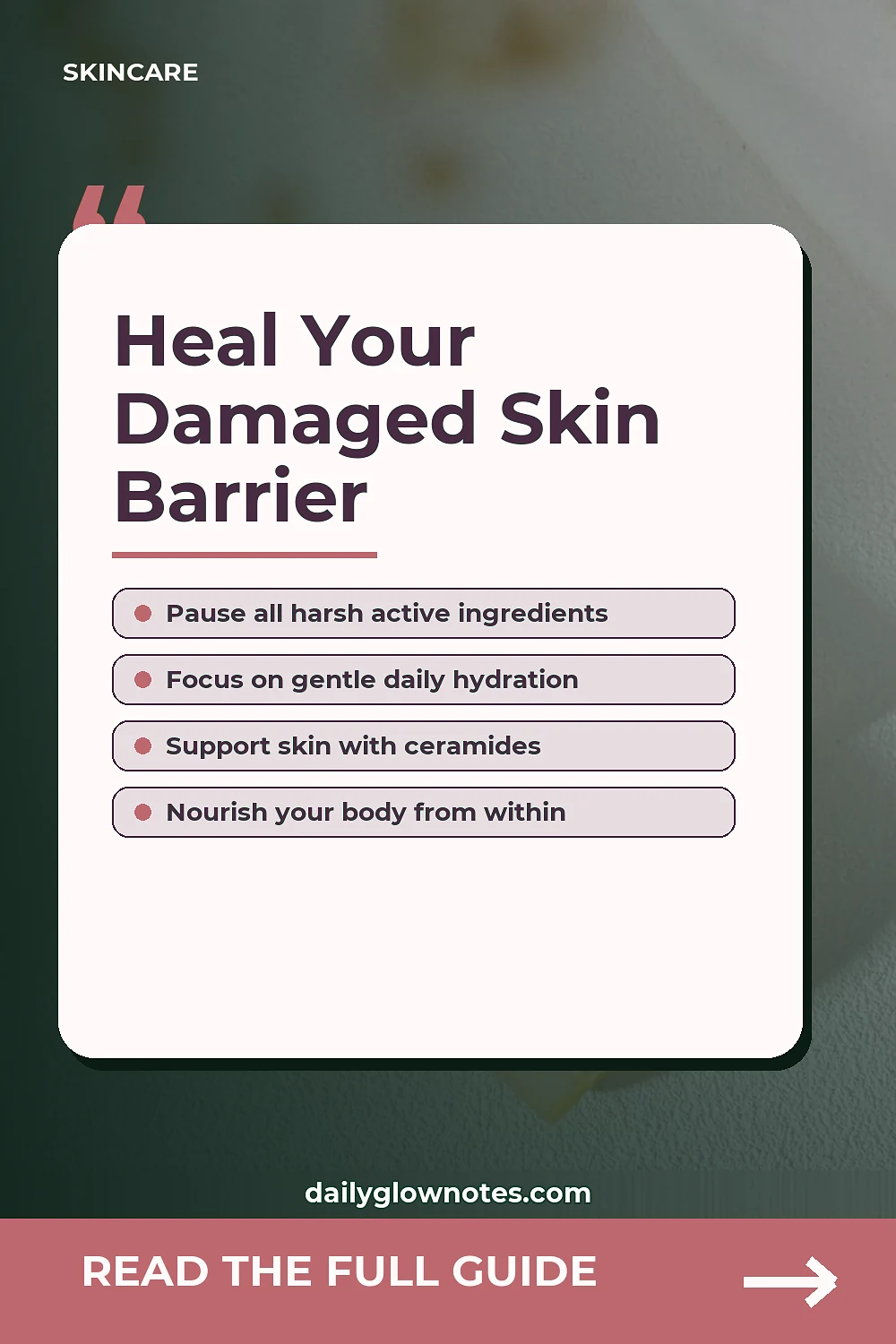
When you first notice a stubborn breakout, the instinct is often to reach for stronger acids, heavier scrubs, and active treatments to chase the problem away. Unfortunately, overdoing these powerful ingredients frequently leads to a compromised moisture barrier. You might wake up to a tight, stinging sensation, redness around your nose and cheeks, and paradoxically, even more breakouts than before. Figuring out how to repair over exfoliated skin with blemishes requires patience, a major step back from harsh actives, and a return to the absolute basics of hydration and protection. When your protective lipid layer is damaged, your skin loses its ability to retain moisture and defend itself against everyday environmental stressors. This delicate state calls for a compassionate, stripped-down recovery protocol that pauses active ingredients without abandoning consistent daily skincare habits.
Understanding Over-Exfoliated Skin with Blemishes
Over-exfoliation typically happens when chemical exfoliants like alpha-hydroxy acids and beta-hydroxy acids, or physical scrubs, are used too frequently or combined improperly. When the stratum corneum is stripped away, micro-tears and excessive moisture loss occur, leaving the underlying tissue vulnerable to irritants and bacteria. Paradoxically, this dehydration can trigger the sebaceous glands to produce excess oil as a defense mechanism, leading to a fresh wave of clogged pores and blemishes. Recognizing the early signs of barrier damage—such as a shiny yet flaky texture, stinging when applying plain water, and persistent redness—is the first crucial step in breaking this frustrating cycle. By understanding that your breakouts are actually a symptom of irritation rather than a lack of cleansing, you can shift your mindset from aggressive treatment to gentle restoration.
Your Multi-Day Barrier Recovery Schedule
Restoring a compromised complexion is not an overnight fix, but rather a gradual journey that rewards consistency and gentleness. For the first few days, strip your routine down to a gentle, non-foaming cleanser, a simple hydrating moisturizer containing ceramides, and a broad-spectrum sunscreen for daytime protection. Avoid all physical scrubs, retinoids, glycolic acid, and salicylic acid until your skin stops stinging upon application of basic products. If you want to explore a deeper understanding of this process, you can read more about restoring your skin barrier: a gentle approach to blemish-prone skin to refine your daily habits. Giving your skin this much-needed breathing room allows the natural healing process to take place without interference from irritating chemicals, setting a solid foundation for long-term health.