
Mindfulness Routine: A Practical Step-by-Step Plan becomes easier to understand when the main ideas are organized into practical, realistic steps. This guide explores the core considerations of daily awareness and shows how to apply them thoughtfully in everyday life without overwhelming your schedule.
Building a sustainable mindfulness routine often feels nearly impossible when your schedule is already packed with daily demands, career commitments, and endless responsibilities. Yet, finding your center does not require hours of silent meditation or retreating to a remote location. Instead, creating a practical daily mindfulness routine relies on anchoring small, intentional habits into the rhythm of your existing day. By focusing on micro-moments of awareness, you can cultivate lasting resilience, ease everyday stress, and navigate life with a clearer, more grounded head. Developing this capability takes patience, self-compassion, and a willingness to let go of rigid expectations about what meditation or mindfulness is supposed to look like in practice.
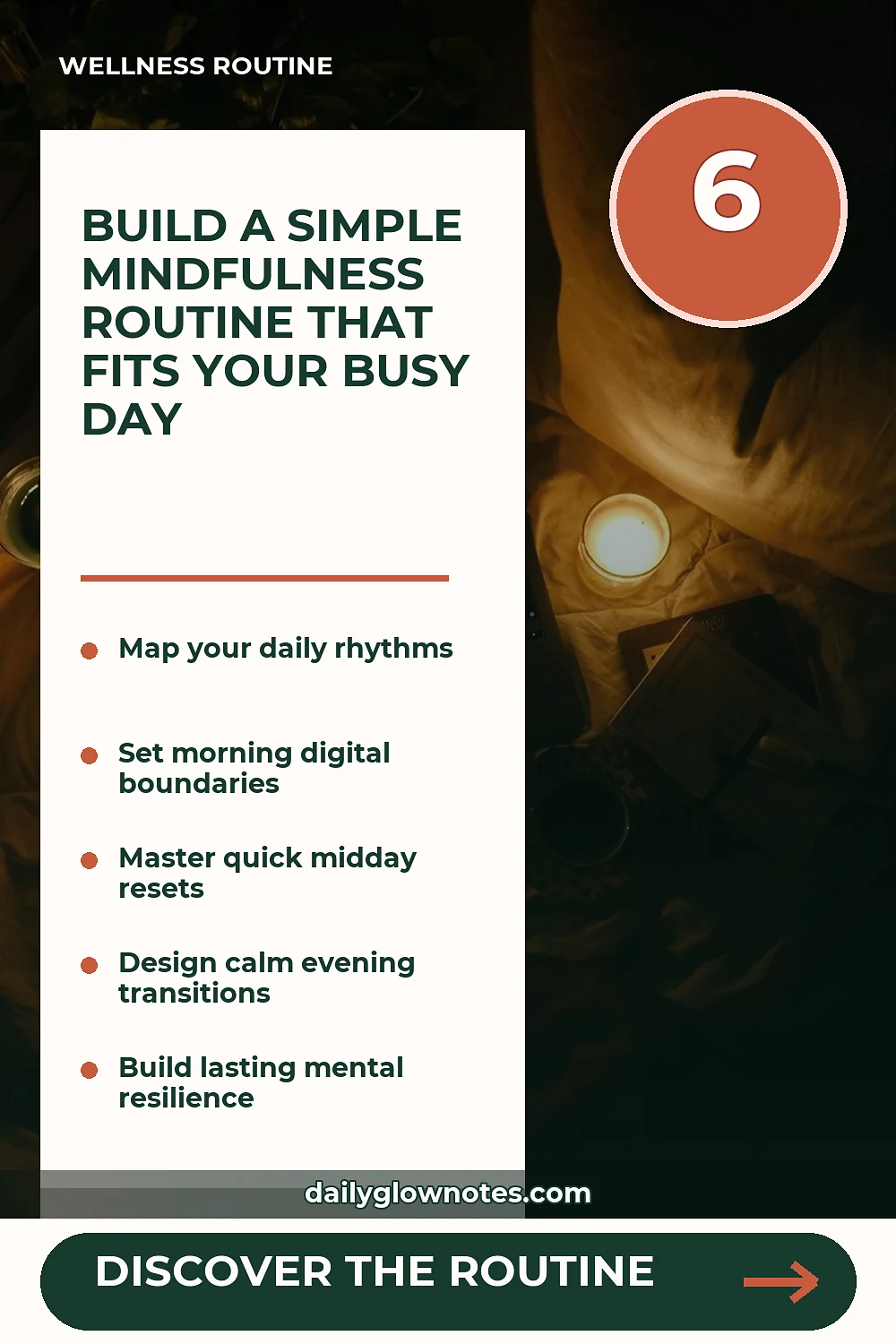
Assess Your Current Daily Rhythms
Before introducing brand new habits, take a realistic look at how your days actually unfold. Forcing a rigid thirty-minute meditation session into a chaotic morning schedule rarely works and usually leads to frustration. Instead, map out your day and identify natural transition points. These are the moments when you are already shifting from one activity to another, such as waking up, finishing your morning commute, stepping away from your desk for lunch, or walking through your front door after a long day.
By attaching a new mindfulness practice to an existing anchor habit, you significantly increase the likelihood that the new behavior will stick over the long term. Reflect on your daily patterns honestly. Notice which hours bring the highest levels of tension and where you might naturally carve out sixty seconds of uninterrupted quiet reflection without disrupting your overall workflow or family responsibilities.
Anchor Your Morning with a Digital Pause
How you begin your morning sets the neurological tone for the rest of the day. Many of us reach for our smartphones the moment we open our eyes, instantly flooding our minds with incoming emails, news alerts, and social media updates. This immediate influx of external stimuli triggers a subtle stress response before your feet even touch the floor. To counter this, design a gentle morning boundary. While you wait for your coffee or tea to brew, spend three minutes simply noticing your physical surroundings. Feel the warmth of the mug in your hands, listen to the quiet sounds of the house, and take a few slow, deliberate breaths.
Creating this morning buffer allows your conscious mind to wake up on its own terms rather than reacting immediately to the demands of the outside world. Over time, this small shift trains your nervous system to handle morning stressors with greater calm, clarity, and intentional focus.
Master the Midday Reset
Afternoons often bring a familiar wave of mental fatigue and scattered focus. When your inbox starts overflowing and your energy dips, it is easy to push through the exhaustion until you feel completely drained. Before that happens, incorporate tiny resets into your workday. If you find yourself staring at an overwhelming screen, try checking out a practical strategy like 3 Tiny Resets for Morning Inbox Overload Before It Takes Over to clear your head in under sixty seconds. Stepping away from digital clutter for even a brief moment allows your nervous system to downshift.
During these midday pauses, pay attention to physical tension that accumulates in your shoulders, jaw, and lower back. Consciously drop your shoulders away from your ears, unclench your jaw, and take three deep abdominal breaths. This physical release sends a powerful signal to your brain that you are safe, helping to reset your focus for the remainder of the workday.