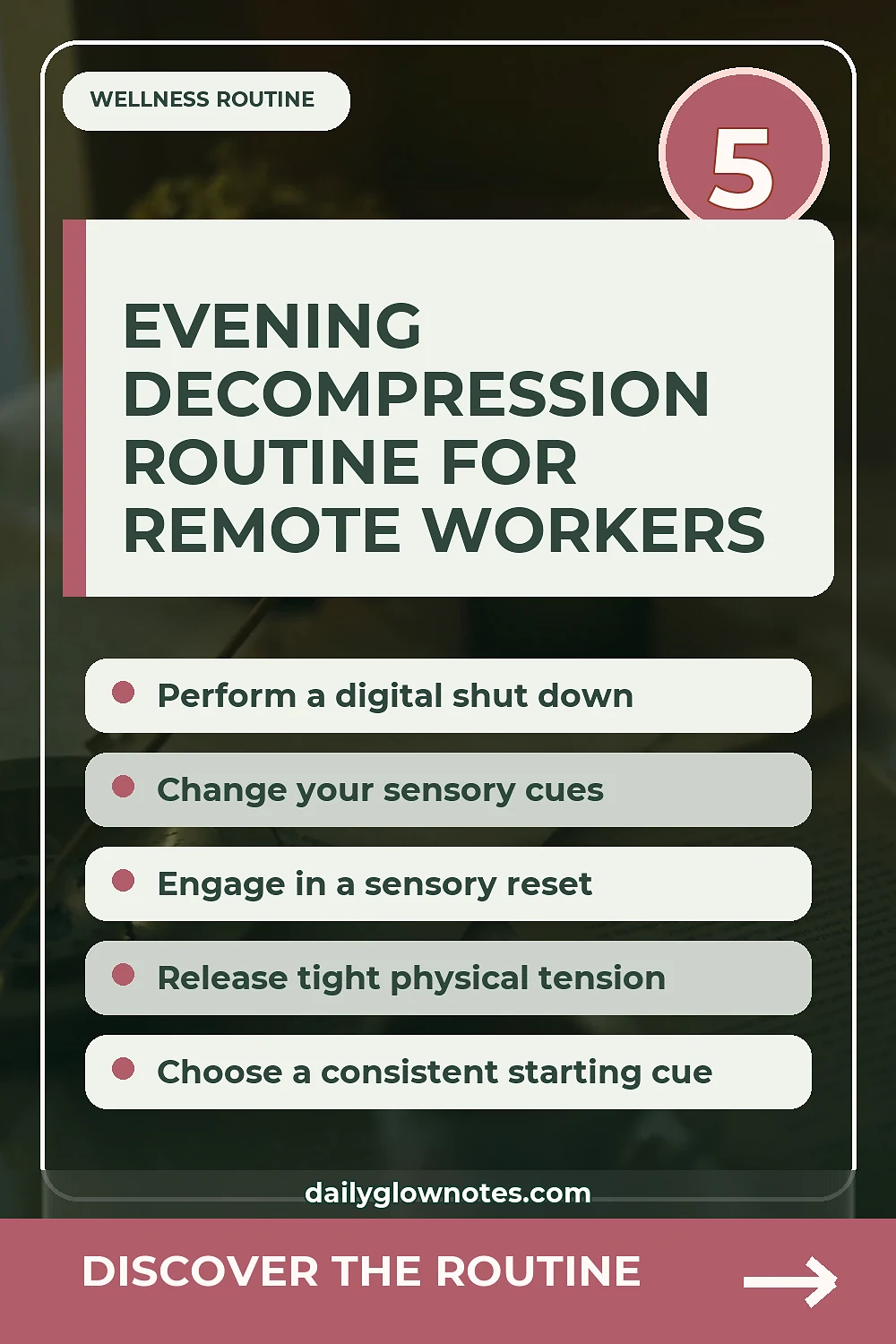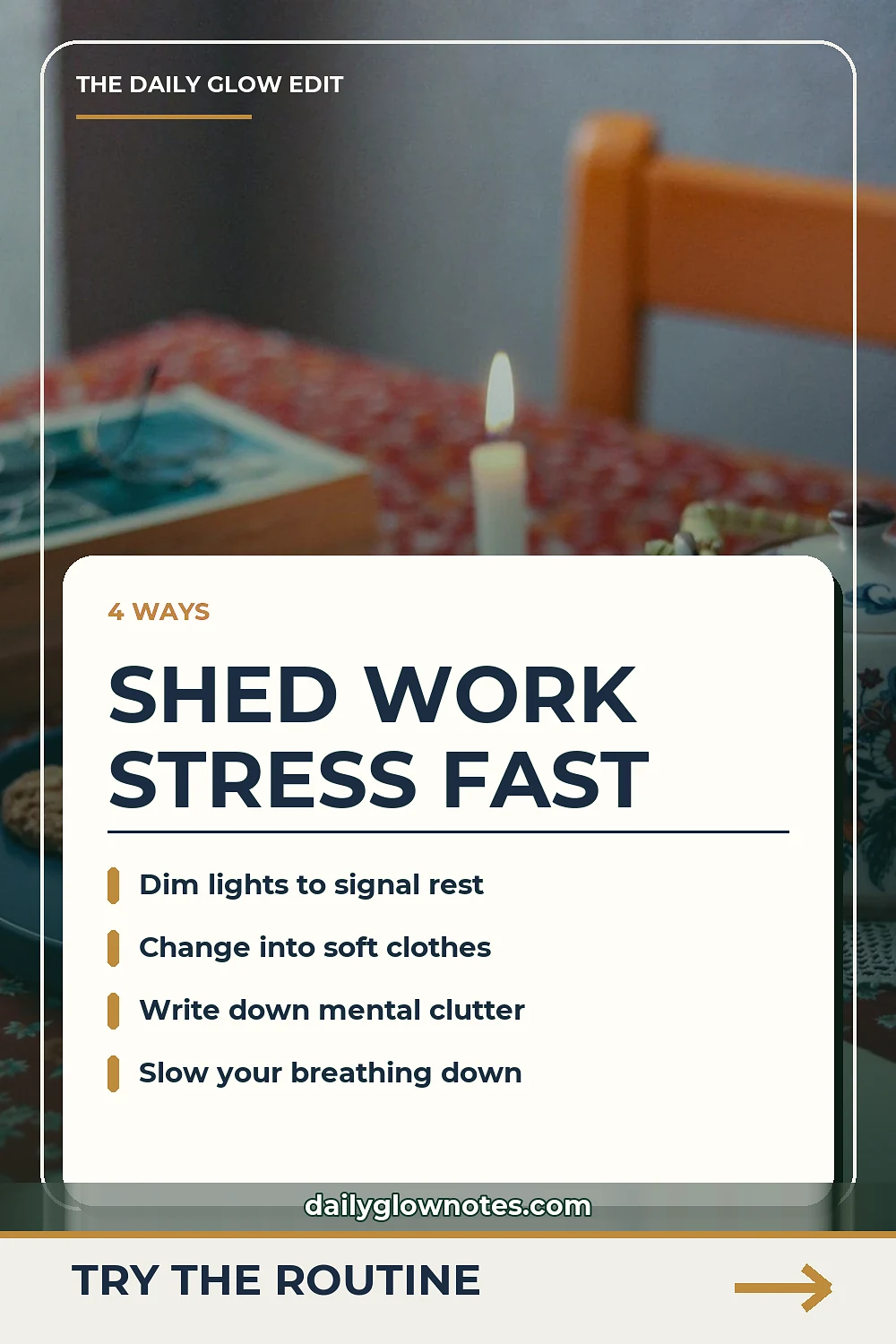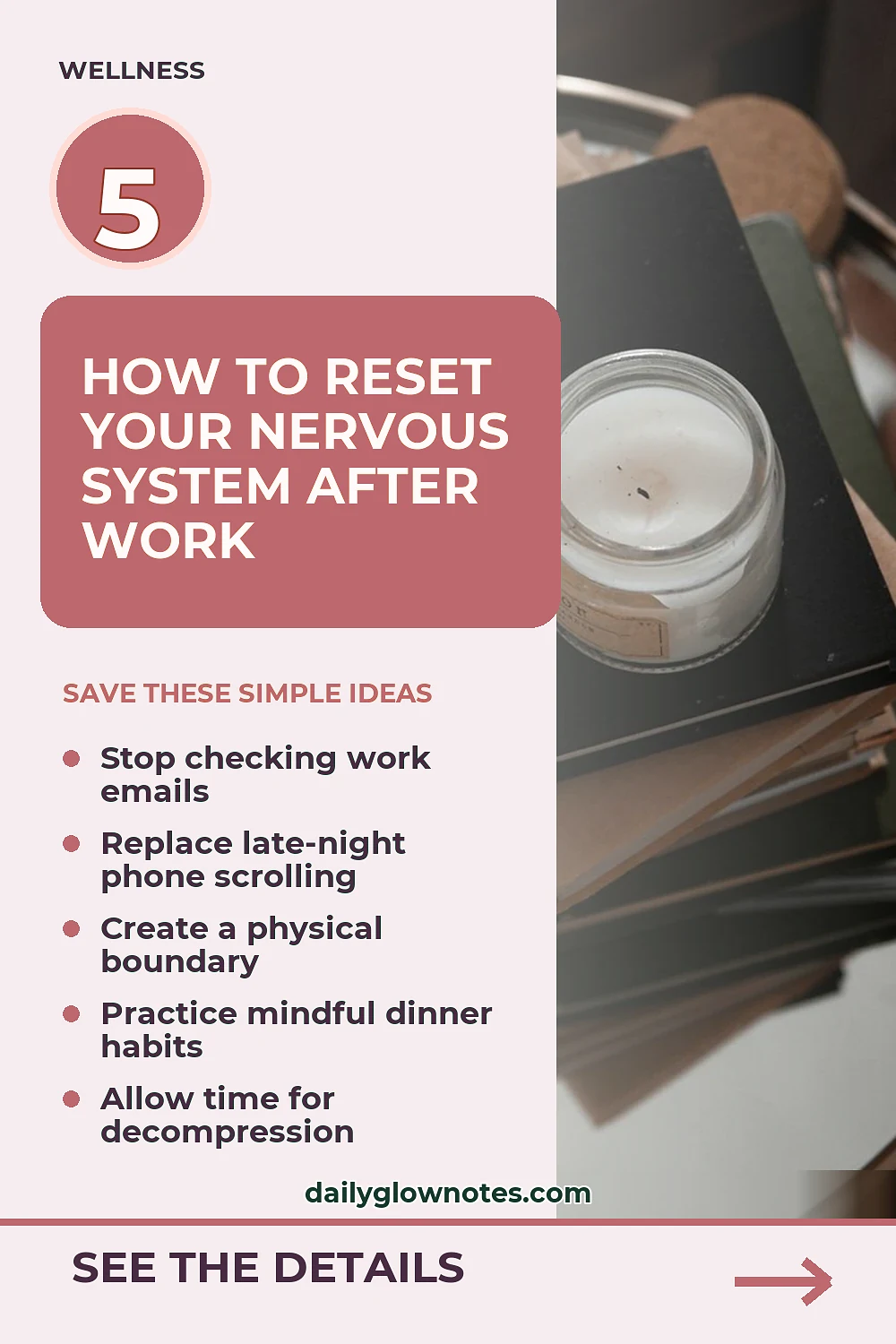

Transitioning from a demanding workday to a restful evening often feels harder than it should. When your computer shuts down, your mind may remain stuck in high-alert mode, cycling through unfinished tasks, unanswered emails, and the lingering tension of tight deadlines. Establishing a structured post work nervous system reset allows your body to recognize that the demands of the day are over, making room for true evening relaxation.
Without a deliberate boundary, work stress bleeds into your personal time, leaving you fatigued yet unable to unwind. By following a practical, step-by-step approach, you can gently guide your physiology from a state of fight-or-flight into a calm, grounded state designed for recovery.
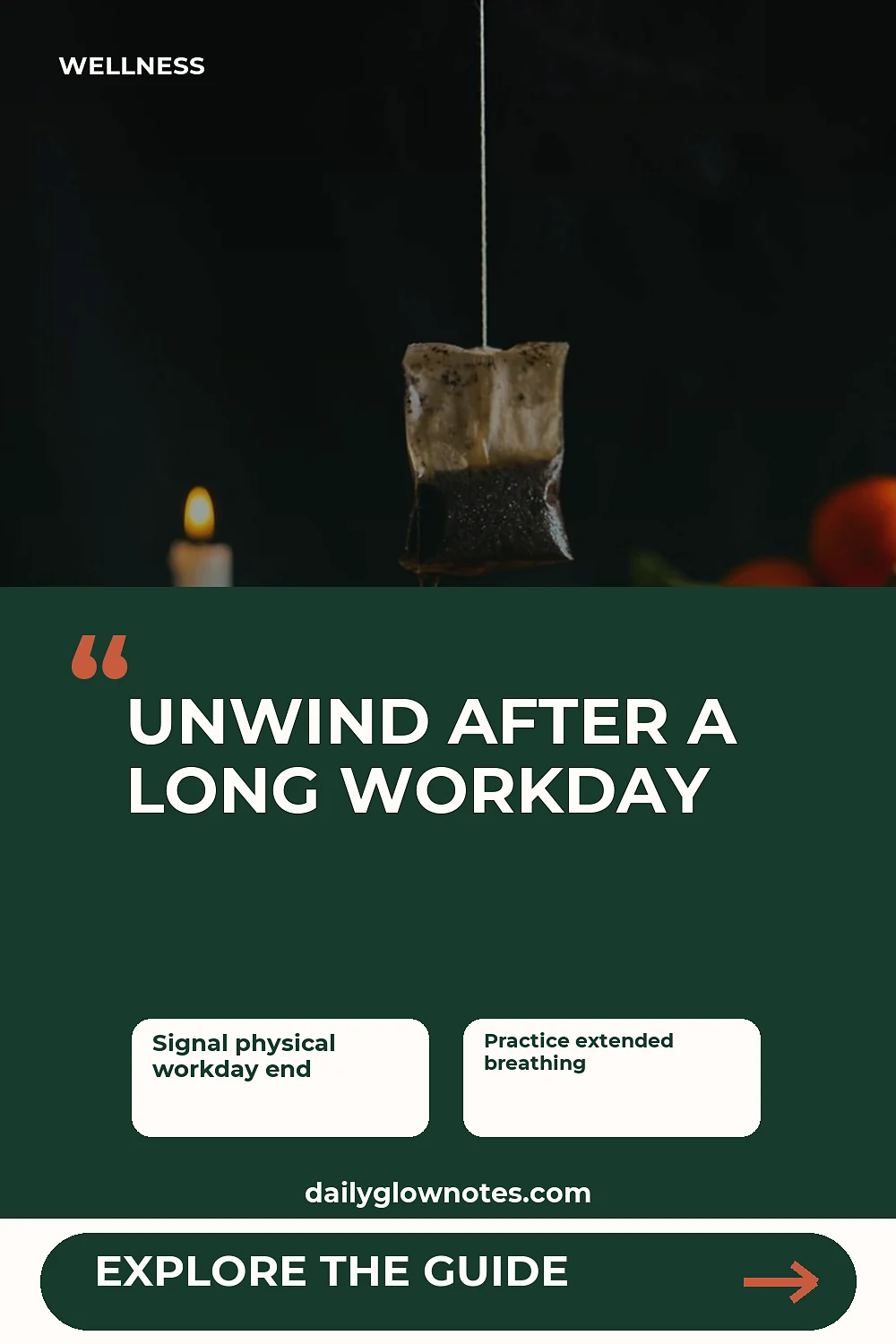
Step 1: Signal the Physical End of the Workday
Your brain relies heavily on environmental cues to understand when to shift gears. When working from home or spending long hours at a desk, the line between productivity and rest becomes blurred. Creating a distinct physical transition helps mark the official end of your professional responsibilities.
Start with a simple tactile routine. Close all open browser tabs, shut off your monitor, and clear your workspace. Changing out of work clothes into comfortable loungewear acts as an immediate physical signal that your duties are complete. Washing your face or hands with warm water can also serve as a sensory boundary, symbolically washing away the tension of the day.
If you find that your mornings set an equally overwhelming tone, taking time later to read about 3 tiny resets for morning inbox overload before it takes over can help prevent stress from compounding before your evening even begins.
Step 2: Downshift Your Breathing Pattern
When you spend hours concentrating or reacting to fast-paced demands, your breathing tends to become shallow and chest-focused. This pattern signals to your nervous system that you are still under pressure. To reverse this physiological response, you must deliberately lengthen your exhalations.
Sit comfortably with your feet flat on the floor or lie down on a supportive surface. Place one hand on your chest and the other on your abdomen. Inhale slowly through your nose for a count of four, letting your belly expand naturally. Pause briefly, then exhale slowly through pursed lips for a count of six or eight. Extended exhalations engage the parasympathetic nervous system, slowing your heart rate and reducing muscle tightness.
Practicing this extended breathing pattern for just five minutes serves as the core engine of your post work nervous system reset, helping to lower internal friction rapidly.
Step 3: Release Stored Muscular Tension
Emotional and mental stress naturally manifests as physical tightness in the shoulders, neck, jaw, and lower back. Holding this tension throughout the evening continuously feeds alarm signals back to your brain, creating a feedback loop of restlessness.
Incorporate a brief physical unwind sequence to discharge this energy:
- Gentle Neck Rolls: Drop your chin toward your chest and slowly roll your ear toward your shoulder, holding for three deep breaths on each side.
- Shoulder Drops: Inhale as you shrug your shoulders up to your ears, hold for two seconds, and drop them down completely as you exhale deeply.
- Supported Child’s Pose: Kneel on a soft rug or yoga mat, fold forward with your arms extended, and let your torso rest between your knees for two minutes.
For those managing packed schedules, integrating these movements into a realistic 15-minute daily stress relief routine that actually fits your schedule ensures that physical tension is addressed consistently without feeling like another tedious chore.