
Pacing Your Energy: A Realistic Midlife Workday Reset Routine becomes easier to understand when the main ideas are organized into practical, realistic steps. This guide explains the core considerations and shows how to apply them thoughtfully in everyday life.
The afternoon slump hits differently when you are navigating midlife. That sudden wall of exhaustion around 2:00 PM is not just a lack of willpower; it is a physical signal that your daily energy reserves need a thoughtful reset. Working women over forty often juggle high professional demands alongside shifting physical rhythms, making standard productivity hacks feel entirely inadequate. If you find yourself reaching for a third cup of coffee or pushing through brain fog with sheer frustration, you are not alone. Building a sustainable midlife work energy pacing routine for afternoon fatigue changes how you move through the workday, replacing forced stamina with predictable, gentle focus.
Rethinking the 9-to-5 Rhythm
Traditional workday structures assume a flat, unchanging energy level from morning until evening. For women experiencing perimenopause or menopause, this model ignores the biological reality of fluctuating hormones and changing sleep patterns. Night awakenings and temperature shifts often mean you start your workday already running on a deficit. Instead of fighting your body's natural cadences, a realistic reset routine honors them. By acknowledging that your peak focus may occur during specific morning hours, you can stop treating afternoon fatigue as a personal failure and start treating it as a natural cue to shift gears. Recognizing these internal shifts allows you to design a schedule that works with your biology rather than against it, reducing the daily friction that drains your emotional and physical reserves.
Shifting from Multitasking to Task Batching
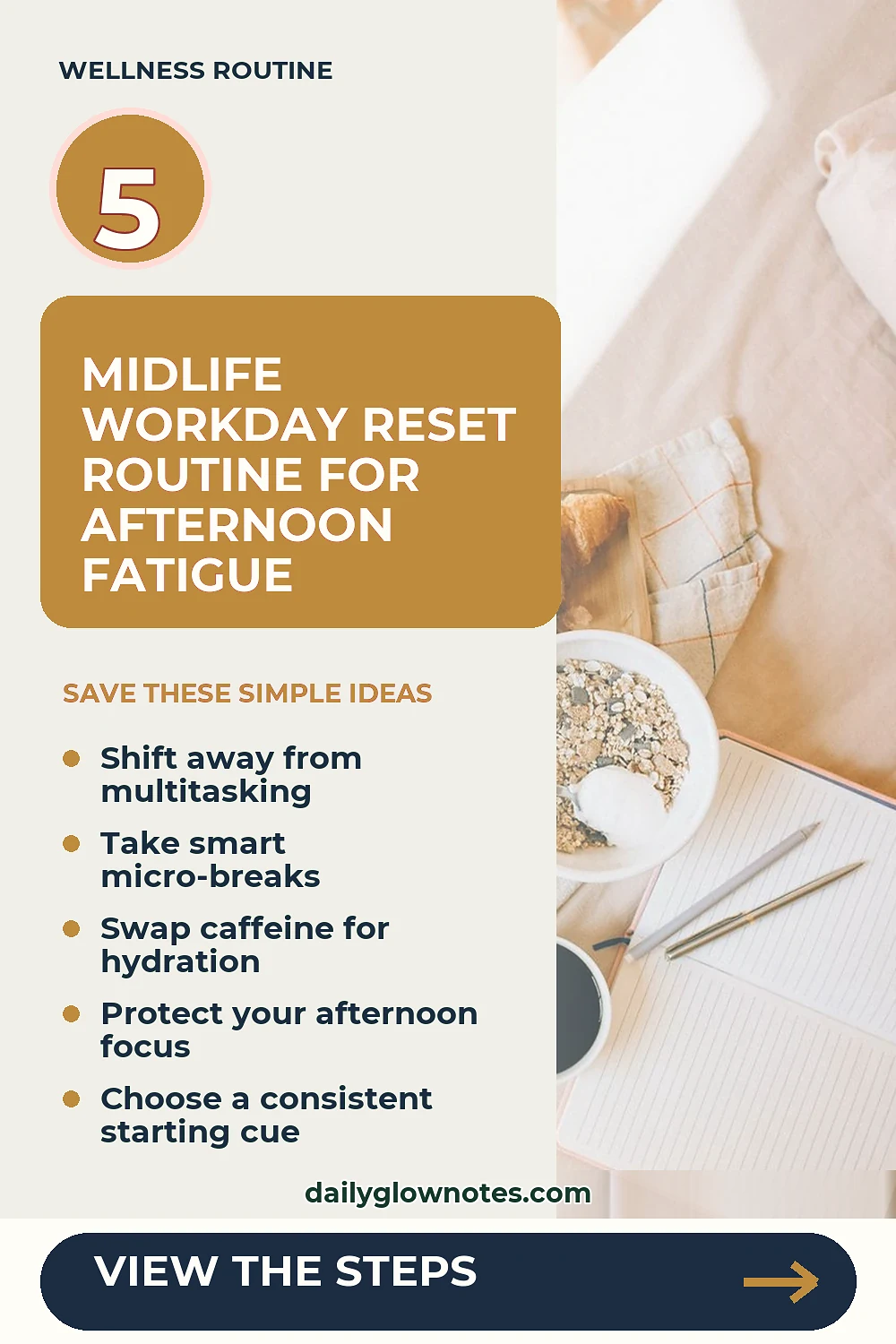
Scattered attention drains mental energy faster than physical labor. When you jump between emails, spreadsheets, and messages, your brain burns valuable glucose trying to re-orient itself. Task batching protects your cognitive stamina by grouping similar activities into dedicated blocks. Dedicate your highest-energy morning hours to complex analytical tasks or creative writing, leaving administrative chores and routine replies for later in the day when your focus naturally softens. This pacing prevents the premature burnout that typically triggers heavy afternoon exhaustion. By deliberately protecting your attention spans and minimizing context switching, you preserve the mental clarity required to navigate complex challenges without hitting a wall by midday.
Implementing Micro-Breaks Before Fatigue Sets In
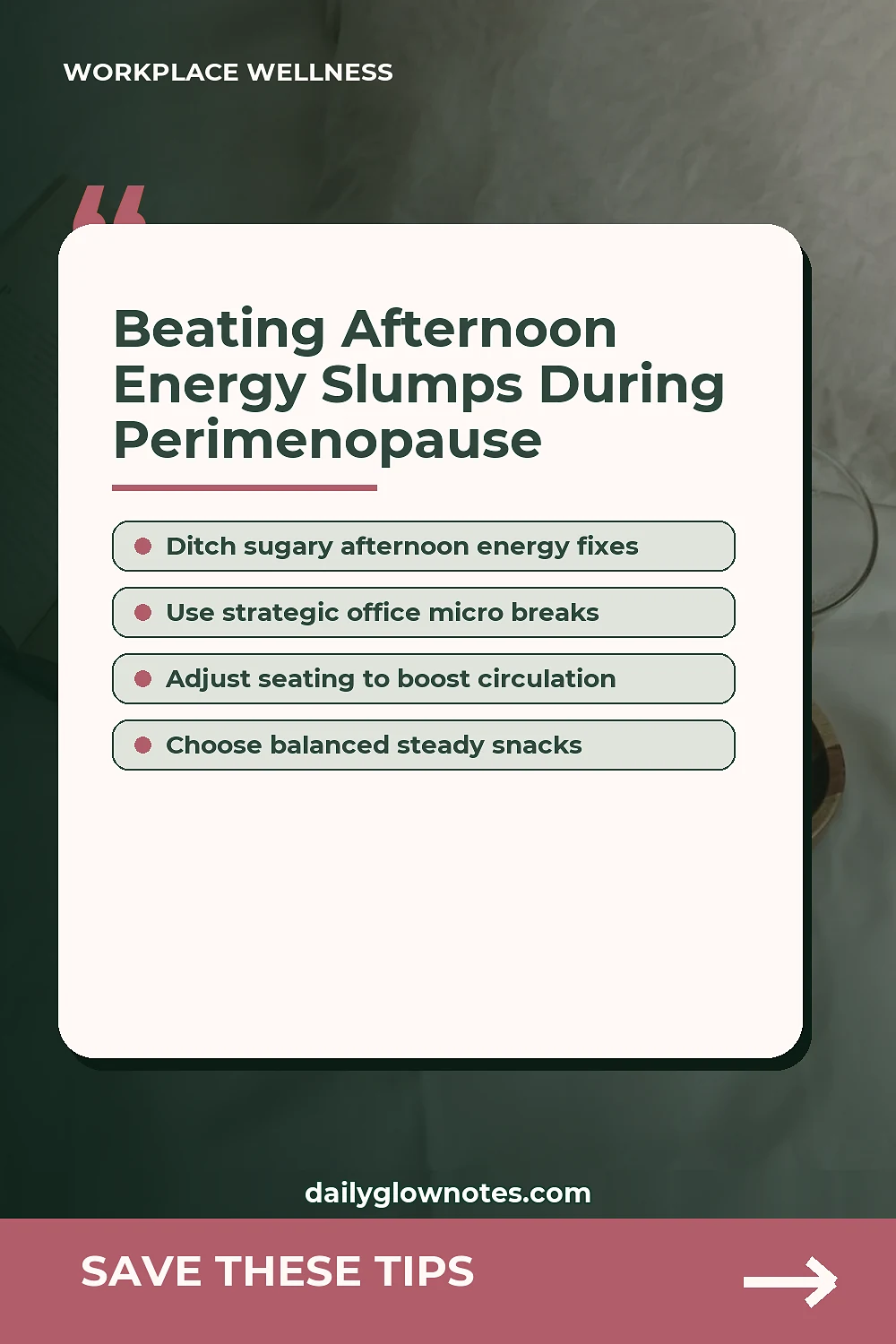
Waiting until you feel completely drained to take a break is counterproductive. By the time exhaustion sets in, your nervous system is already stressed. A restorative midlife routine incorporates deliberate micro-breaks every ninety minutes. Step away from the screen, stretch your shoulders, or practice slow, rhythmic breathing for three minutes. Stepping away from the desk resets your visual focus and lowers cortisol levels. When managing physical comfort during the workday, such as dealing with unexpected warmth in a stuffy office, managing your environment is just as crucial as managing your schedule. Keeping a desk fan nearby, adjusting your chair for optimal ergonomic support, or dressing in breathable layers helps maintain steady physical ease. These small environmental adjustments prevent physical discomfort from compounding into mental fatigue.