
Stepping out of the professional workspace and immediately into domestic life can feel like shifting gears without using the clutch. For working women in midlife, the cognitive fatigue of managing meetings, emails, and workplace demands does not simply evaporate the moment you close your laptop or park the car. Instead, that mental load follows you right across the threshold, colliding with evening household responsibilities, family needs, and the quiet desire to finally rest. When you are navigating perimenopause or the broader transitions of midlife, this abrupt shift can intensify physical tension, irritability, and low evening energy. Implementing a intentional midlife stress reset between work and home transitions offers a gentle bridge, allowing your nervous system to downshift before the second half of your day begins.
Creating a Boundary Before You Walk Through the Front Door
Rather than relying on lengthy meditation sessions that demand time you simply do not have, a micro-break approach fits naturally into the gap between your commute and your kitchen. Building this small pause into your afternoon routine helps clear cognitive clutter and supports a calmer entry into your evening environment.
The Anatomy of a Ten-Minute Decompression Routine
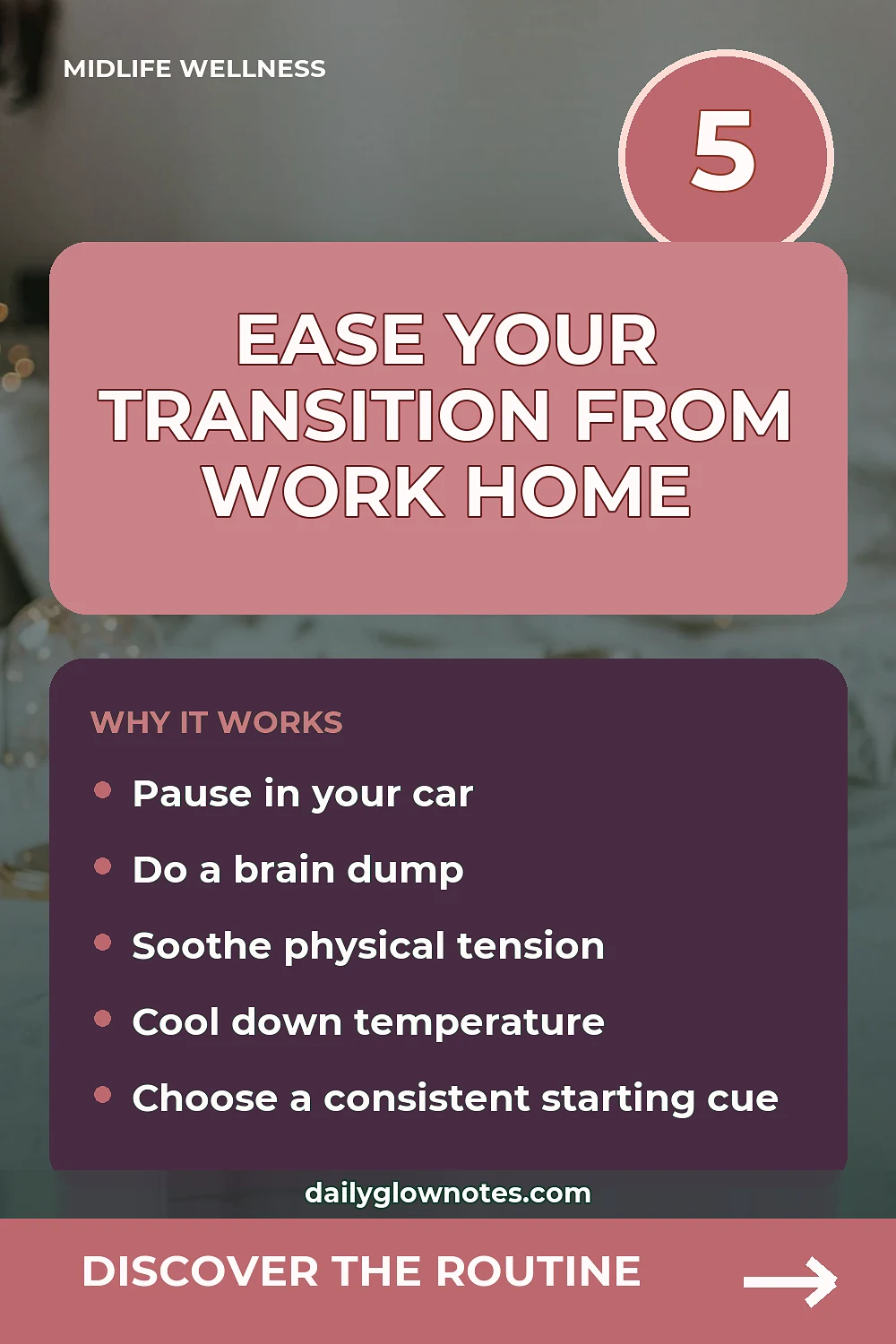
A successful transition ritual does not need to be complicated. In fact, the simpler it is, the more likely you are to maintain it on high-stress days. When you arrive home or pull up to your driveway, give yourself ten undistracted minutes before engaging with household demands. This small window is entirely yours to shed the accumulated stress of the workday.
Start by pausing in your entryway or car to anchor your physical body. Notice where you are holding tension—often in the jaw, shoulders, or upper back—and consciously release it. Take a few slow, deep breaths, extending your exhales to signal safety to your nervous system. You might also find it helpful to track how your physical energy fluctuates day to day, as understanding your personal rhythms can guide you in pacing your evening activities. For more ideas on tuning into your body, explore A Low-Pressure Guide to Tracking Your Wellbeing in Midlife to better understand your daily patterns.
Shedding the Mental Load of the Workday
One of the primary reasons the transition home feels so exhausting in midlife is the phenomenon of boundary blurring. When professional tasks linger in your mind, it becomes difficult to be fully present for your family, your partner, or simply yourself. To clear your mental workspace, try a simple brain-dump technique.
Keep a small notebook in your bag or car where you can scribble remaining tasks, stray thoughts, or unresolved work items in bullet points. Once written down, mentally close the book, telling yourself that those items are safely stored until the next business day. This physical act of recording and closing helps create a psychological boundary between your professional identity and your evening self. Letting go of work-related urgency can also help preserve your social battery for the rest of the evening, which is especially important if you tend to feel overstimulated by the end of the day. To learn more about protecting your personal energy when evening demands pile up, read Navigating Perimenopause Social Energy Boundaries and Evening Recovery Tips.