
That familiar heavy fog rolls in right around 2:00 PM. Your shoulders tense, your screen blurs slightly, and the thought of tackling another spreadsheet feels like climbing a mountain. For many professional women navigating perimenopause, afternoon fatigue at the office is not just about a bad night of sleep or a heavy lunch. It is a complex interplay of shifting hormones, fluctuating energy reserves, and the sheer exhaustion of maintaining peak professional performance while managing invisible midlife transitions.
Reaching for a third cup of coffee often backfires, leading to jittery anxiety followed by an even harder crash. Instead of fighting your body's natural afternoon rhythm with stimulants, a more sustainable approach involves strategic micro-pacing. By breaking your afternoon into intentional, low-effort intervals, you can restore mental clarity and physical comfort without disrupting your workday.
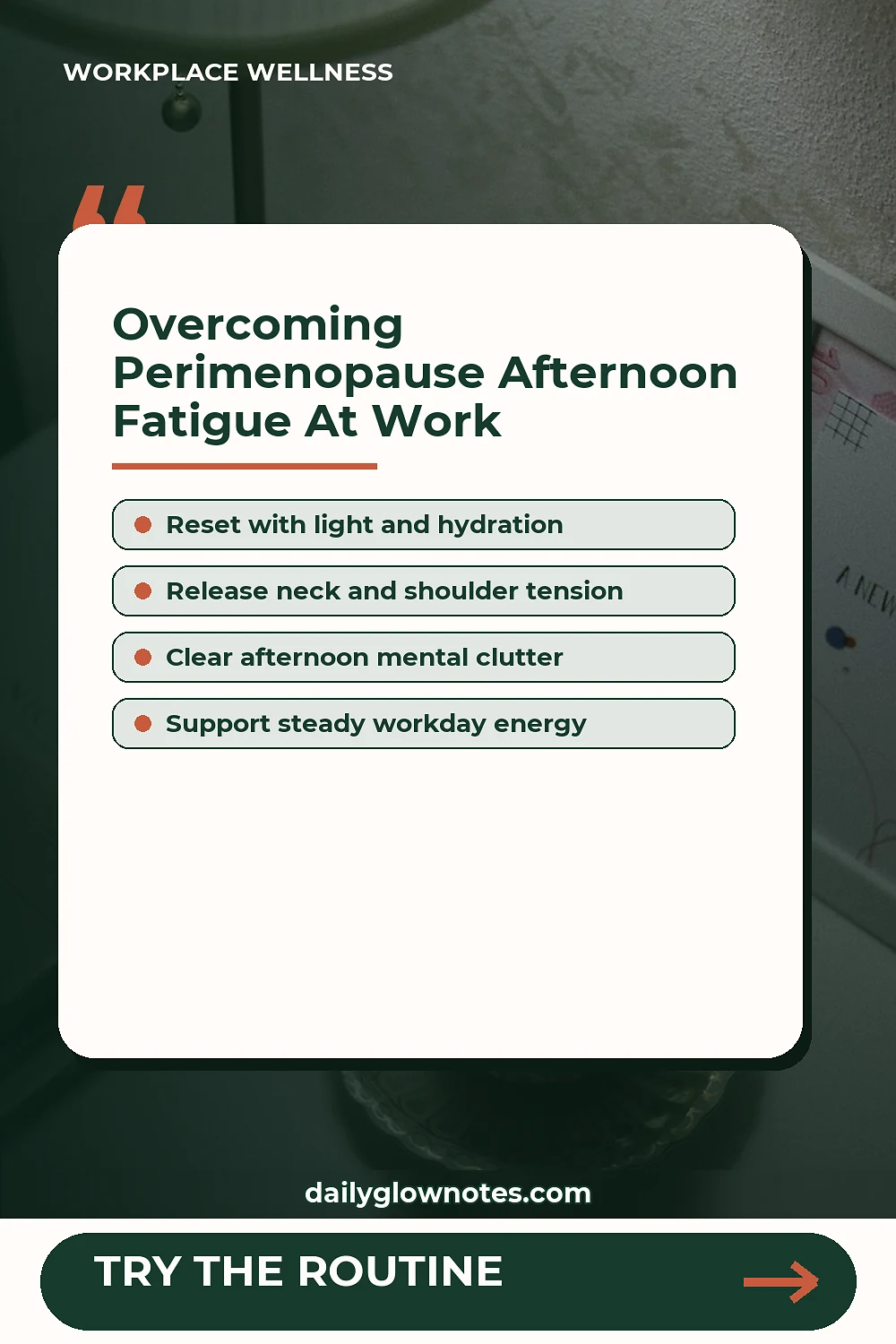
Minute 1 to 5: The Strategic Light and Hydration Shift
When focus begins to fracture, the quickest physiological reset starts with your environment and hydration. Step away from your desk if possible, or adjust your workspace lighting to reduce eye strain. Sipping cool water infused with fresh lemon provides a sensory jolt that refreshes the palate and encourages mindful hydration.
During perimenopause, internal thermostat fluctuations can make stuffy office air feel suffocating, contributing significantly to mental sluggishness. Taking these first five minutes to hydrate mindfully and cool your immediate environment helps signal to your nervous system that it is safe to reset. If you are preparing for travel outside the office later in the week, similar cooling strategies are essential, much like managing road tripping in perimenopause: managing car cabin heat and comfort during transit. Hydration plays an exceptionally vital role here, as fluctuating estrogen levels can impact your body's natural fluid balance, making you more susceptible to midday headaches and dry eyes when sitting under harsh fluorescent office lights for hours on end.
Minute 6 to 10: Physical Release and Posture Realignment
Hours of uninterrupted sitting create physical stagnation that compounds mental fatigue. Midlife joints and muscles often hold onto tension silently, especially when you are concentrating deeply on demanding tasks. Use this block for targeted micro-movements right at your desk to keep your lymphatic system moving and prevent stiffness.
Drop your shoulders away from your ears, gently roll your neck, and stretch your wrists and fingers. Stand up to lengthen your spine, taking three slow, deep abdominal breaths to lower cortisol levels. These small physical adjustments improve circulation, sending fresh oxygen to your brain and helping to clear the afternoon brain fog naturally. Incorporating gentle seated spinal twists or hip openers can also alleviate the lower back ache that frequently accompanies hormonal shifts and prolonged sedentary periods during the workday.