
The kitchen is often the unspoken heart of the home, but it is also a frequent site of friction. Perhaps you have just spent ten minutes frantically searching for a missing lunchbox while the coffee pot overflows, or maybe a minor spill has turned into a cascading series of frustrations right as you were trying to start your workday. These moments are small, but they have a way of lingering, coloring the rest of your morning or afternoon with an undercurrent of agitation. When we carry this residual tension forward, we unknowingly invite a sense of urgency into tasks that don't actually require it. Learning to interrupt this cycle is one of the most effective ways to reclaim your energy throughout the day.
The Physiological Echo of Kitchen Chaos
When a hectic kitchen moment occurs—that sudden spike in heart rate when something breaks or time runs short—your body enters a state of heightened alertness. It is a biological response designed to help you navigate a threat, but it is less helpful when you are simply trying to get out the door. The trouble starts when the event ends, but the chemical response does not. Your cortisol levels may remain elevated, and your muscles might stay braced, even as you move into a quiet office or transition to a different room. This is the phenomenon of carrying stress forward. You are effectively running a marathon in your mind while sitting still, which drains your mental battery long before the day is truly underway.
Anchor Your Senses with Temperature Shifts
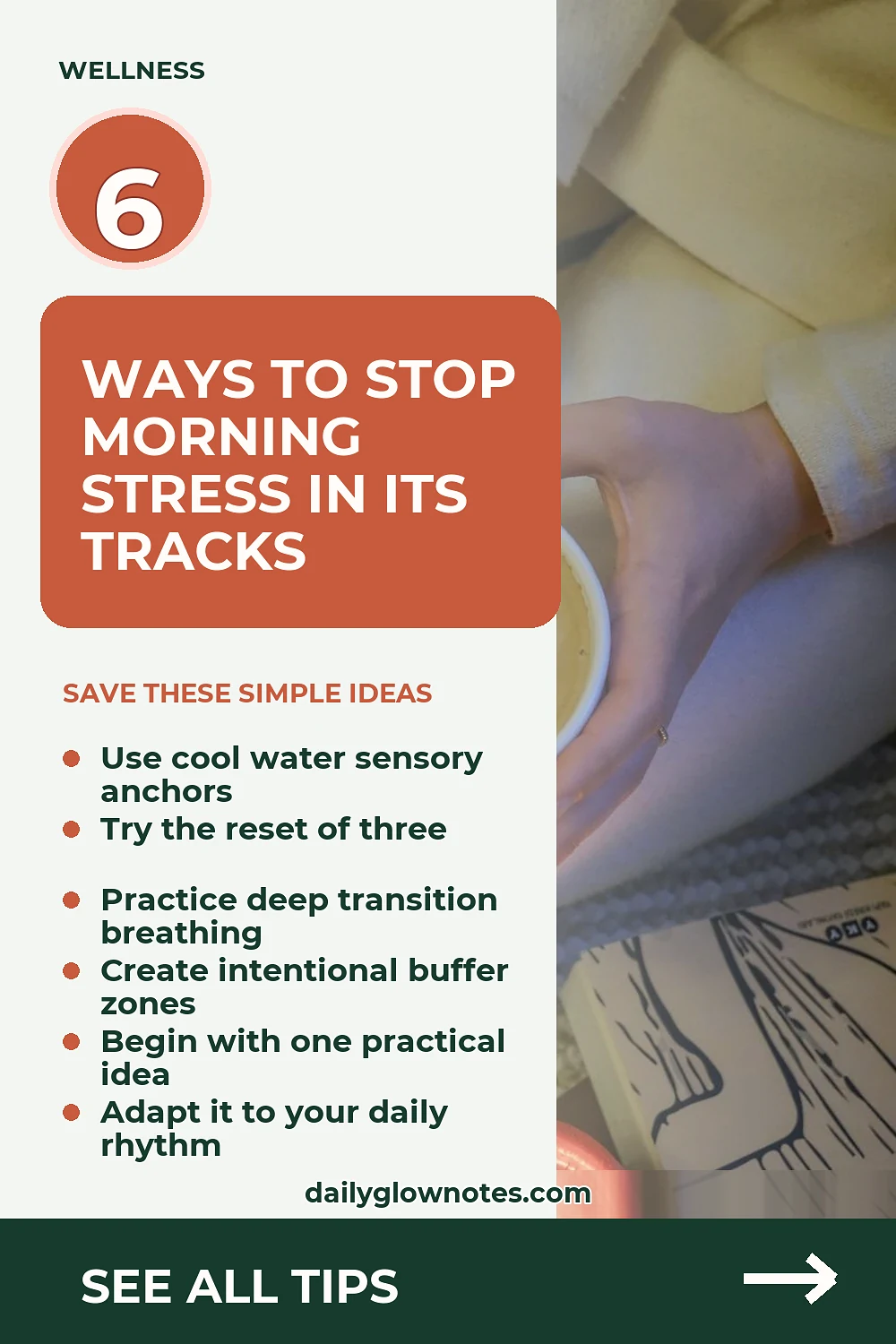
One of the most immediate ways to signal to your nervous system that the "emergency" is over is through a deliberate change in sensory input. Temperature is a powerful tool here. If you find yourself pacing your kitchen floor, feeling the heat of frustration rise, move to the sink and run cool water over your wrists for thirty seconds. The cooling sensation acts as a physical anchor, pulling your attention away from the racing thoughts about what went wrong and grounding you in the present moment. This isn't about ignoring the mess or the task; it is about resetting your internal thermostat so you can address the situation with clarity rather than reactivity. Some people find this practice so effective that they pair it with a consistent hydration ritual, ensuring that even during a busy morning, they pause long enough to drink a full glass of water, which can be a grounding habit during high-stress windows.
The Reset of Physical De-Cluttering
Chaos in our immediate environment often mirrors chaos in our mental state. If a kitchen mishap has left you feeling frazzled, the urge might be to rush away to the next task, leaving the evidence of the stress behind. Instead, try a "reset of three." This means choosing three items to put back in their place—perhaps a stray spoon, a discarded napkin, and a rogue mail envelope. The act of organizing something small creates a sense of agency. You are moving from a state of being acted upon by circumstances to being an active participant in your space. This small gesture can stop the snowball effect of disorganization and help you transition into your next activity with a sense of completion rather than scattered energy.