
Your mind is racing through open browser tabs, a running to-do list, and tomorrow's obligations before your morning coffee even cools. Mental clutter rarely arrives as a single massive crisis; instead, it accumulates as a low-grade static that drains your patience and focus. When you are constantly switching between tasks, your nervous system stays locked in a state of subtle alert. This makes simple decisions feel exhausting and turns minor inconveniences into major stressors. Recognizing this scatter is the first step toward reclaiming your calm. Instead of fighting the racing thoughts or trying to force productivity, you need a physical anchor to pull your awareness back into the room.
Why Mental Clutter Hijacks Your Day
Physical grounding offers a reliable bridge out of mental overload. When your thoughts are trapped in the future or replaying the past, engaging your senses forces your brain to register the immediate present. You do not need an hour of silent meditation or a secluded retreat to reset your focus. Just a few intentional moments can shift your state from scattered to centered, giving you the clarity needed to handle whatever your day throws at you. For those mornings when the onslaught begins before you even open your laptop, exploring small habits like 3 Tiny Resets for Morning Inbox Overload Before It Takes Over can help you build an even stronger defense against digital chaos.
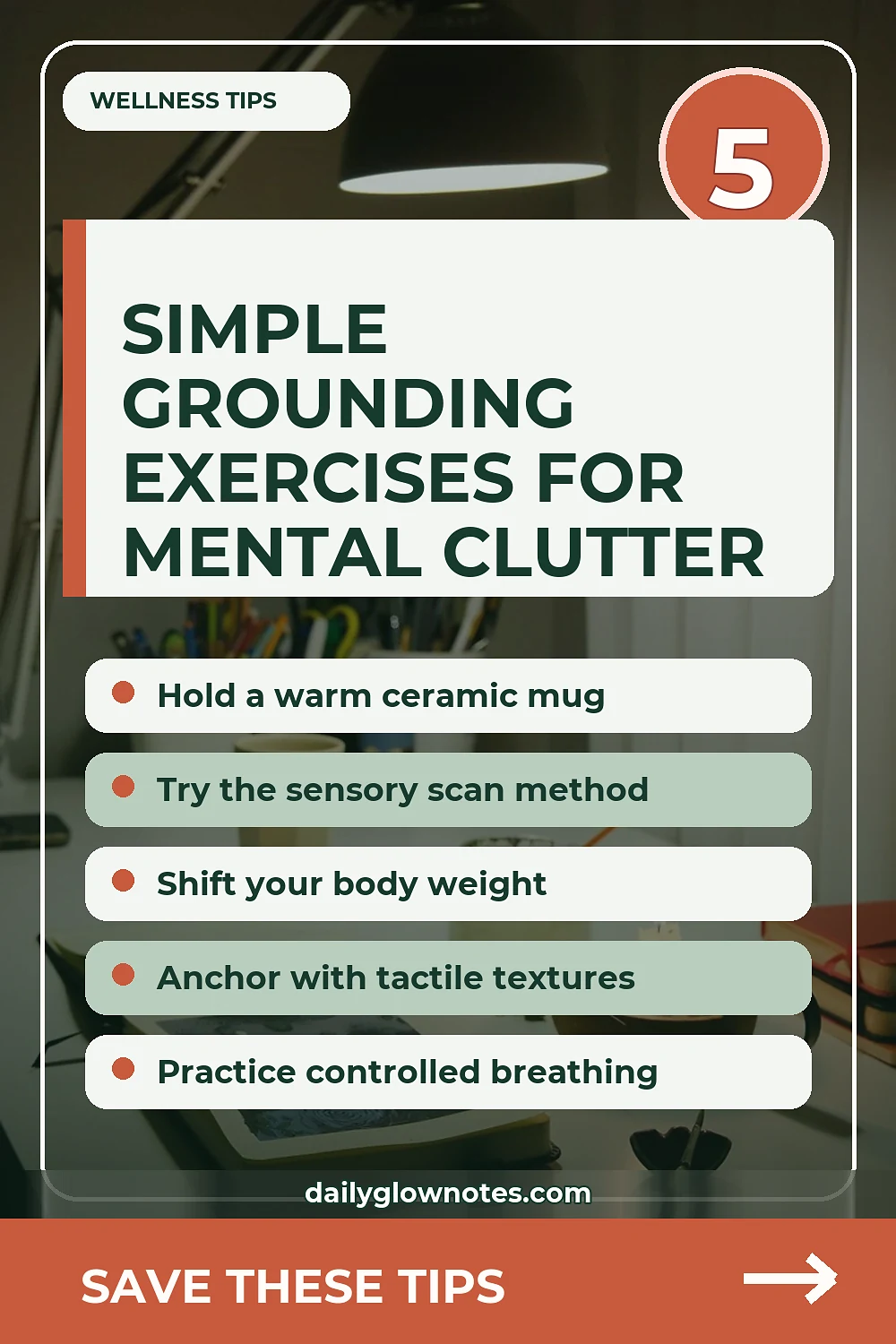
1. The Warm Mug Technique
There is a reason a cup of tea or warm water feels instantly comforting. The physical sensation of holding a warm ceramic mug provides immediate tactile feedback that cuts through mental noise. Wrap both palms around the vessel, noticing the exact temperature radiating against your skin. Feel the weight of the ceramic, the texture of the glaze, and the rise of the steam. By concentrating entirely on this single physical sensation for thirty seconds, you give your overworked mind permission to drop its multitasking burden. Many adults find that pairing this tactile exercise with a calming herbal tea or natural daily support like Restilen helps create a peaceful boundary between a hectic morning and a productive workday.
2. The 5-4-3-2-1 Sensory Scan
When your thoughts feel entirely unmanageable, visual and spatial tracking can quiet the mental storm. The classic 5-4-3-2-1 method guides your focus through your immediate environment using your five senses. Quietly acknowledge five things you can see around you, four things you can physically feel, three things you can hear, two things you can smell, and one thing you can taste. This exercise requires no special tools and can be done discreetly at your desk, in your car, or while waiting in line. By systematically checking in with your senses, you interrupt the internal feedback loop of stress and remind your brain that you are safe in the present moment.