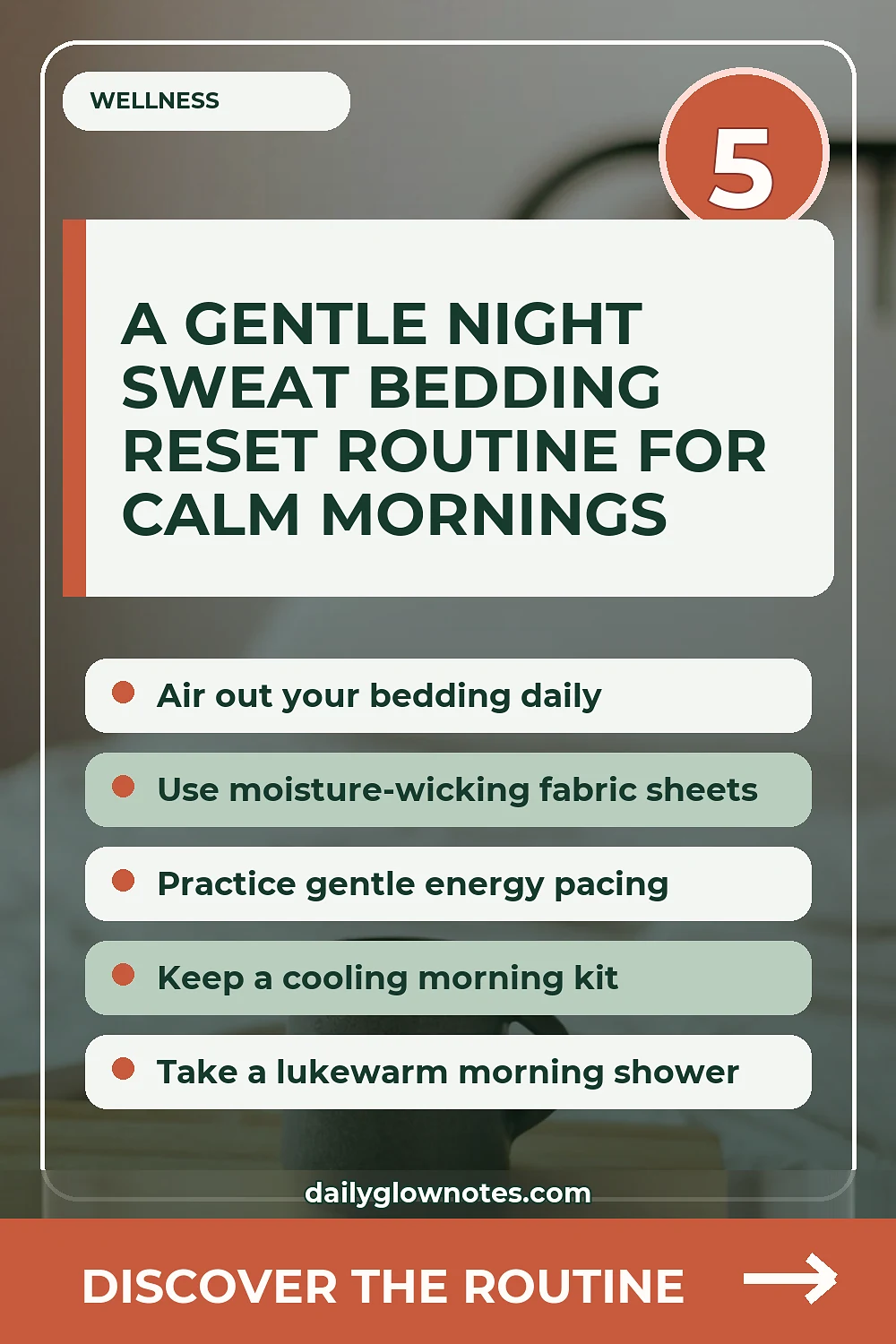

Waking up in the middle of the night drenched in sweat, with damp sheets clinging to your skin, instantly disrupts your body's rest cycle. For women navigating perimenopause and midlife hormonal shifts, these nocturnal thermal spikes are a common reality. The hardest part often isn't the heat itself, but the lingering discomfort and bright lights that make falling back to sleep feel almost impossible. Having a reliable night sweat bedding reset routine allows you to clear away moisture and restore bodily comfort in under three minutes without fully waking up your brain.
The Low-Light Protocol: Keep Melatonin High
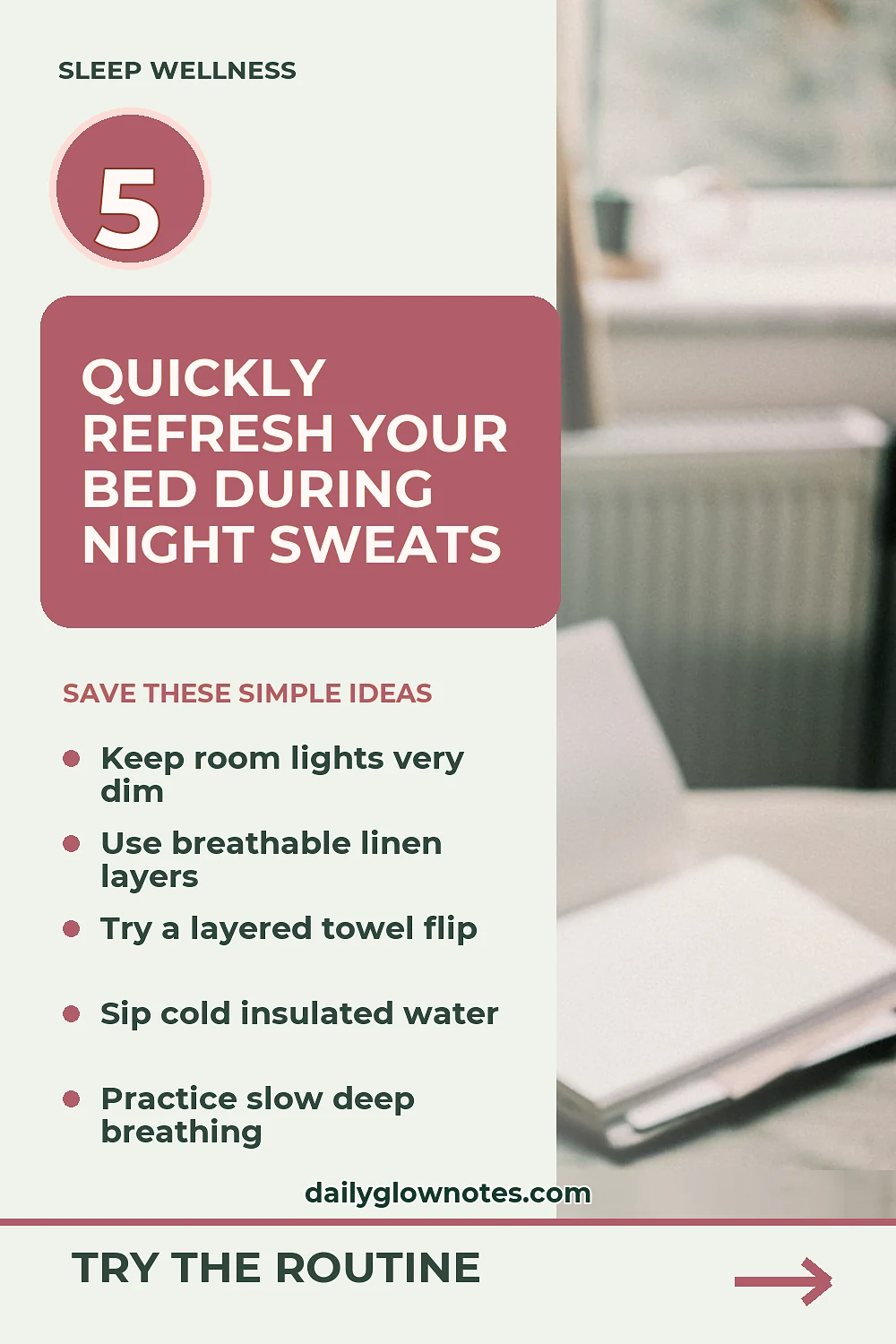
When you wake up overheating at 3:00 AM, the impulse is often to flip on the bedside lamp, throw off the duvet, and remake the bed. However, exposure to overhead or bright yellow lights signals your brain that morning has arrived, suppressing melatonin production and turning a brief disruption into hours of tossing and turning. To preserve your sleepy state, keep your bedroom pitch black or use a dim, low-placed red nightlight that illuminates the floor without reaching your eyes.
Keep your movement slow and deliberate. Avoid checking your phone for the time, as blue light and time-tracking anxiety will immediately elevate your heart rate. By maintaining a dim atmosphere, you keep your nervous system in a parasympathetic state, making it much easier to drift back off once your sleep surface is clean and cool.
The Two-Layer Towel Flip for Instant Dryness
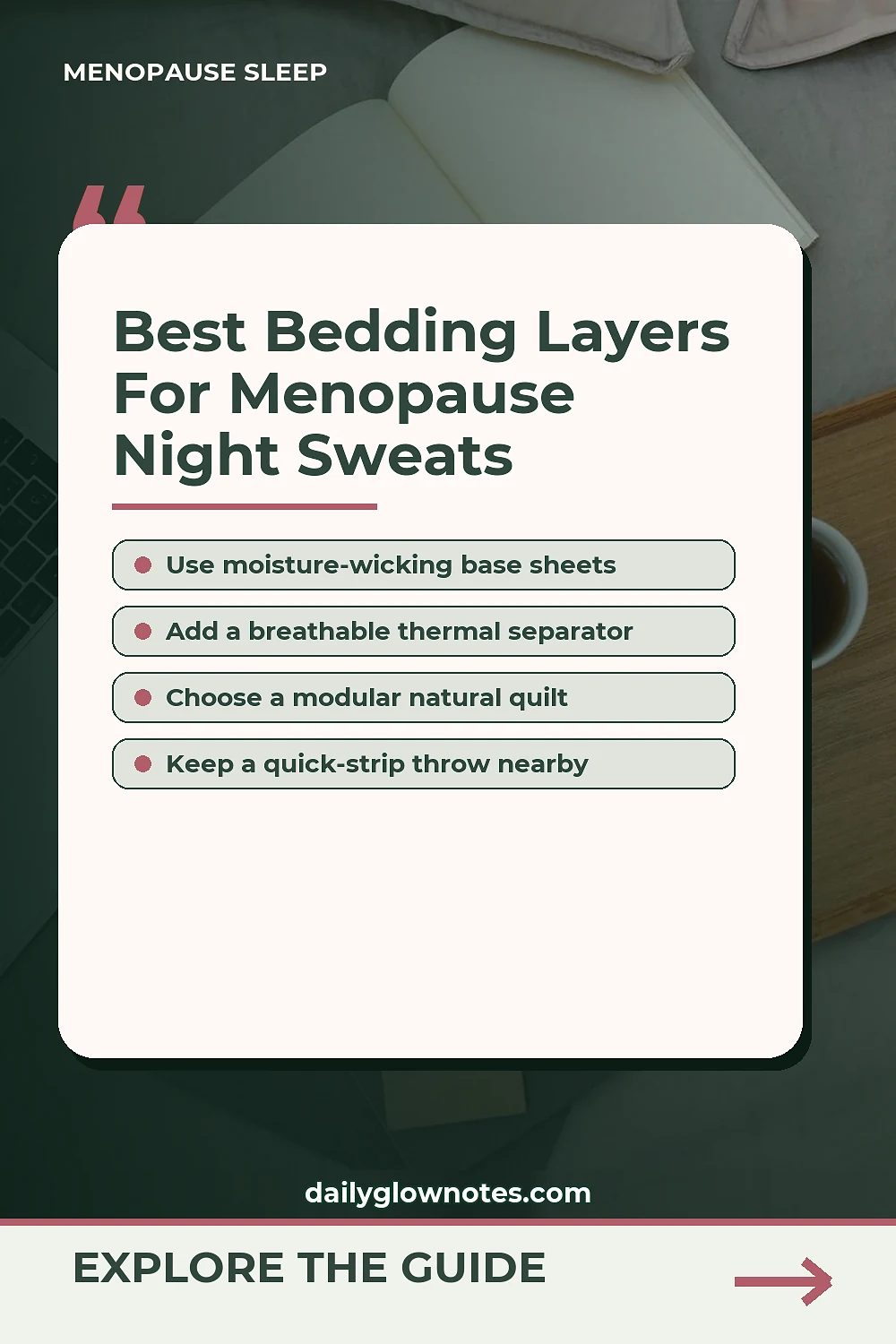
Stripping a fitted sheet off a mattress in the dark requires far too much physical effort and energy. Instead, prepare your bed before you go to sleep using a layered moisture-management strategy. Lay a soft, breathable linen or organic cotton bath towel across the lower half or mid-section of your bed over your bottom sheet.
When a night sweat strikes, simply fold the damp towel inward and slide it off the bed, revealing the dry, cool sheet beneath. If you tend to experience multiple thermal spikes per night, store a second pre-folded towel on a nearby chair. Swapping a towel takes less than twenty seconds and eliminates the need to change full bedding sets until morning. For additional midlife wellness routines, learning about managing car cabin heat and comfort can help you stay cool on daytime journeys as well.
Selecting Breathable Fabrics That Dissipate Thermal Spikes
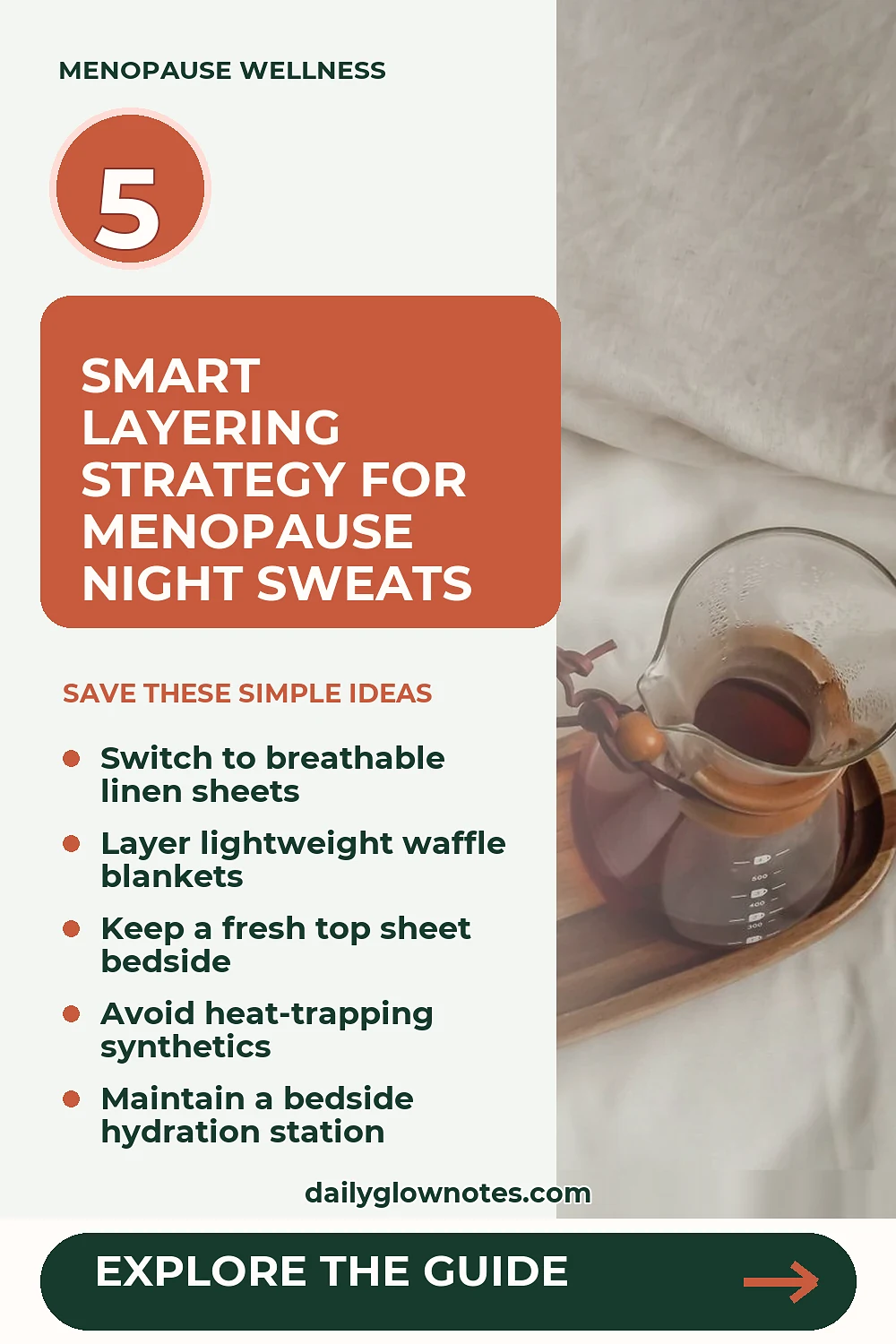
The materials you sleep on play a massive role in how severe night sweat disruptions feel. Synthetic fabrics like polyester or microfiber trap body heat and moisture, creating a humid microclimate against your skin that intensifies discomfort. Natural fibers, on the other hand, actively manage air circulation and moisture evaporation.
- Linen: Naturally thermoregulating with an open weave that allows heat to escape instantly.
- Percal Cotton: Features a crisp, matte weave that feels cool to the touch and allows high airflow.
- Bamboo or Tencel: Extremely soft options with superior moisture-wicking properties that dry quickly.
Pairing these lightweight fabrics with a moisture-wicking pajama set ensures that sweat moves away from your skin rapidly rather than pooling on the fabric.