
Closing your laptop at the end of a demanding workday rarely means your mind stops working. For many remote and office-working professionals, the transition from professional responsibilities to personal evening time comes with a stubborn cognitive hangover. You might find yourself sitting on the couch while mentally drafting tomorrow morning emails, replaying a tense afternoon meeting, or keeping a running inventory of uncompleted tasks. When this overthinking takes over, it becomes nearly impossible to unwind, enjoy your evening, or drift into a restorative sleep.
Finding effective journal prompts for overthinking before bed can serve as a crucial psychological boundary. Writing acts as an external hard drive for your brain, taking the abstract weight of lingering worries and anchoring them onto paper where they no longer demand active mental surveillance. Building a consistent wind-down routine allows you to gently signal to your nervous system that the workday is officially over. By combining mindful writing habits with practical evening self-care, you can cultivate a much calmer domestic atmosphere.
The Brain-Dump Separation Technique
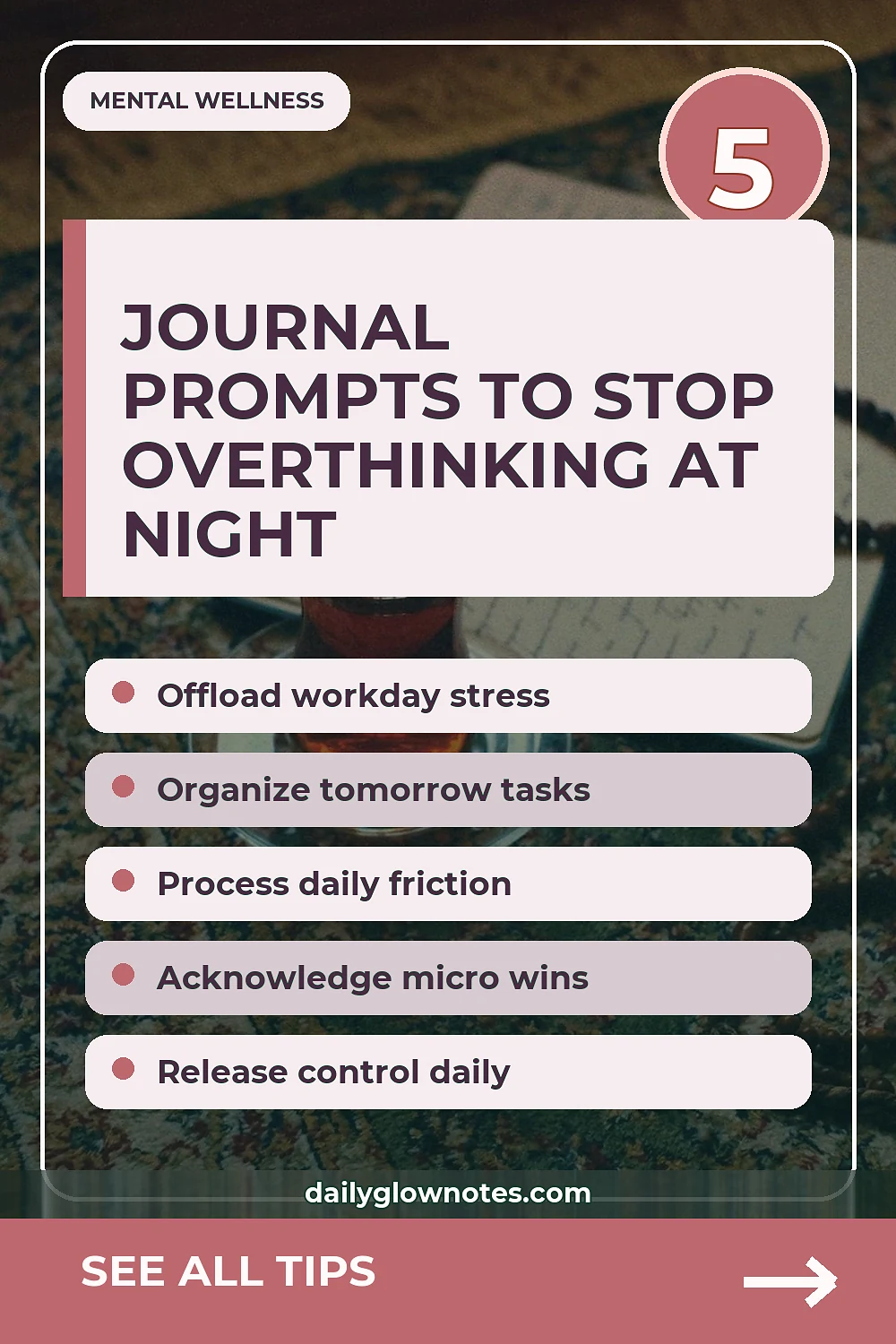
The first step in quieting mental clutter is getting everything out of your head without filtering or editing. When you try to simply tell yourself to stop thinking about work, your brain often doubles down on the effort. Instead, give your thoughts a physical container. Open your notebook and write down every single task, worry, or half-formed idea lingering from your shift. Do not worry about neat handwriting or professional phrasing; let the page capture the raw chaos of your workday fatigue.
This unstructured brain-dump creates an immediate cognitive buffer. Once your thoughts are safely recorded, your brain recognizes that you do not need to hold onto them overnight to prevent forgetting them. To build a broader evening routine around this practice, you can explore ideas from a shopping free relaxation toolkit using household items for busy evenings, which offers creative ways to enhance your post-work transition using simple items you already have at home.
Categorizing Unresolved Tasks for Tomorrow
Once you have offloaded your mental clutter, the next prompt helps you organize those fragments into actionable reality. Stressed minds tend to treat every minor task as an urgent midnight emergency. To counter this, review your brain-dump list and divide the items into two distinct categories: what genuinely requires attention tomorrow, and what was merely anxiety talking.
Write down a maximum of three concrete priorities for the next workday. By establishing these boundaries on paper, you relieve yourself of the burden of carrying tomorrow's schedule through tonight's dinner and relaxation time. Knowing your tasks are safely captured for the morning allows your attention to return fully to the present moment.