
Mid-afternoon often brings a distinct kind of mental fog. The inbox is overflowing, back-to-back meetings have eroded your focus, and your body feels tense after hours in the same chair. In those moments when taking a full hour-long break is simply not realistic, having a desk drawer stress reset kit can offer a grounding anchor. Rather than buying specialized gadgets or trendy wellness products, you can curate a simple, shopping-free collection of ordinary desk items that encourage a brief, meaningful pause.
Creating a personal reset drawer is about designing an intentional boundary within your existing workspace. By assembling tactile, calming objects you already own, you create a dedicated physical cue that signals it is time to slow down, soften your posture, and clear your mental slate before diving into the next task.
The Intentional Power of Tactile Workspace Transitions
When mental fatigue sets in, abstract reminders to remain calm rarely work. Your brain is reacting to a continuous stream of digital stimuli, making physical sensory inputs far more effective for shifting your internal state. A dedicated reset drawer acts as an immediate tactile circuit breaker.
Opening a specific drawer and reaching for a non-digital item disrupts the mechanical rhythm of typing and scrolling. Placing a smooth river stone, a plain paper notebook, or a swatch of textured fabric on your desk forces your eyes to adjust to a non-illuminated surface. This simple physical shift prompts your nervous system to pause, giving you a chance to check in with your physical comfort, drop your shoulders, and loosen a tight jaw.
Essential Non-Digital Elements for Your Reset Drawer
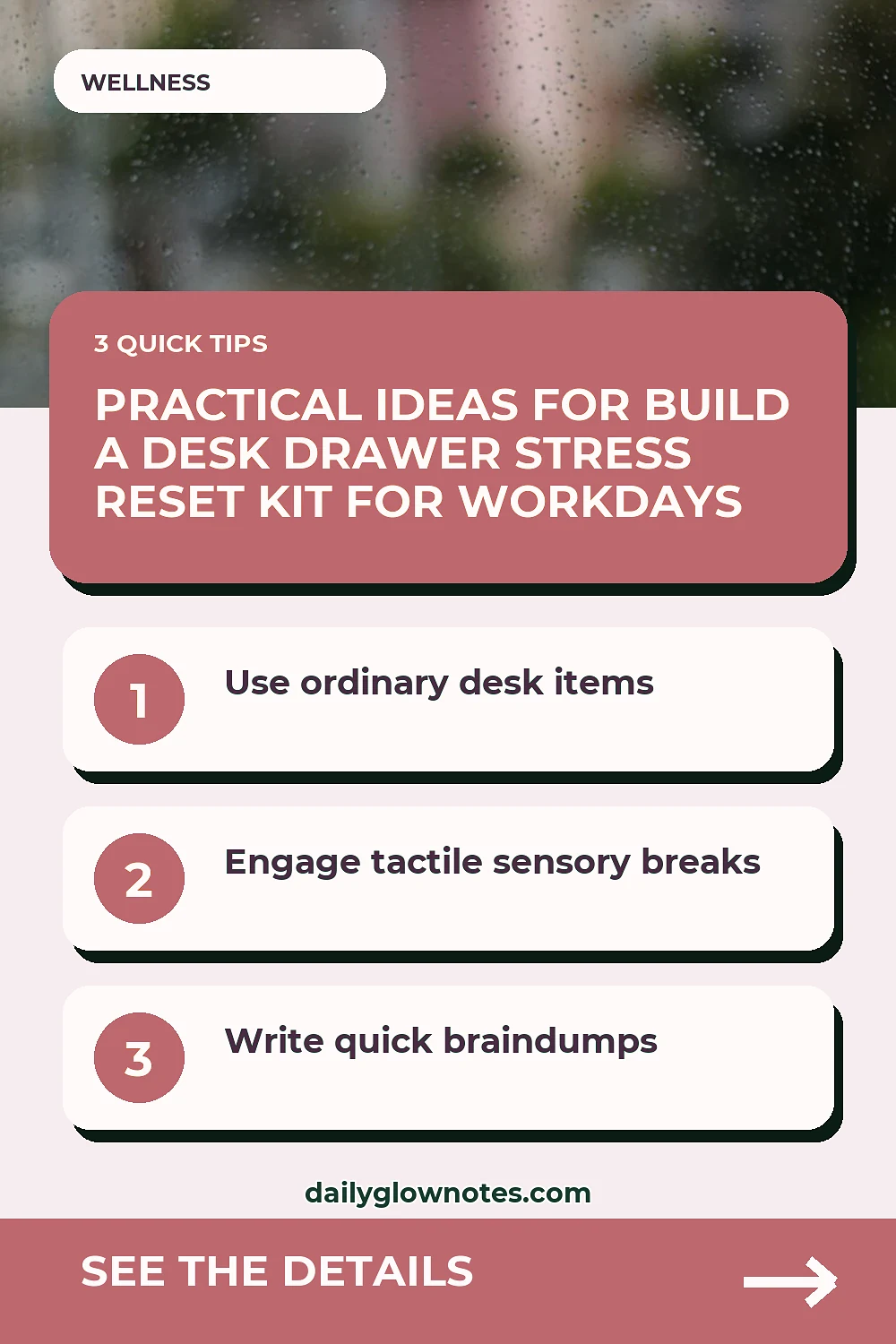
Building a functional desk drawer stress reset kit requires no shopping trips. The goal is to gather four or five simple items that engage different senses and promote a brief sensory reset during demanding work hours.
- A Plain, Unlined Notebook: Use this strictly for rapid, low-stakes braindumps. When overwhelming thoughts or sudden reminders pull your focus away from your current priority, writing them down by hand clears mental bandwidth without adding digital clutter.
- A Smooth Stone or Tactile Object: Keeping a natural object like a smooth pebble or a wooden block gives your hands something grounding to hold during intense phone calls or brief moments of reflection.
- A Soft Fabric Pouch or Ribbon: Holding a soft texture offers a quiet sensory break, helping to counteract the harsh, cold feeling of plastic keyboards and glass screens.
- An Uncaffeinated Herbal Tea Bag: Having a favorite herbal blend tucked away offers a comforting ritual. The act of stepping away to pour hot water serves as a natural physical boundary during chaotic afternoons.
A Five-Minute Desk-Based Reset Sequence
Having a reset drawer is most effective when paired with a predictable, low-effort routine. When you notice your concentration slipping or feel an onset of tension, try this simple five-minute sequence right at your desk.
First, slide open your reset drawer and select your tactile object. Hold it in your palm and take three slow, deliberate breaths, focusing entirely on the temperature and weight of the object. Next, open your plain notebook and write down whatever is currently cluttering your mind—whether it is a looming deadline or a stray personal task. Once it is on paper, close the notebook and leave it inside the drawer.
Finally, roll your shoulders backward three times and take a slow sip of warm water or tea. This complete sequence takes less than five minutes, yet it effectively resets your mental state without requiring you to leave your office or interrupt your workflow completely. If you struggle with early-day momentum, you might also explore 3 Tiny Resets for Morning Inbox Overload Before It Takes Over for strategies tailored to busy mornings.