
Waking up at 3:00 a.m. with a racing mind or sudden temperature shift is a common experience, especially during midlife transitions. When your sleep is interrupted, trying to figure out what to do next can accidentally wake you up even more. A midlife night waking bedside routine relies on removing friction and decision-making from those quiet hours. By preparing a calm, low-decision bedside environment before you go to sleep, you give your body and mind a smooth path back to rest without turning on bright overhead lights or checking your phone.
The Psychology of Low-Decision Sleep Environments
When you wake up in the middle of the night, the prefrontal cortex—the part of the brain responsible for complex decision-making and planning—is largely offline. Asking yourself whether you should get up, find a lighter blanket, or fetch a glass of water creates micro-stressors that trigger alertness. Every small choice demands mental processing, which elevates your heart rate and keeps deep sleep out of reach.
By organizing your nightstand and immediate surroundings ahead of time, you create an environment that requires zero active choices. You move from waking to resting on autopilot. This supportive approach removes the frustration of night waking, turning a potential period of restlessness into a predictable, gentle pause.
Essential Items for Your Bedside Night Waking Reset
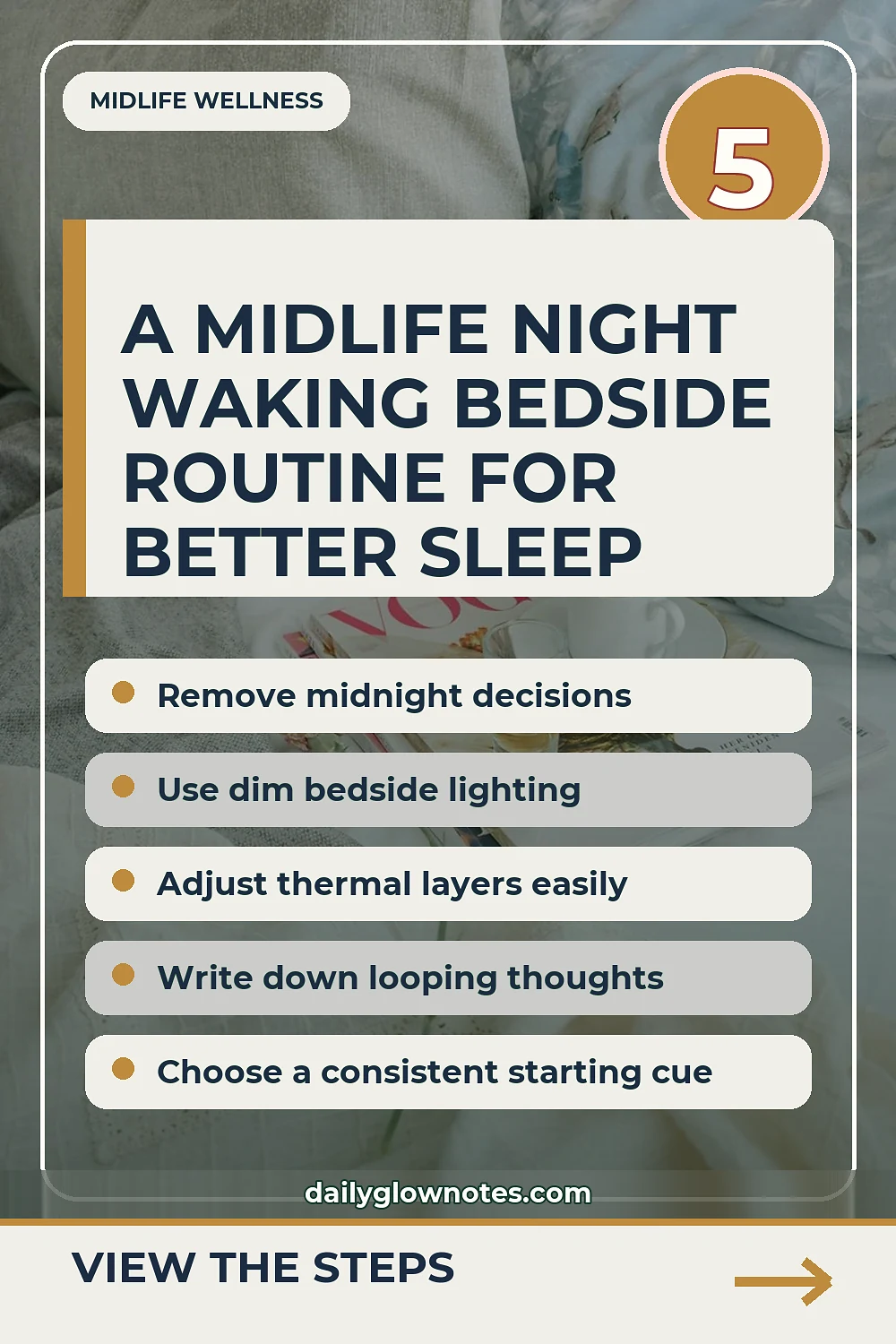
A successful bedside setup focuses on simplicity and tactile comfort. Keeping your nightstand uncluttered helps maintain visual calm if you open your eyes, ensuring everything you might need is within arm's reach.
- A Low-Wattage, Warm Light Source: Avoid harsh overhead lighting or phone screens. A small, dim bedside lamp with a warm bulb allows you to see enough to take a sip of water without suppressing your natural melatonin production.
- Temperature-Regulating Bedding Layers: Keep a light, breathable throw blanket folded at the foot of your bed or on a nearby chair. If you wake up feeling chilled or overheated, you can adjust your layers without searching through closets.
- A Sturdy Glass of Room-Temperature Water: Dehydration can subtlely disrupt sleep. Having water readily available prevents the need to walk into a brightly lit kitchen.
- A Non-Digital Mind Unloading Pad: If looping thoughts keep you awake, keep a small notepad and pencil nearby. Writing down a brief word or two lets your brain release the thought until morning.
Managing Temperature Shifts and Physical Comfort
Fluctuating hormone levels during perimenopause and menopause frequently cause night sweats or sudden chills, which interrupt deep sleep cycles. Instead of fighting these physical changes, design your sleep space to accommodate them smoothly.
Opt for natural, moisture-wicking bedding fabrics like linen, bamboo, or lightweight cotton. Layering your bedding rather than using one heavy duvet allows you to quickly adjust your thermal comfort with minimal effort. While environmental adjustments form the foundation of physical comfort, some women also choose to include daily wellness options like NuviaLab Meno in their broader routine. As a dietary supplement tailored for midlife support, it can complement consistent sleep hygiene habits and gentle self-care practices.